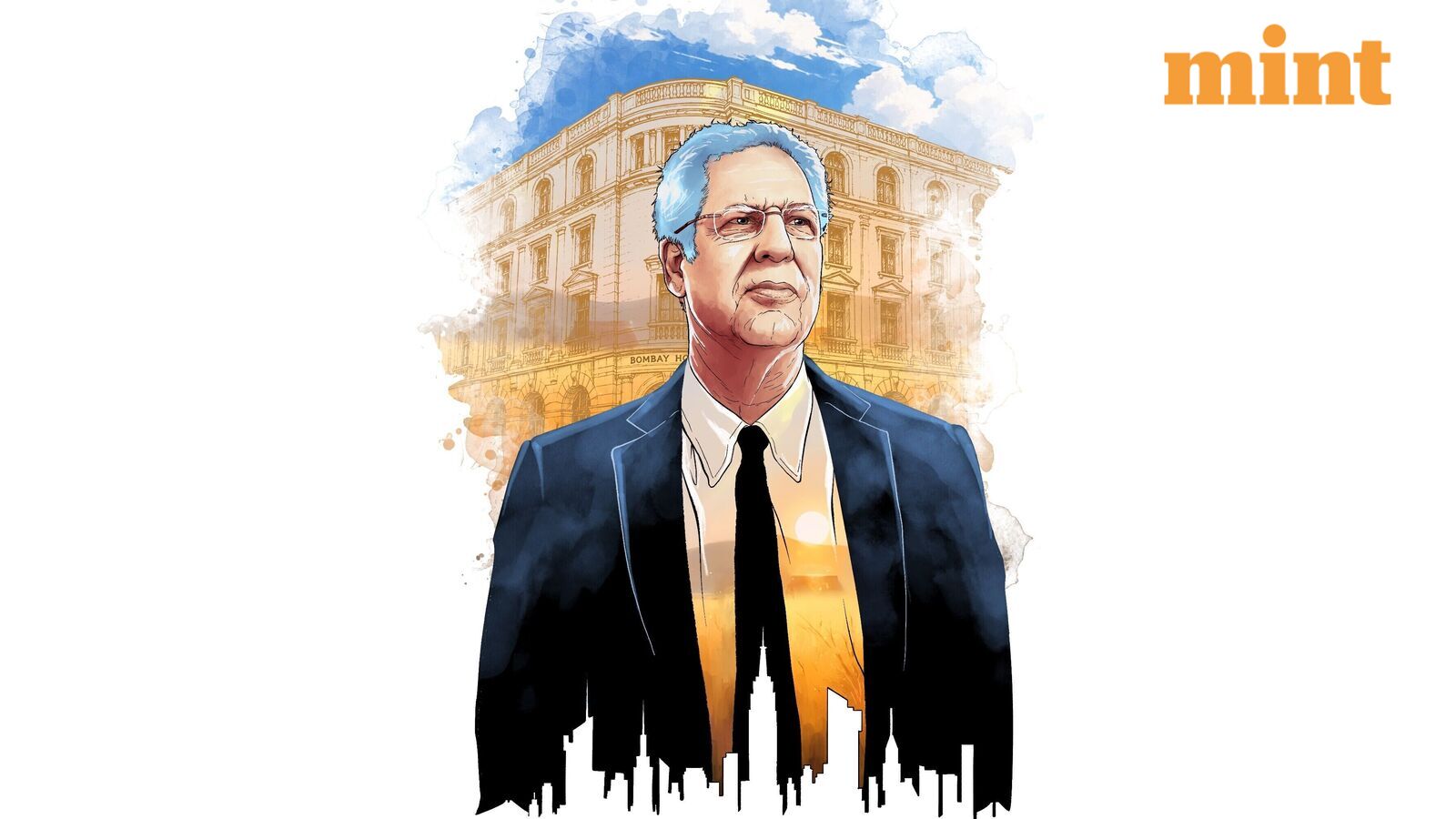
Tata Sons AGM adjourned for first time as Noel Tata inherits unfinished bets, thinning cash from TCS, and a board that needs rebuilding before Chandrasekaran exits.
Mumbai: The annual general meeting of Tata Sons on 18 August never started. Sir Ratan Tata Trust, the second largest shareholder with a 23.56% stake, could not nominate a member to represent it. A 15 May order by the Maharashtra Charity Commissioner had blocked the trust from convening its own board meeting to decide on a nominee.
Under Tata Sons' articles, a meeting has quorum only if the two biggest shareholders are represented. Sir Dorabji Tata Trust, the largest with 27.98%, and SRTT together hold more than 51% of the holding company. Without quorum, the meeting was adjourned – the first such adjournment in the group's history.
The machinery jammed just as Noel Tata, chairman of Tata Trusts, was set to take centrestage as the group's top decisionmaker. Trusts owns about two-thirds of Tata Sons through a web of smaller trusts. The stalled meeting is the least of his problems.
N. Chandrasekaran, who succeeded Cyrus Mistry in 2017 after a boardroom coup orchestrated by Ratan Tata, built a holding company that operated like a personal mandate. Decisions of enormous consequence were taken with a board that, in the eventual judgement of Tata Trusts, was neither adequately consulted nor kept informed.
On 24 February, the Tata Sons board weighed a third term for Chandrasekaran. Four of six directors backed it. Noel did not. The new Trusts chairman wanted a profitability roadmap for four businesses launched after Chandrasekaran took over: airlines, iPhone assembly and semiconductors, quick commerce, and battery storage. Together they lost about ₹29,924 crore in FY26. “Beyond the capital allocation, not a single business decision of any of these businesses has been discussed at the board,” a former Tata Sons board member said on condition of anonymity.
Six months later, on 12 August, Chandrasekaran said he would not seek another term. His tenure ends on 20 February 2027.
The Financial Toll
Over nine years, Chandrasekaran deployed over ₹55,000 crore of the holding company's money into four new ventures. Almost all of it remains work in progress.
The showcase bet was Tata Digital. The group poured more than ₹22,000 crore into the Tata Neu platform, meant to be the single front door to everything the group sells. It has instead muddled through leadership changes, losses, poor consumer traction, and a strategy left in tatters by the quick-commerce wave it was never built for.
Tata Electronics is building India's first major semiconductor fabrication unit at Dholera in a technology tie-up with Taiwan's Powerchip, alongside iPhone-assembly lines and a packaging unit in Assam – businesses so capital-hungry that even seasoned global players stumble.
Air India remains loss-making three-and-a-half years after the Tatas bought it back from the state. A new chief executive, Tewolde Gebremariam, was named only this month to succeed Campbell Wilson and steady an airline still recovering from last year's crash.
None of these businesses generates cash yet. All of them consume it. “Diversification is not necessarily par for the course and history shows us that widely diversified conglomerates become unwieldy beyond a point and lose value,” said Kannan Ramaswamy, professor at the US-based Thunderbird School of Global Management. “Ideally, the diversification strategy must ensure that the investment portfolio is continually pruned and nurtured to enable new growth.”
The real danger is to the ATM that funded all of it. TCS, the group's cash machine, cut its dividend for the year to March 2026. Tata Sons' take fell about 12% to ₹28,291 crore, the squeeze compounded by the artificial-intelligence pressures now bearing down on the IT sector. “If I were an investor, this would be my most significant worry,” said Ramaswamy. “It is most vulnerable due to the emergence of AI.”
The next chairman will inherit a portfolio of long-dated, unfinished bets at precisely the moment the engine funding them is losing power.
Tata Sons' board currently has six directors: Chandrasekaran, Noel Tata and a second Trust representative Venu Srinivasan, group CFO Saurabh Agrawal, and two independent directors, Harish Manwani and Anita George. Chandrasekaran leaves next February; Manwani's second term ends that May. If a departing chairperson is replaced, the board holds at six, another exit will leave it at the threshold of five.
A board refresh is tied to how quickly SRTT receives the Mumbai Charity Commissioner's go-ahead to continue operations. A September 2025 Maharashtra ordinance now requires trustee appointments to be unanimous rather than carried by a majority, which, in a divided house, could make expansion of the Trusts and consequently the board of Tata Sons difficult.
Noel must also manage the government relationship. The semiconductor plants depend on public subsidies that can run to half their setup cost; Air India needs official goodwill on routes and aircraft. Both Chandrasekaran and Noel have, by some accounts, briefed the government separately about their rift – an awkward indication of how entangled the group has become with New Delhi.
In between, he has to find an exit for the Shapoorji Pallonji Group, which owns 18.38% in Tata Sons. “Noel recognises that it is only fair to give the SP Group an exit,” a group executive said. Options include selling shares in Tata Capital, Tata Auto Components, or any other company ready to be listed.
The biggest immediate challenge is appointing a new group chairman. For close to a century, Tata Sons supervised. It owned the group's companies and let their bosses run them; when a business faltered, its chief had to answer. “The question will be whether the next Tata Sons chair will be a super-CEO like Chandra or go back to the old soft-touch way,” a second group executive said.
Noel Tata has not really been tested in this role, he ran Trent well: under his chairmanship, it became one of the group's fastest-growing businesses by market value. Trent was merely a group company, and Noel was kept on the fringes of the succession line for years. Now he has at last reached the centre. He arrives to find the levers jammed, the treasury thinning, the flagship bets unfinished, and the state as a partner he cannot afford to alienate.
“Season 1 is over,” a person close to the new order remarked after Chandrasekaran resigned. “Let's see what is in store.”
Drafted by a large language model from the source reporting linked above, then screened by automated publishing checks. It is not read by a journalist before publication. Some articles cite our Alpha Score. Verify prices and figures against the original source. Educational coverage, not personalized advice.