Nobel Drops Two Chile Copper Projects After Drilling Misses
Nobel Resources drops Anais and Pampa Austral after drilling fails to repeat historical copper grades. CEO says Cuprita remains the focus with active drilling underway.
Nobel Resources Corp. (TSX-V: NBLC) has walked away from two of its four Chilean copper prospects after drilling failed to repeat historical results. The company terminated option agreements for the Anais and Pampa Austral projects effective June 15, shifting focus entirely to the Cuprita and Janett targets.
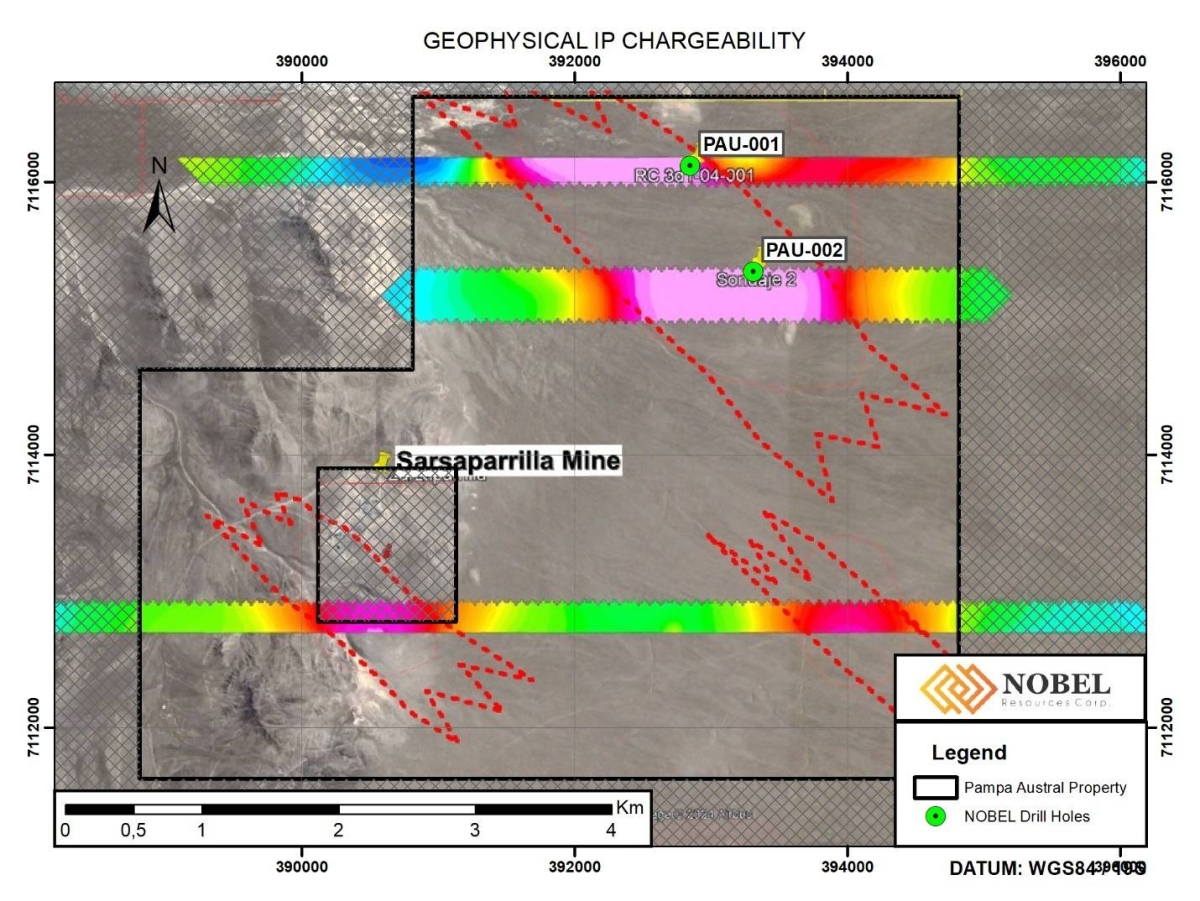
At Pampa Austral, two drill holes were designed to replicate copper intersections reported by Farwest Mining in 2024. They did not. The company said the drilling encountered a different geological environment and did not intersect high-grade copper mineralization. An induced polarization anomaly at the same location turned out to be pyrite stringers and disseminations over several meters of core – not the copper the geophysical signature had suggested.
Anais presented a different problem. Nobel geologists found previously unreported drill hole casings on the property, close to the high-grade intersection Farwest had reported. That discovery limits the potential for a significant copper find, the company said, and it decided not to continue.
Cuprita remains the core asset. Nobel has completed geophysical and remote sensing surveys, detailed geological mapping, and identified alteration mineral assemblages characteristic of higher-temperature parts of porphyry copper systems – intense albitization and destruction of biotite minerals. Those areas align with strong IP chargeability anomalies and are now the target of an active drilling program. Results will be released once the program finishes and laboratory assays come back.
CEO Vernon Arseneau, who has decades of experience in the region, said the Cuprita system is unusual. "We rarely see such intensely altered porphyry systems with only the few drill holes completed by Nobel and no other drilling," he said in the release. "These are large complex systems and require a systematic approach and some persistence to solve geometry."
The Janett project, which Nobel also retains, was not discussed in detail in the update.
For a company with a market cap around C$3 million, the decision to cut two projects and concentrate capital on one drill program is the standard discipline of an explorer with limited runway. The risk is that Cuprita's alteration halos and chargeability anomalies – textbook porphyry indicators – have already been tested by the same historical drilling that Nobel is now trying to extend. The company has not said how many holes the current Cuprita program includes or when assays are expected.
David Gower, P.Geo., a consultant to Nobel, reviewed and approved the technical disclosure. He is not considered independent under NI 43-101.
Nobel shares last traded at C$0.035 on the TSX Venture Exchange.
Drafted by a large language model from the source reporting linked above, then screened by automated publishing checks. It is not read by a journalist before publication. Some articles cite our Alpha Score. Verify prices and figures against the original source. Educational coverage, not personalized advice.