India and Norway signed a Green Strategic Partnership, but no tickers, valuations, or specific catalysts emerged. Traders should await project-level tenders or corporate announcements.
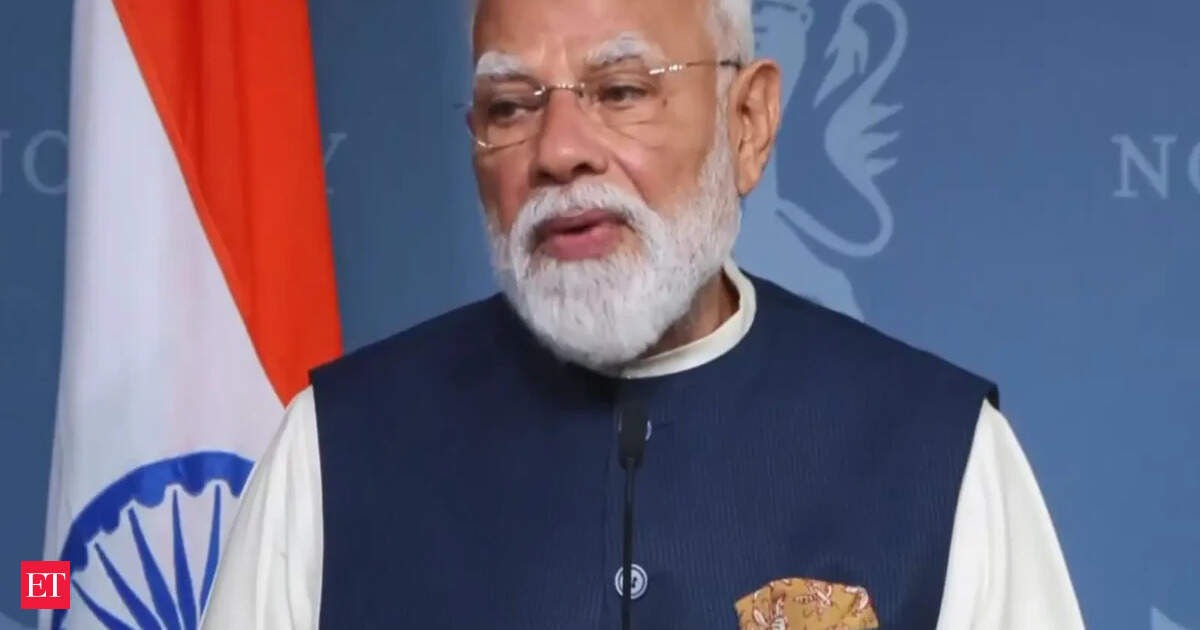
The India-Norway Green Strategic Partnership was announced after a meeting between Prime Minister Narendra Modi and Prime Minister Jonas Gahr Store. The two leaders committed to cooperation in clean energy, climate resilience, clean energy, and the blue economy. They also called for early resolution of conflicts in West Asia and Ukraine through dialogue.
For a market analysis desk, the summit produced no tradeable signal. The readthrough requires at least one identifiable company, ticker, or financial figure to anchor a sector call. The source text contains none of these. No Indian or Norwegian listed entity was named, no contract value was disclosed, and no earnings or guidance references. Without an asset-level catalyst, the event does not meet the bar for a sector readthrough.
A broad thematic partnership – even one combining India's scale with Norway's technology – cannot serve as a direct trade catalyst. Traders need a specific cause-and-effect chain to make a watchlist decision: whether a regulation, a project tender, or a joint venture involving a public company.
The partnership covers clean energy, climate resilience, and environmental resilience**, and the blue and green economy. These are long-term policy themes that shift over months to years. A single diplomatic announcement does not change the immediate valuation, positioning, or liquidity of any stock.
India's renewable energy sector includes companies such as Adani Green Energy, Suzlon Energy, and NTPC. Norway has a line of Norwegian peers such as Equinor and Scatec ASA. None of these were mentioned in the source. Inferring an impact would be speculation, not analysis.
For this partnership becomes actionable, one of two triggers must appear. First, a government tender or bilateral Memorandum of Understanding that names a specific contractor or operating company. Second, an earnings call where a management mentions the partnership as a material growth driver.
Until then, the event sits in the same category as any other non-financial summit: a directional indicator for policy that carries no immediate execution risk. Stock market analysis that relies on summit outcomes alone tends to produce noise rather than signal.
The better market read is to track the follow-up filings from the Indian Ministry of External Affairs and the Norwegian Ministry of Climate and Environment. Only when a concrete project – such as a floating solar array deal or a green hydrogen supply agreement – reaches the press release stage can the desk assign a price impact. At that point, the sector readthrough would switch from thematic to event-driven.
Prepared with AlphaScala research tooling and grounded in primary market data: live prices, fundamentals, SEC filings, hedge-fund holdings, and insider activity. Each story is checked against AlphaScala publishing rules before release. Educational coverage, not personalized advice.