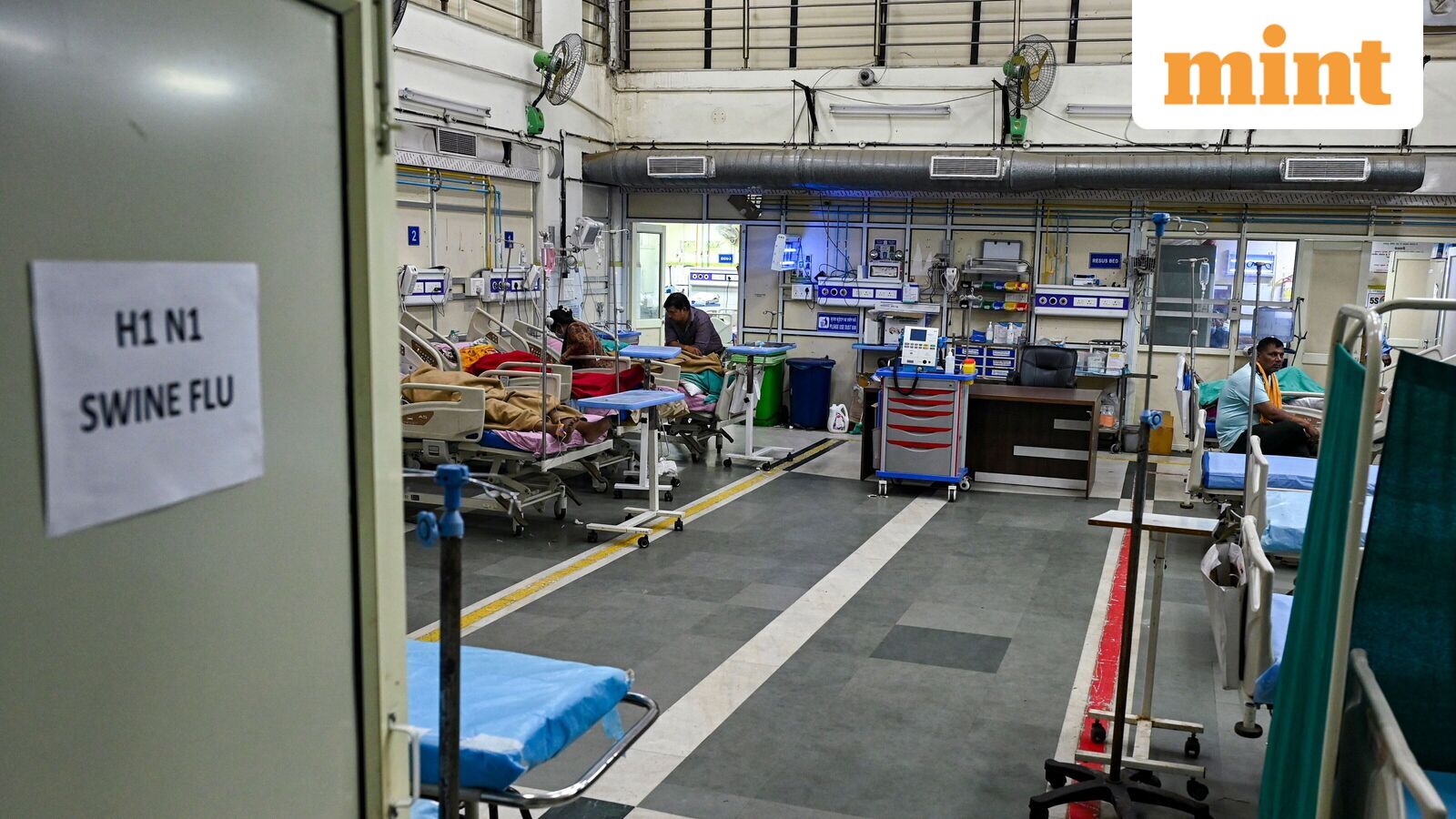
New Delhi: India is seeing a seasonal rise in respiratory infections driven largely by Influenza A subtype H1N1, with minor circulation of H3N2, Influenza B (Victoria lineage), and mild SARS-CoV-2 cases, Dr Rajiv Bahl, director general of the Indian Council of Medical Research (ICMR), said on Tuesday.
"There should not be any cause of panic that we can see, any cause of concern. It is a large number of cases with the same H1N1 strain, which is the seasonal influenza," Dr Bahl said during a media briefing at ICMR headquarters.
H1N1 accounts for nearly 98% of circulating Influenza A cases, with H3N2 making up the rest, he said. He confirmed that 98-99% of all cases remain mild, self-limiting, and manageable at home with rest, hydration and basic care.
Instead of masks, Dr Bahl advised standard hand hygiene, respiratory etiquette, and maintaining a distance of one to two meters from symptomatic individuals. He noted that high-risk groups, adults aged 65 and above, pregnant women, and immunocompromised individuals, can opt for the Northern Hemisphere flu vaccine in consultation with their physicians.
"We are not asking people to wear masks because respiratory droplet infections travel at most one to two meters," he added.
Dr Bahl, who is also secretary of the department of health research (DHR), said the circulating influenza strains remain sensitive to standard antivirals like oseltamivir (Tamiflu), though unprescribed use of antivirals and antibiotics is strictly discouraged.
So far this year, Delhi has reported over 2,600 influenza cases characterized by sudden onset of high fever and sore throat, with the H1N1 strain accounting for nearly 70% to 75% of total infections. Other states significantly affected include Karnataka, Maharashtra, and Kerala.
The sharp uptick had prompted Union Health Minister J.P. Nadda to chair a high-level review meeting on 21 August to evaluate the country's epidemiological situation and public health preparedness.
Addressing concerns around the strain's evolution, Dr Bahl explained that H1N1 is no longer swine flu; it now spreads strictly from human to human and has become a seasonal flu that resurfaces every year. "Flu viruses have a very classical way of behaving; they keep on having small mutations every year. That mutation helps them to keep on infecting people even if they had the flu last year," he said.
Real-time syndromic surveillance is tracking trends across 73 sentinel hospitals and 167 virus research and diagnostic laboratories (VRDLs) nationwide. "Every week, 25 samples are tested from SARI (Severe Acute Respiratory Infection) and other respiratory infections," Dr Bahl said. The 167 VRDLs process samples against a 10-virus syndromic panel that tests for Influenza A, Influenza B, SARS-CoV-2, Respiratory Syncytial Virus (RSV), Adenovirus and Parainfluenza.