Nissan's AI Cameras Track Worker Movements, Cut Injury Costs
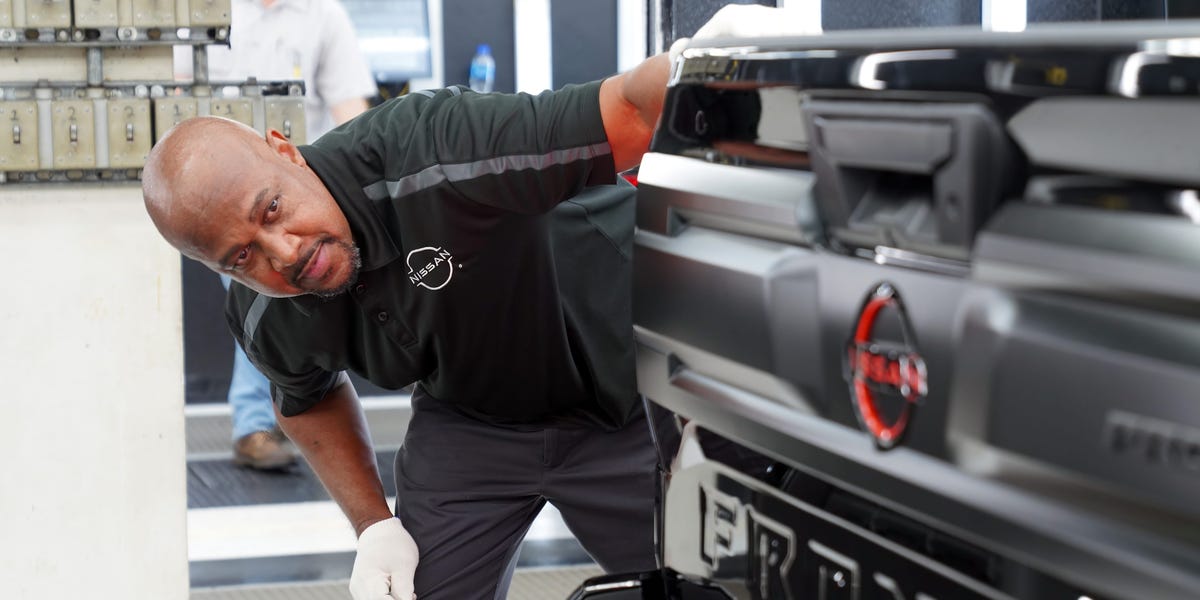
Nissan's Canton, Mississippi plant uses AI cameras to flag unsafe bending and posture, saving about $34 million. The system expands to Smyrna, Tennessee next.
Nissan Motor Co. has installed AI-powered cameras at its Canton, Mississippi, assembly plant that track how workers bend and reach for parts as they build the Altima sedan and the Frontier pickup. Victor Taylor, Nissan's divisional vice president of manufacturing for the Americas, told Business Insider the system has contributed to about $34 million in safety and health-related savings at the plant.
Taylor said the technology is not aimed at cutting jobs. "We're not talking about job elimination," he said. "What we're referring to are mundane tasks that are really antiquated for a human being to be performing."
Chi Amaechi, a Nissan process engineer and former safety engineer who worked on the system's implementation, said Canton uses what it calls a "golden cycle" for each job. The golden cycle defines the standard way a task should be performed, including the sequence for installing components and the body movements designed to reduce repetitive strain.
"What it does is it monitors body angles proactively," Amaechi said while showing Business Insider a virtual demonstration. "It's basically identifying your joints, so it can identify when a person is bending in a position that's beyond the safety requirement."
When the system detects an employee bending too far or holding an unsafe position too long, it flags the risk for plant managers. Supervisors and engineers can use that information to coach workers or redesign a workstation. Amaechi said the technology replaces manual observations that can be inconsistent, since employees may change their behavior when they know someone is watching.
Nissan initially evaluated the technology to improve manufacturing efficiency and help train new workers, Taylor said. The ergonomic benefits emerged later. "We weren't originally looking for that," he said of the safety applications. "It just kind of shown itself as, this is the biggest win."
The system has also become part of Nissan's response to an aging workforce, Taylor said. "We have employees that have been in the plant 20, 30-some odd years, and they want to retire," he added. "You can't replace 20, 30 years of know-how."
Employees were involved early through plant safety committees, Taylor said. He and Amaechi said workers initially worried the technology could threaten jobs. They became more receptive when Nissan presented it as a safety and training tool, and the two described instances in which workers welcomed changes made using the system.
Nissan plans to complete its rollout in Canton before expanding the system to the company's Smyrna, Tennessee, assembly plant and evaluating applications at its powertrain facilities, Taylor said.
Nissan's Turnaround Reaches Canton
Nissan has had a rough few years, and it is showing early signs of a turnaround. The automaker replaced Makoto Uchida with Ivan Espinosa as CEO in April 2025, shortly after Nissan and Honda abandoned merger talks. Espinosa introduced a recovery plan centered on cutting jobs and reducing manufacturing capacity.
Canton's assembly line has been affected by some of those cuts. In May, the company canceled its $500 million plan to manufacture electric vehicles at the plant.
On Monday, Nissan reported its first quarterly net profit in two years, helped by cost reductions and stronger sales in the US and Japan. The automaker said its US sales rose nearly 10% during the quarter and called itself the fastest-growing mainstream brand over the previous 10 months.
Drafted by a large language model from the source reporting linked above, then screened by automated publishing checks. It is not read by a journalist before publication. Some articles cite our Alpha Score. Verify prices and figures against the original source. Educational coverage, not personalized advice.