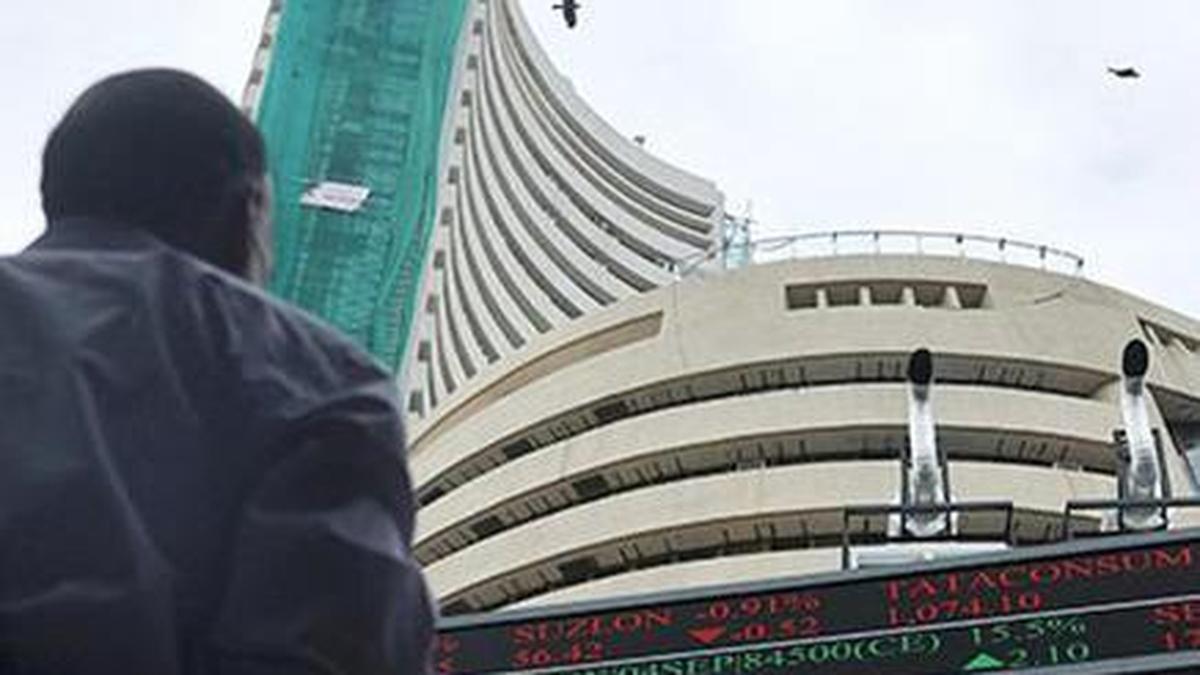
Indian benchmark indices opened lower on Thursday, extending Wednesday's losses as sustained foreign fund outflows and unresolved West Asia tensions weighed on sentiment. The Sensex fell 229.69 points to 74,139.32, while the Nifty dropped 66.30 points to 23,339. The move follows a session where the Sensex closed 303.67 points lower and the Nifty ended at 23,405.60.
Foreign Institutional Investors (FIIs) offloaded equities worth ₹5,616.56 crore on Wednesday, according to exchange data. That single-session figure is large enough to drive index-level moves, particularly when concentrated in high-weight constituents. Trent, Infosys, HDFC Bank, Bajaj Finserv, Kotak Mahindra Bank, and Tata Steel were among the biggest laggards on the Sensex. Eternal, Titan, Adani Ports, and Tech Mahindra were among the few gainers.
The Two Headwinds: West Asia and FPI Selling
V.K. Vijayakumar, Chief Investment Strategist at Geojit Investments Limited, described the current setup as one where headwinds are stronger than tailwinds. "The continuing uncertainty in West Asia and the big and sustained FPI selling are the strong headwinds which are weighing on the market," he said.
The Geopolitical Driver
The ceasefire agreement between Israel and Lebanon provided some relief to regional risk sentiment. Broader concerns remain unresolved. Ponmudi, CEO of Enrich Money, noted that "continued hostilities between the United States and Iran, including reports of retaliatory Iranian actions following recent U.S. strikes, have kept uncertainty elevated and limited any meaningful improvement in global risk appetite."
The absence of tangible progress toward a diplomatic resolution leaves markets highly sensitive to geopolitical headlines. The implications for energy prices are direct: Brent crude traded 0.97% lower at $96.86 per barrel on Thursday. The level remains elevated relative to pre-crisis norms. Any escalation that threatens supply routes through the Strait of Hormuz would push oil prices higher, compounding India's import bill and inflation outlook.
The FPI Selling Mechanism
Vijayakumar pointed to a structural factor driving FPI outflows: the relative performance of other markets. "The bullish undertone of the booming markets in the U.S., Japan, South Korea and Taiwan suggests more FPI selling in India," he said. When global fund managers see stronger returns in developed markets and select Asian peers, they rebalance away from Indian equities.
The scale of selling matters. ₹5,616.56 crore in a single session is not retail-level churn. It reflects institutional rebalancing, likely from passive funds adjusting country weights and active managers rotating into markets with stronger momentum. The Nifty and Sensex have limited capacity to absorb sustained selling at this scale without drifting lower.
Affected Assets and Exposure
Large-Cap Equities
The selling is broad but concentrated in financials and technology. HDFC Bank and Infosys are among the heaviest weights in the Nifty 50, so their declines exert outsized pressure on the index. HDFC Bank carries an Alpha Score of 37/100 (Mixed) on AlphaScala's proprietary framework, reflecting a stock with moderate fundamental support facing headwinds from FII positioning. Infosys scores 57/100 (Moderate), indicating a more balanced risk-reward profile that remains vulnerable to global sentiment shifts.
Sectoral Rotation
Defensive names like Titan and Adani Ports are gaining, suggesting some rotation into stocks perceived as less exposed to FII flows or geopolitical shocks. Tech Mahindra also bucked the trend, though the move appears stock-specific rather than sector-wide.
Currency and Bond Markets
The rupee faces additional pressure from FII outflows. When foreign investors sell equities and repatriate proceeds, they sell rupees and buy dollars. A weaker rupee compounds inflation risks by making imports more expensive, particularly crude oil. Bond yields may also edge higher as foreign selling reduces demand for government securities.
Timeline and Catalysts
Near-Term (1-2 Weeks)
The immediate catalyst is the trajectory of West Asia tensions. Any diplomatic breakthrough that reduces the risk premium on oil would remove one of the two headwinds. An escalation involving Iran or disruption to shipping lanes would accelerate selling.
Medium-Term (1-3 Months)
FPI flows will depend on relative market performance. If U.S. and Japanese markets continue their rallies, India will continue to see outflows. The trigger for a reversal would be either a correction in those markets or a catalyst that makes Indian valuations look attractive again, such as a sharp rupee depreciation that boosts export-oriented sectors.
Key Levels to Watch
- Nifty 23,000: A psychological support level. A break below this would likely trigger stop-loss selling and accelerate the decline.
- Sensex 74,000: The round number is the next major support. Wednesday's close at 74,346.17 leaves limited cushion.
- Brent crude $100: A breach above $100 would signal that the geopolitical risk premium is expanding, not contracting. That would be a clear negative for Indian equities.
What Would Reduce the Risk
- A confirmed diplomatic resolution between the U.S. and Iran that de-escalates military posturing.
- A sustained decline in Brent crude below $90 per barrel, indicating that supply concerns are easing.
- A slowdown in FII selling, ideally a return to net buying over a 5-session window.
- A correction in U.S. equities that makes Indian valuations look relatively attractive on a forward P/E basis.
What Would Make It Worse
- A new military incident involving Iran that threatens oil infrastructure or shipping.
- FII selling accelerating to ₹7,000-8,000 crore per session, which would signal panic rather than rebalancing.
- Brent crude breaking above $100 and staying there, which would force the Reserve Bank of India to revise inflation forecasts and potentially delay rate cuts.
- A simultaneous sell-off in U.S. and Indian markets, which would trap leveraged positions and force margin calls.
The Better Market Read
The simple read is that Indian markets are falling because of West Asia tensions and FII selling. The better read is that these two factors are reinforcing each other in a way that makes the sell-off self-sustaining until one of them breaks.
FIIs are selling partly because of geopolitical risk and partly because other markets offer better returns. The geopolitical risk keeps oil elevated, which hurts India's fiscal and trade balances. That makes Indian equities less attractive relative to markets not exposed to oil import costs. The selling itself pushes prices lower, which triggers more selling from momentum-driven funds and algorithmic strategies.
This feedback loop means that a resolution to either the geopolitical tension or the relative performance gap could break the cycle. Until one of those happens, the path of least resistance for Indian equities is lower.
Practical rule: When FII selling exceeds ₹5,000 crore in a single session and Brent crude is above $95, the probability of a sustained recovery in the Nifty over the next 10 sessions is below 30%. Wait for either a drop in FII outflows below ₹2,000 crore or a Brent close below $92 before adding long exposure.
For traders tracking these developments, the HDB stock page and INFY stock page provide real-time Alpha Score updates. Broader context on energy price dynamics is available on the crude oil profile and commodities analysis pages.