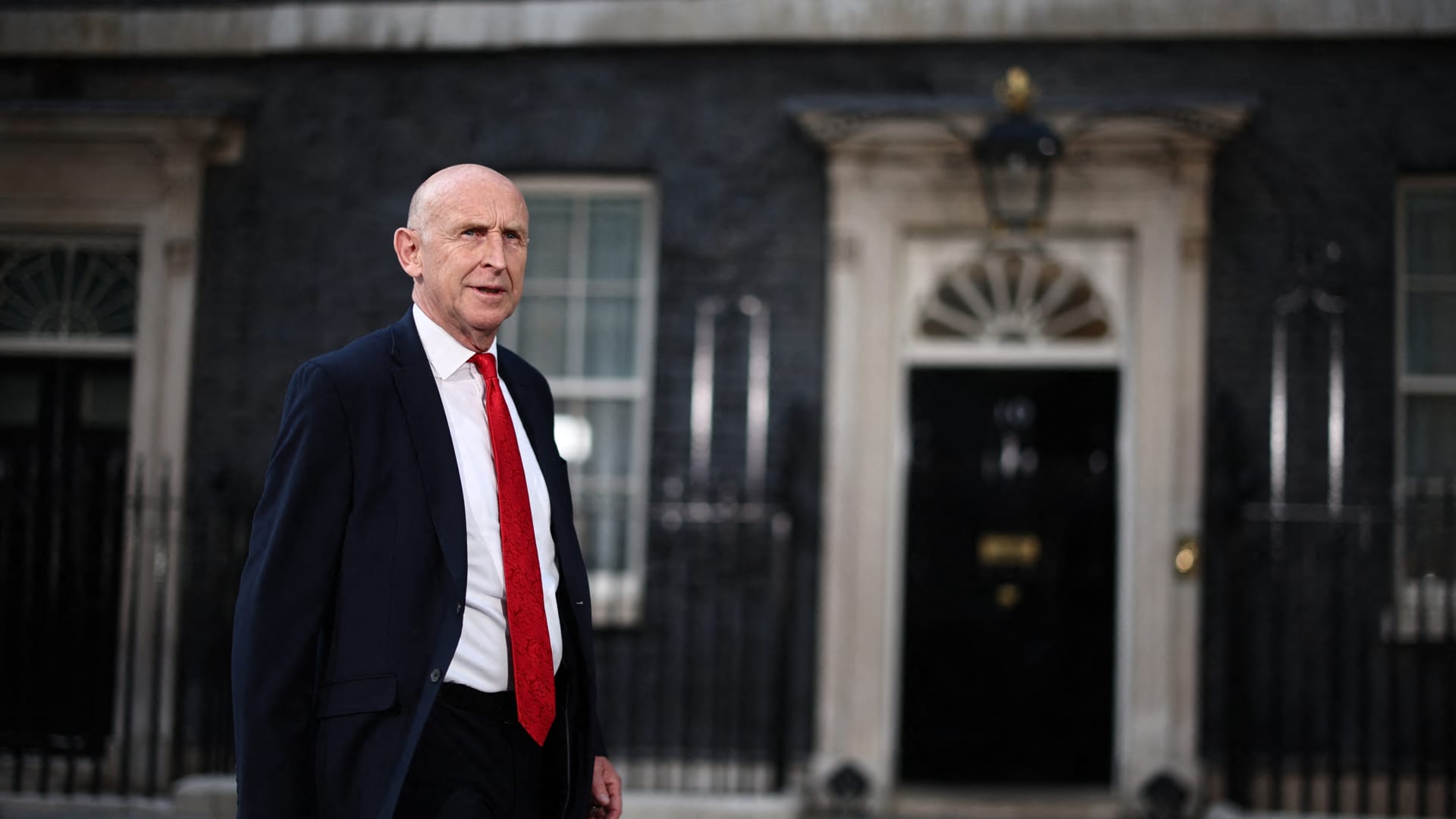
Andy Burnham named John Healey chancellor. Gilt yields fell Tuesday after a month-long rise signaled market caution. Healey balances spending promises with fiscal discipline.
Andy Burnham became the United Kingdom's seventh prime minister in a decade this week, and investors are now focused on John Healey, named Chancellor of the Exchequer late Monday. Healey, who resigned as defense secretary under Keir Starmer over what he called the government's unwillingness to commit resources to national security, now faces two immediate tests: delivering Burnham's domestic agenda and keeping bond markets calm.
Gilt yields fell across the curve Tuesday morning, a provisional sign of market approval. The benchmark 10-year yield was lower by several basis points, and the 30-year yield eased as well. That session followed a volatile stretch. Over the past month, the 10-year yield has risen roughly 19 basis points and the 30-year yield about 21 basis points, with both seeing choppy trade. Some of that move reflects the economic effects of the Iran war, which has lifted borrowing costs across most major economies. UK yields continue to trade at a substantial premium to G7 peers.
George Godber, who manages the £781 million Polar Capital UK Value Opportunities Fund, told CNBC's "Squawk Box Europe" that "you can attribute quite a lot" of the recent gilt move to Burnham. "Gilts have moved 50 basis points in the last month. That's costing the average household £80 more on a mortgage, and so the saving on the utility bill is pretty small," Godber said. His fund has taken the view that Burnham is likely to be left of Starmer, which implies higher tax and lower growth, a tough combination for rate-sensitive parts of the economy.
Godber also argued that the bond market itself would restrain any overly ambitious spending. "Have a look at the intraday move in the gilt market yesterday. The moment Burnham used the words 'we will be flexible on the fiscal rules,' gilts reacted. The gilt market will control their policy. When you're £3 trillion in debt, it is your lenders who dictate your policy."
Burnham and Healey announced Tuesday that they would cut sales tax on household electricity bills from 5% to 0% from October, a measure they said will cost £850 million in 2026-27. The cost is to be offset by scrapping Starmer's digital ID program, which was expected to cost £1.8 billion over three years. "For too long, too many people have struggled with the cost of living," Healey said in a statement. "Today's energy tax cut will give families some breathing room on bills."
Healey's appointment carries a defense angle. He stepped down as Starmer's defense minister weeks ago, saying the government was unwilling to commit the resources the nation needs. Last year Starmer vowed to increase defense spending sharply, shortly before NATO raised its military spending targets. Gareth Davies, the shadow minister for business and trade in the opposition Conservative party, told CNBC's "Europe Early Edition" that the new government's autumn budget will need to find almost £5 billion ($6.7 billion) for defense spending. "Reeves left a £4.7 billion hole in the defense investment plan," Davies said. Some lawmakers have renewed calls for defense bonds to fund the shortfall.
Citi analyst Charles J Armitage said in a note that Healey is likely to be well received by the market as good for defense stocks. "As chancellor he will likely have many demands on spending, and how much he will be able to allocate to defense remains to be seen," Armitage added.
Kate Shoesmith, director of policy and insights at the British Chambers of Commerce, told CNBC that "the cost stack of successive policy decisions has increased by 72%" for the average small-to-medium UK business. "The biggest cost is labor. Is it time to have a national insurance holiday if we want to employ more young people under the age of 25?" She urged Burnham and Healey to reconsider measures brought in by previous governments, including the £40 billion tax raid in Reeves' 2024 autumn budget.
J.P. Morgan CEO Jamie Dimon weighed in as well. In an interview with Wilfred Frost, Dimon said he wants Burnham to succeed urged the incoming chancellor to focus on building a strong economy. "The new chancellor is going to need good policies that actually cause growth. I'm praying that they get policy right. Government after government get it wrong."
Prepared with AlphaScala editorial tooling from the source reporting linked above. Indexable analysis may include a cited Alpha Score value. Publishing checks screen each story before release. Educational coverage, not personalized advice.