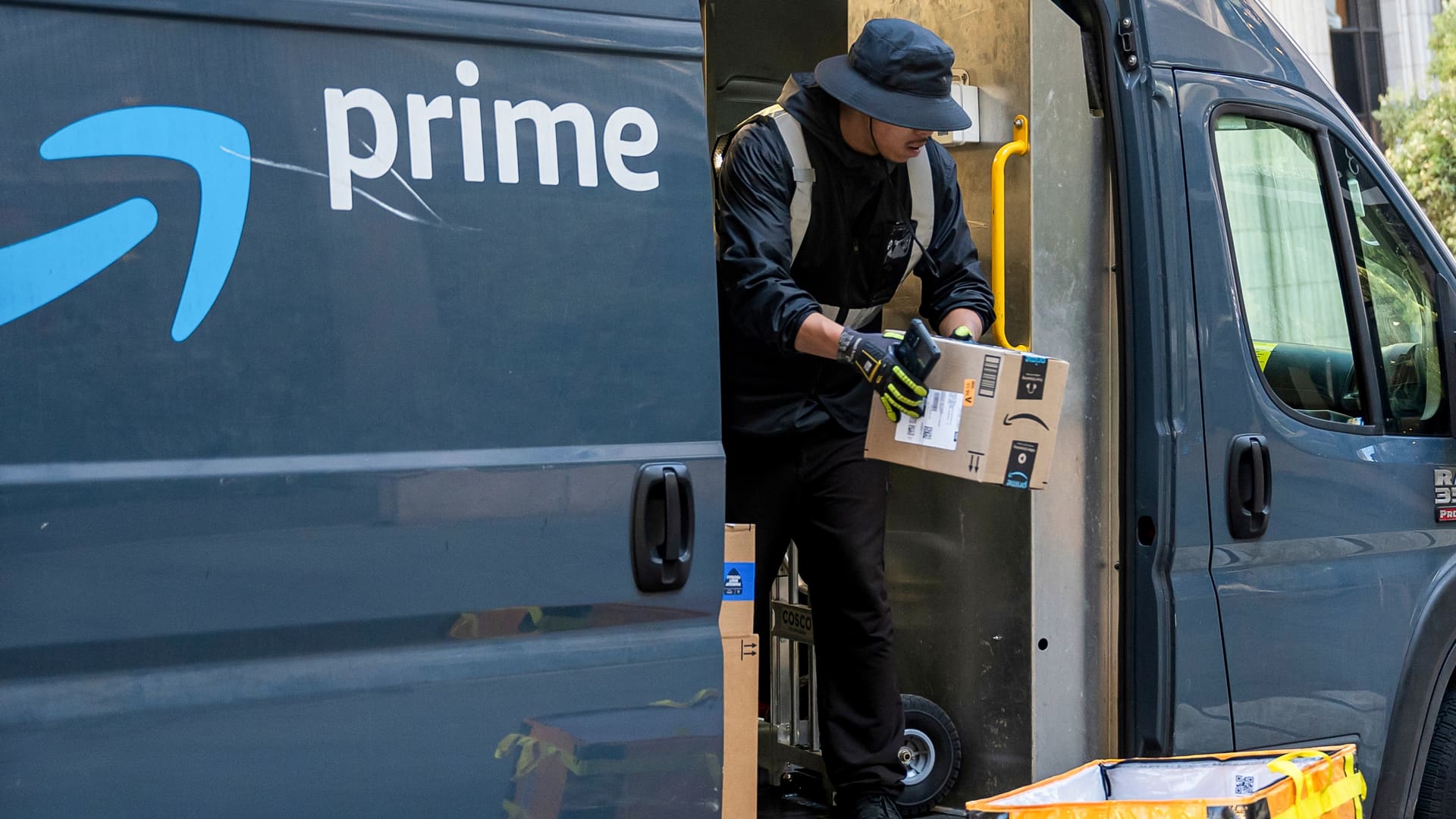
New Jersey sued Amazon on Tuesday, accusing the company of using its market power over third-party delivery contractors to suppress competition and wages.
Attorney General Jennifer Davenport said Amazon prevents delivery workers from unionizing, restricts contractors from hiring each other's drivers, and limits competition for labor. The result is lower pay and worse working conditions than would exist in a competitive market, her office said in a statement.
"As our complaint alleges, Amazon built a company worth trillions while subjecting drivers in its delivery network to artificially low pay and punishing working conditions thanks to its overwhelming power in the labor market," Davenport said.
The lawsuit, filed in U.S. District Court for the District of New Jersey, claims Amazon holds a "monopsony" over the market for delivery driver services. Unlike a monopoly, which controls output or consumer prices, a monopsony describes a single dominant buyer in a labor market that can dictate employment terms.
Amazon has run its Delivery Service Partner program since 2018. The network of small contracted companies handles last-mile delivery from warehouses to doorsteps, reducing Amazon's reliance on carriers such as UPS and FedEx. The model has drawn scrutiny from lawmakers and labor advocates, who argue Amazon uses the contractor label to dodge liability while controlling driver wages, schedules, and uniforms. Amazon says its partners control their own operations.
The complaint alleges DSPs are "economically dependent on Amazon" and cannot compete for drivers through higher pay or better conditions, which the company exploits to hold wages down.
Amazon did not immediately respond to a request for comment. The case adds to a growing legal and regulatory push against the company's delivery model. New York City is weighing legislation that would require Amazon to employ DSPs directly; Amazon has said it would "consider relocating delivery operations" outside the city if the bill passes. A tech industry group warned the measure could raise shipping costs for consumers.
The New Jersey case is one of the first to frame Amazon's control over delivery labor specifically as an antitrust violation. Davenport's office said the alleged practices harm workers and suppress competition in the broader logistics labor market.