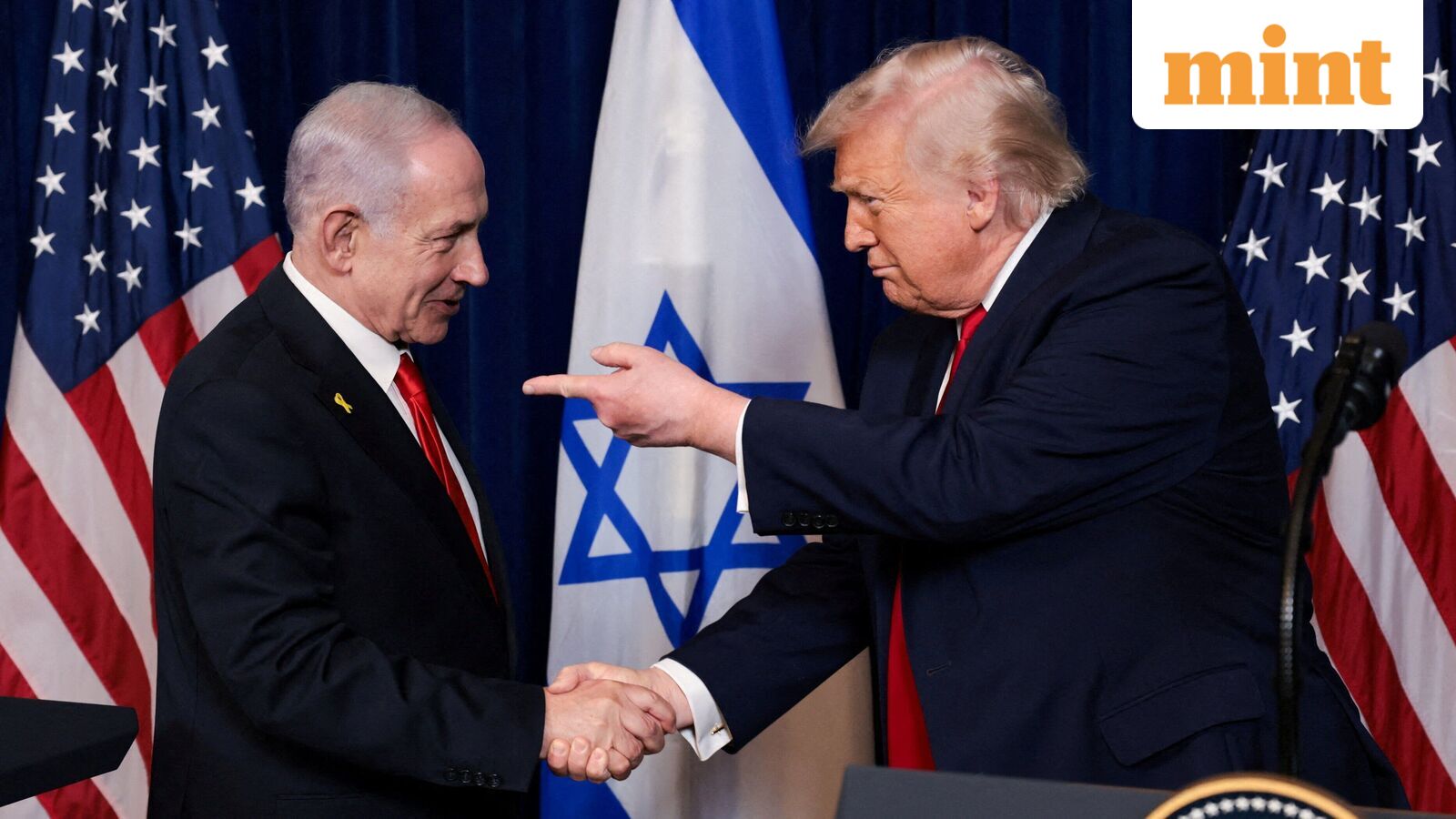
The Iran Memorandum of Understanding signed at Versailles sidelined one of its most vocal opponents: Israeli Prime Minister Benjamin Netanyahu. His government was not shown the draft, NBC News reported, a snub that is reshaping Israeli politics three months before a scheduled national election.
Netanyahu spent years pushing for military action against Iran's nuclear program and popularizing the war at home. Now the war's objectives – regime change in Tehran, dismantling its nuclear capabilities, curbing its proxy forces – remain unmet. The Islamic Republic has not fallen and appears in no immediate danger of collapse.
Polls tell the story of a public that has turned sharply. In March, roughly 60% of Israelis approved of the war's military achievements, according to data from the Institute for National Security Studies cited by NBC News. By May that figure had dropped to 27%.
Criticism now comes from every direction. Yair Lapid, who will challenge Netanyahu in the legislative election set for June 14, called the emerging agreement "one of the most shocking failures in Israel's foreign and security policy ... entirely registered in Netanyahu's name." Former prime minister Ehud Barak was blunter: "Iran emerged stronger; Israel emerged weaker. That is Netanyahu's strategic responsibility. He failed."
It is not just the opposition. The relationship with President Trump has frayed in public view. During a recent call about Lebanon, Trump asked Netanyahu: "Why are you blowing up buildings?" and told him to stop, according to The Wall Street Journal. In another call the president reportedly complained the worldwide downturn sparked by the war could link him historically to Herbert Hoover and the Great Depression. Trump acknowledged on Tuesday that he has yelled at Netanyahu, telling reporters: "Now Bibi has to be more responsible with respect to Lebanon." Earlier this month the president called him "f–king crazy," the WSJ reported.
Daniel Shapiro, former U.S. ambassador to Israel and a Distinguished Fellow at the Atlantic Council, described Netanyahu's position as precarious. "All Hezbollah has to do is get one rocket across into an Israeli town in northern Israel, and then the pressure on Netanyahu – which he's already hearing from his own base and from the opposition ... will ramp up," he told PBS News.
The agreement signals a fundamental shift. The U.S. has agreed to end hostilities on all fronts, including Lebanon – a theater where Netanyahu has argued for continued military action. Trump administration officials have described a pattern in which the Israeli leader argues for more bombing during calls, and the president has grown tired of it, one senior U.S. official told the WSJ.
Yossi Mekelberg of Chatham House told Al Jazeera that Washington will dictate Tel Aviv's role in the coming negotiations. A broad consensus now exists across Israel's political spectrum that the war fell short of its stated goals, he said.
Netanyahu said Monday that "with an agreement, without an agreement," he would keep fighting to prevent Iran from acquiring nuclear weapons. The remark drew a contrast with a leader who once claimed to be an equal partner in launching the war but now describes the U.S.-brokered peace as "Trump's decision."
If the interim accord leads to a final deal before the October election deadline, Netanyahu's biggest political fight may no longer be about Iran at all.