Nepal declines foreign rescue aid after floods kill close to 500
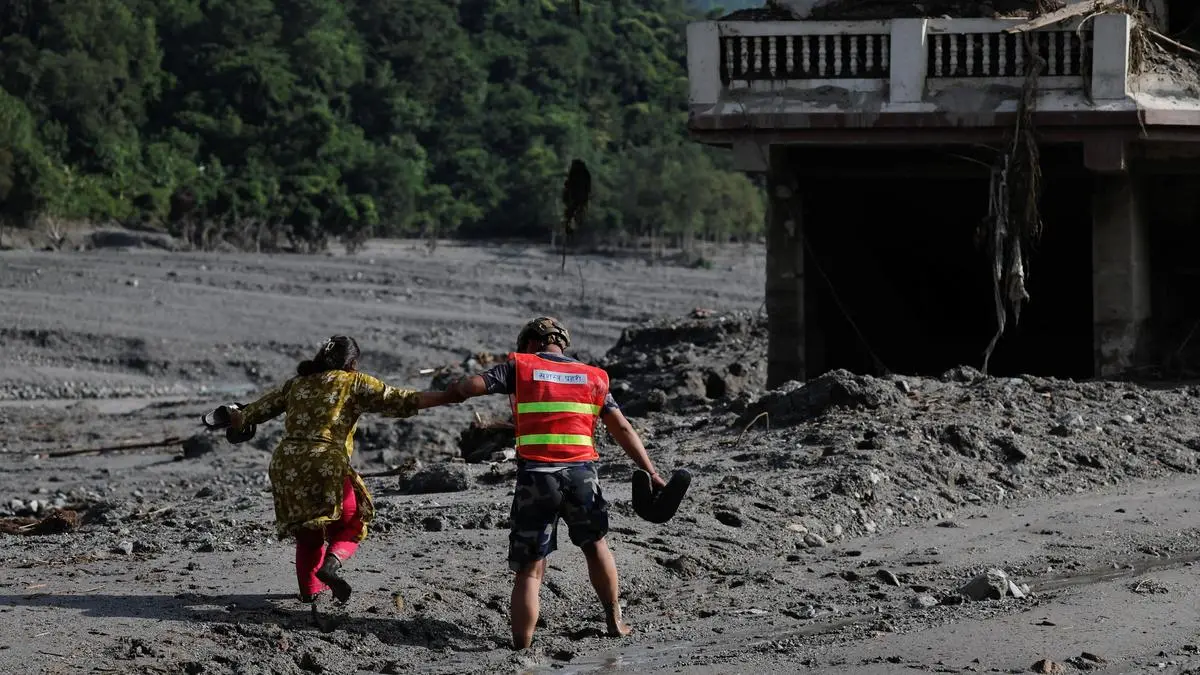
Nepal's foreign ministry said its agencies are handling rescue after floods damaged hydropower projects near the Chinese border. Seoul will keep negotiating.
Nepal does not need foreign assistance for search-and-rescue operations following flash floods that killed close to 500 people and damaged hydropower projects, its foreign ministry said Friday.
The floods tore through areas including Rasuwa district near the Chinese border, levelling entire towns. Several countries with nationals missing in the disaster offered help.
Hundreds of foreign nationals are still missing, including South Koreans. South Korea said it has already sent a response team to Nepal and will also dispatch a disaster relief team. Seoul's foreign ministry said Nepal had indicated it was not yet planning to accept foreign rescue teams. "South Korea will keep negotiating with Nepal over the matter," the ministry added.
South Korea pledged $1 million in humanitarian assistance through international organisations, its foreign minister said on X. Nine South Koreans working at a hydropower plant were missing and 10 were stranded, South Korea's foreign ministry said on Wednesday.
The Kathmandu Post reported that India, China, the United States, Britain, Japan, South Korea, Sri Lanka and Bangladesh asked the government to allow their search-and-rescue teams to assist.
Dinesh Bhattarai, a former Nepali ambassador to the United Nations in Geneva, said the government's reluctance to accept foreign search-and-rescue teams may be linked to the sensitivity of flood-hit Rasuwa district, which borders China's Tibet region.
"They may have thought about the locational sensitivity of the region and decided not to accept foreign teams," Bhattarai told Reuters. Chhetri said the decision had nothing to do with China's sensitivity because Nepal's own rescue teams were handling the operation.
Drafted by a large language model from the source reporting linked above, then screened by automated publishing checks. It is not read by a journalist before publication. Some articles cite our Alpha Score. Verify prices and figures against the original source. Educational coverage, not personalized advice.