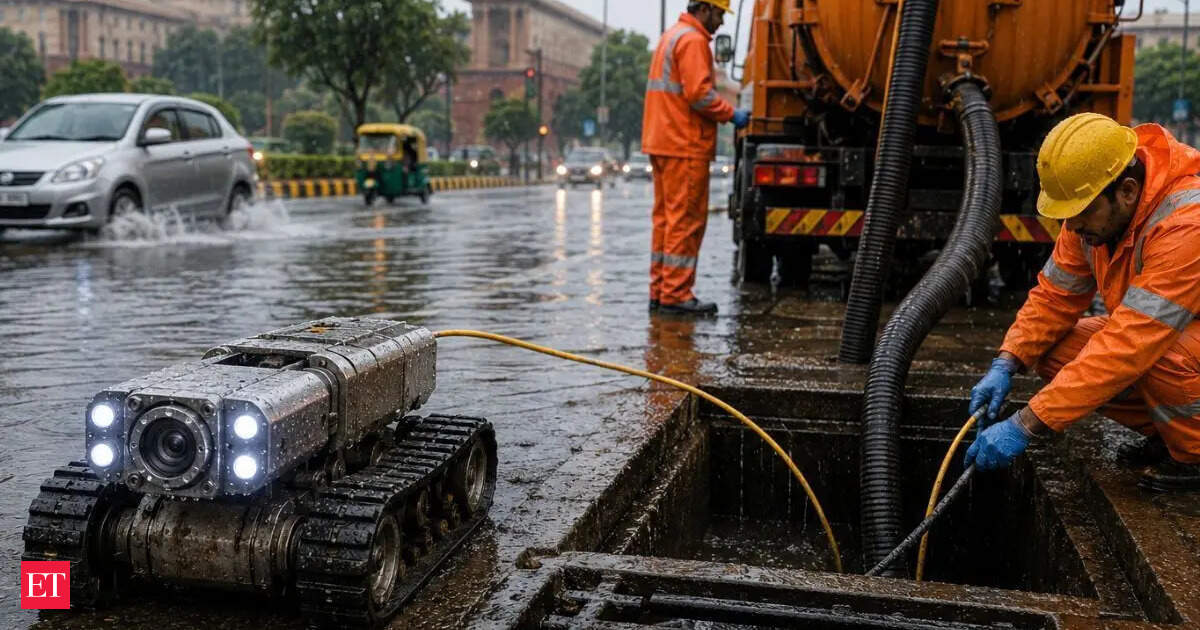
The New Delhi Municipal Council's technology-driven Monsoon Action Plan 2026 is more than a municipal cleanup. It is a real-world deployment of robotic drain surveys, GIS mapping, and CCTV monitoring at city scale. For investors in water infrastructure and industrial automation, the plan provides a concrete demand signal. The question is whether this pilot translates into a sustained procurement cycle for the companies that supply the hardware, software, and services behind it.
Robotic Drain Surveys as a Catalyst for Water Infrastructure Tech
The plan's most distinctive feature is the use of robotic surveys for covered drains. This shifts drain inspection from manual, reactive work to a data-driven, preventative model. The immediate read is bullish for manufacturers of pipe-inspection robots and crawler systems. A better read separates the one-time equipment sale from the recurring revenue that comes with maintenance contracts, data analytics, and operator training. The NDMC has not disclosed the procurement model, but if the council opts for a service-based contract rather than an outright purchase, the winning vendor gains a sticky, multi-year revenue stream. That would be a more durable catalyst than a single equipment order.
GIS Mapping and the Software Angle
GIS mapping of the entire drainage network creates a digital twin that can be updated with each monsoon season. The simple market take is that GIS software providers benefit. The more useful take is that the value lies in integration: the ability to overlay real-time sensor data, pump status, and rainfall forecasts onto the map. Companies that offer a platform rather than just a mapping tool are better positioned. The NDMC plan also includes CCTV monitoring, which suggests a command-center setup. That opens a secondary opportunity for video analytics and edge-computing hardware. The key unknown is whether the council builds this capability in-house or outsources it, which will determine the margin profile for any technology vendor.
Pumps and Hardware: Sarojini Nagar as a Test Case
The installation of pumps at Sarojini Nagar is a small but tangible hardware deployment. If these pumps are part of a larger network of automated pumping stations, the plan could become a reference project for pump manufacturers and industrial IoT firms. The risk is that the pumps are standard, low-margin equipment with no recurring software tie-in. The market will want to see whether the NDMC specifies smart pumps with remote monitoring, which would lift the addressable market for industrial connectivity providers.
For traders, the next concrete marker is the monsoon season itself. If the robotic surveys and GIS mapping lead to measurably fewer waterlogging incidents, other Indian cities will face pressure to replicate the model. That would turn a single-city pilot into a multi-year municipal capex theme. Until then, the trade is a bet on the NDMC's execution and the contract structures it chooses.