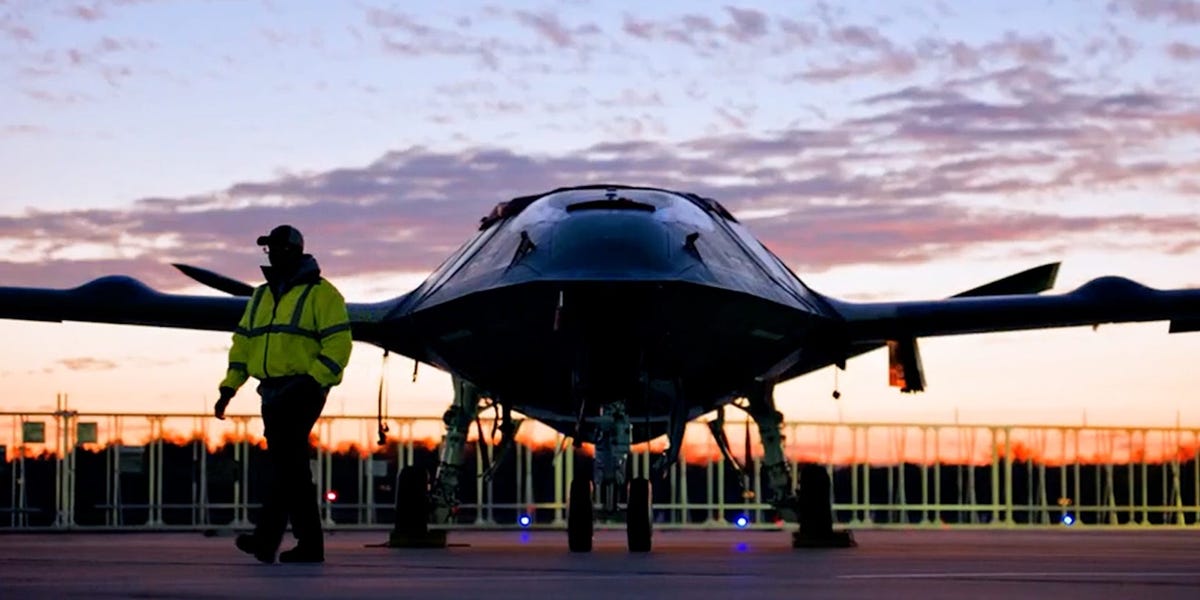
Navy MQ-25A Stingray Flight Test Marks Shift in Carrier Aviation Logistics

The Navy's successful test flight of the MQ-25A Stingray marks a shift in carrier logistics, potentially increasing the combat radius of manned strike fighters by offloading refueling duties to autonomous systems.
Alpha Score of 45 reflects weak overall profile with strong momentum, poor value, poor quality, weak sentiment.
Alpha Score of 47 reflects weak overall profile with moderate momentum, poor value, moderate quality. Based on 3 of 4 signals — score is capped at 90 until remaining data ingests.
Alpha Score of 47 reflects weak overall profile with moderate momentum, strong value, poor quality, poor sentiment.
Alpha Score of 42 reflects weak overall profile with weak momentum, weak value, poor quality, moderate sentiment.
The U.S. Navy successfully completed the inaugural test flight of the MQ-25A Stingray over the weekend, signaling a transition toward autonomous aerial refueling capabilities for carrier-based operations. As the first unmanned aircraft designed specifically for carrier integration, the Stingray addresses a critical bottleneck in naval power projection by extending the operational range of existing strike fighters. This development moves the platform from the design and simulation phase into active flight validation, shifting the focus toward integration with existing carrier air wings.
Operational Impact on Carrier Air Wings
The introduction of the MQ-25A alters the current logistics model for carrier-based strike groups. Historically, the Navy has relied on F/A-18 Super Hornets to perform the "tanker" role, a practice that diverts combat-capable assets away from strike missions and accelerates airframe fatigue. By offloading the refueling requirement to an unmanned platform, the Navy intends to increase the sortie rate and combat radius of its manned fleet. This shift effectively reclaims the mission capacity of the existing fighter inventory, allowing for a more efficient allocation of flight hours and structural life across the carrier air wing.
Defense Industrial Base and Program Scaling
The successful test flight serves as a primary validation point for the prime contractors involved in the development of the Stingray. For the defense sector, the transition to autonomous refueling represents a broader move toward unmanned systems that can operate in contested environments without risking pilot safety. The program's progress is a key indicator for the health of the Navy's unmanned aerial vehicle roadmap, which seeks to integrate more autonomous systems into the carrier deck environment over the next decade.
- Extension of strike fighter combat radius.
- Reduction in airframe wear on manned aircraft.
- Integration of autonomous flight control systems into carrier operations.
This milestone is particularly relevant for stock market analysis regarding defense contractors that are pivoting toward autonomous systems. While the MQ-25A is a specialized asset, its success provides a template for future unmanned carrier-based platforms. The ability to manage logistics autonomously is a core requirement for the Navy's long-term modernization strategy, which prioritizes the expansion of the carrier's reach against evolving threats.
Future Integration Milestones
Following this initial flight, the program will move toward carrier deck handling tests and full-scale refueling demonstrations. The next concrete marker for the MQ-25A will be the transition from land-based testing to shipboard integration trials. These upcoming tests will determine how the drone interacts with the complex electromagnetic environment of a carrier deck and its ability to execute autonomous hookups with manned aircraft in flight. The outcome of these trials will dictate the pace of production and the eventual deployment schedule for the fleet, providing a clearer timeline for when these assets will become a standard component of carrier air wing operations. Investors should monitor subsequent Navy budget filings and procurement updates for adjustments to the production timeline as the program scales from prototype to operational asset.
AI-drafted from named sources and checked against AlphaScala publishing rules before release. Direct quotes must match source text, low-information tables are removed, and thinner or higher-risk stories can be held for manual review.