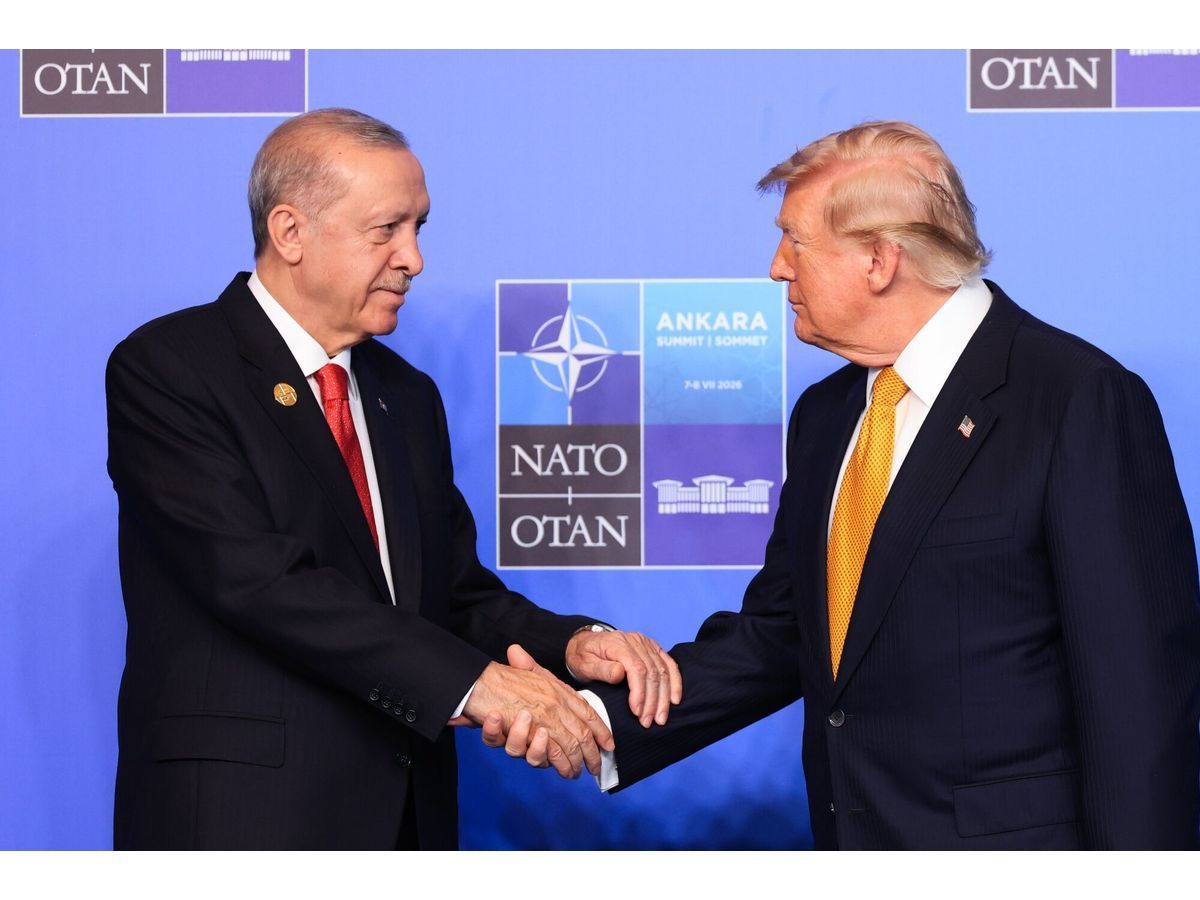
Donald Trump told NATO leaders he was feeling the love at the end of a two-day summit in Ankara. His actions showed a different target for that affection.
Syria's Ahmed Al-Sharaa, a former jihadist, won sanctions relief. Volodymyr Zelenskyy's rehabilitation was rewarded with a deal on air-defense missiles for Ukraine. When Recep Tayyip Erdogan heard through his translator that Turkey might be in line for the F-35 fighter jets he has long craved, he gave a jubilant thumbs up.
Albania, one of NATO's poorest members, found its expectations of hosting the next summit in 2027 were parked, partly to reduce tensions over its struggle to meet the alliance's spending goals.
“Sometimes you get along with the toughest people,” Trump said Tuesday as he greeted the Turkish president. “And sometimes you don't get along with the weakest.” That quote, reported by Bloomberg, captured the thread running through a summit shaped by the US president's shifting moods.
European officials had pinned hopes on Trump's chemistry with Erdogan to smooth over alliance tensions. Yet signs of awkwardness appeared early. Italy's Giorgia Meloni arrived last to the leaders' dinner, testily insisting her relationship with Trump was “cordial.” France's Emmanuel Macron, wearing aviator sunglasses throughout the summit, tried to kiss the Turkish first lady's outstretched hand only to have it snatched away. A banquet of slow-cooked beef ribs and baklava masked a harsher reality away from the presidential palace, where inflation remains above 30% and groceries have become a stretch for many. The booze-free dinner seemed geared to please the teetotal American president and almost no one else.
Canada's Mark Carney struck an optimistic note Wednesday, telling reporters Trump had seemed in a “good mood” after overnight US strikes on Iran.
The summit exposed a structural risk for NATO's collective defense framework. Trump's preference for strongmen undermines the principle of mutual commitment among all 32 members. The sidelining of weaker members – even symbolic moves like parking Albania's summit hosting – signals that US support is conditional on bilateral strength, not shared values.
The pattern raises questions about long-term alliance cohesion. If smaller members see less value in NATO, the 2028 defense spending target of 2% of GDP could become harder to enforce. Albania's hosting was parked partly over its spending shortfall. That decision reduces short-term tension but reinforces a tiered alliance where the US president rewards loyalty with hardware and punishes weakness with snubs.