NATO plans drone swarm network along Russia border, keeps humans on trigger
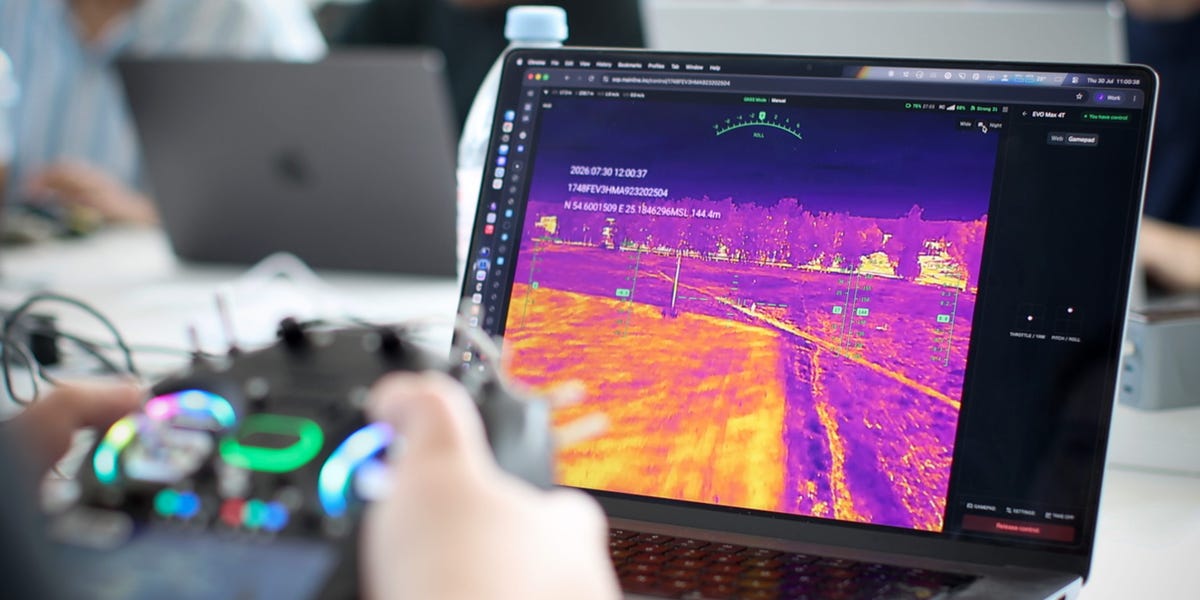
NATO's Eastern Flank Deterrence Initiative will automate drone flight while keeping humans on targeting decisions. The network, already tested in combat, stretches from Finland to the Black Sea.
NATO is building a digital battlespace network along its eastern flank that will use thousands of drones, sensors, satellites, and artificial intelligence to detect and help repel a potential Russian attack. The system, called the Eastern Flank Deterrence Initiative, is designed to automate the "most boring parts of flying" – loitering and surveillance – while keeping human operators in charge of targeting decisions.
US Army Maj. Ben Schiff, the primary architect of EFDI's data backbone, said the goal is to reverse the current model where pilots control every aspect of drone flight. "So the humans are deciding what the drone does, they don't necessarily need to take the action of flying it because we don't have a million pilots," Schiff told BILD. "We can't fly a million drones at the same time."
The approach echoes what Ukraine is doing on the battlefield. Ukrainian defense companies are integrating AI into drone operations at varying levels – target detection, identification, terminal guidance – and multiple firms and commanders have stressed that humans still make the final call on what gets struck. Wild Hornets, manufacturer of the Sting interceptor drone, told Business Insider in May that operators must keep adapting as Russia changes its tactics.
EFDI is intended to move NATO beyond a linear "kill chain" to a decentralized "kill web," where data from any sensor can be passed rapidly to any weapons system. Schiff described it as a "data highway" that lets allied nations plug their existing systems into a shared environment without custom integrations. The concept has already been tested in combat: US forces in the Middle East used the same data-sharing architecture to coordinate the first American kill of an Iranian Shahed drone in Kuwait using the Merops interceptor system.
Andrii Hrytseniuk, CEO of the Ukrainian state-backed innovation platform Brave1, told Business Insider that more than 200 local companies were developing AI-based components for drones, missiles, radars, and other systems as of this spring. Ukraine's defense ministry launched a first-of-its-kind program in March to incorporate AI into defense processes.
US Army officers stressed that NATO is learning from Ukraine's experience but not copying it. "We're not copying Ukraine," said Capt. Ronan Sefton. "We're learning from Ukraine."
Ground robots are also increasingly replacing soldiers in front-line logistics roles that have become extremely deadly in Ukraine. Grek, a robot company commander with the 21st Unmanned Systems "Kraken" Regiment, who requested to be identified only by his call sign, said the goal is to "allow people to focus on the tasks where human judgment has the greatest value."
NATO's EFDI network will stretch from northern Finland down to the Black Sea, covering the alliance's borders with Russia and Belarus. Conventional forces – tanks, fighter jets, artillery – remain the backbone of defense. The drone and sensor network is designed as the first line of detection and response.
Maj. Matt Blubaugh, a spokesperson for US Army Europe and Africa, said a drone's effectiveness depends on how well it integrates into the broader operational ecosystem. "The value of a drone, sensor, or other capability is not determined solely by its individual performance," he said.
Drafted by a large language model from the source reporting linked above, then screened by automated publishing checks. It is not read by a journalist before publication. Some articles cite our Alpha Score. Verify prices and figures against the original source. Educational coverage, not personalized advice.