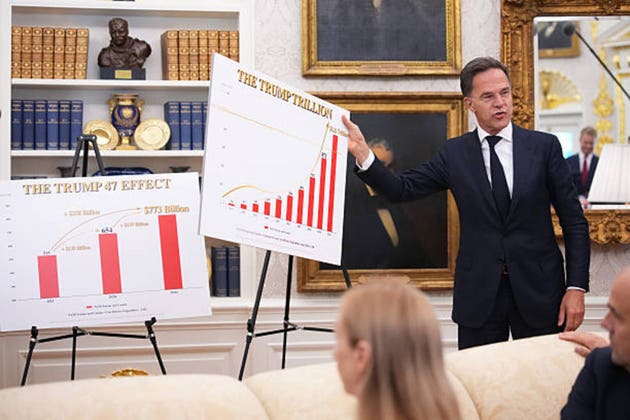
NATO Secretary General Mark Rutte walked into the White House with a number that President Donald Trump likes: the "Trump Trillion." That is Rutte's label for the cumulative increase in European defense spending since Trump first pushed allies to hit the 2% of GDP target. The meeting came as US-Europe tensions simmer on two fronts – Iran policy and troop commitments in Europe.
Rutte told reporters afterward that European allies have added roughly $600 billion in defense outlays since 2014, with more on the way. The figure is central to his argument that NATO is pulling its weight, a message aimed directly at a president who has threatened to pull US forces out of Europe if allies do not pay up.
The Iran piece complicates the picture. The Trump administration wants NATO partners to join a maximum-pressure campaign. Several European capitals want to preserve the 2015 nuclear deal's diplomatic channels. That split could slow the defense-spending momentum if transatlantic trust erodes.
On troop commitments, the US maintains roughly 100,000 service members in Europe. Trump has signaled he expects European nations to cover more of those costs or accept a drawdown. Rutte's response: European defense budgets are rising faster than US inflation, and the trend line points to continued increases through the decade.
For markets, the read is less about a single meeting and more about the trajectory. European defense contractors have already repriced on higher budget expectations. The question is whether the US-Europe rift widens enough to slow procurement programs that depend on NATO interoperability. A full break would hurt – but a managed tension with higher European spending could benefit both US and European defense firms over time.
The White House meeting produced no new commitments. Rutte and Trump agreed to keep talking. The next concrete marker is the NATO summit in June, where allies will report updated spending plans. Until then, the Trump Trillion remains a sales pitch – one that Rutte hopes gains traction in the Oval Office.