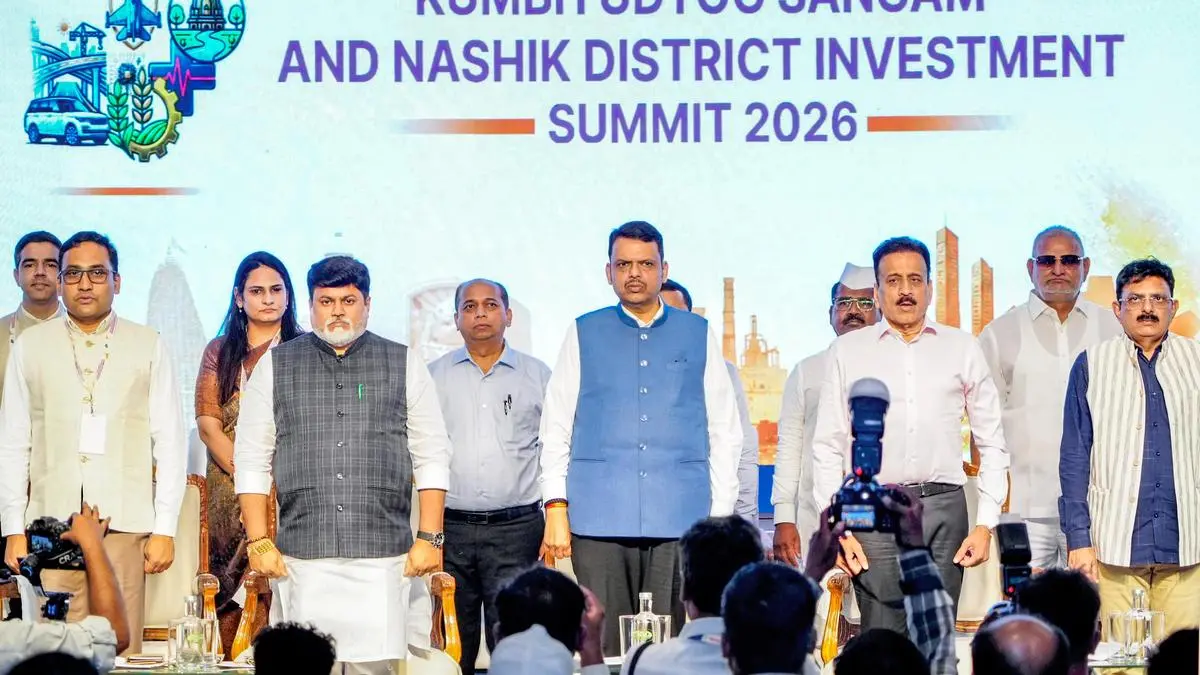
The Maharashtra government has officially designated Nashik as a primary industrial growth engine, anchored by a ₹33,000 crore infrastructure investment program tied to the upcoming Simhastha Kumbh Mela. Chief Minister Devendra Fadnavis confirmed the allocation during the 'Kumbh Udyog Sangam and Nashik District Investment Summit 2026' on May 6, 2026. This capital injection is intended to serve as a long-term catalyst for regional development, with the government projecting the creation of a ₹3 lakh crore economy in the district over the next decade.
Infrastructure as an Industrial Magnet
The core of the state's strategy involves leveraging the Kumbh Mela—which runs from October 31, 2026, to July 24, 2028—to accelerate permanent infrastructure upgrades. Unlike traditional event-based spending, the current plan prioritizes the construction of ring roads, dry ports, and expanded airport and railway connectivity. These assets are designed to lower logistics costs for the manufacturing sector, effectively decentralizing industrial activity away from the saturated Mumbai and Pune corridors. The government's shift toward a balanced regional development model aims to utilize the specific capabilities of North Maharashtra, including Ahilyanagar, Jalgaon, Dhule, and Nandurbar.
Capital Commitment and Sectoral Exposure
During the summit, the state secured Memorandums of Understanding (MoUs) totaling ₹13,190 crore, which are expected to generate approximately 32,000 jobs. These commitments follow a broader trend of capital inflow into the district, with ₹31,945 crore already invested in Nashik over the last three years. The implementation rate for these prior agreements stands at 77 percent, suggesting a higher-than-average conversion rate for state-sponsored industrial pacts. The investment mix is diversified across electronics, agricultural services, automobiles, and textiles.
For investors, the primary read-through is the increased demand for industrial land and utility services in the Nashik corridor. The presence of major automotive players, such as Mahindra & Mahindra, indicates that the region is already being integrated into existing supply chains. The government’s 'Maitri' portal, which consolidates regulatory permits, has processed over 300,000 applications since February 2025, signaling a reduction in administrative friction for incoming capital.
Assessing the Execution Risk
The success of this regional pivot depends on the state's ability to maintain the momentum of the Maitri cell and the timely completion of the proposed infrastructure projects. While the government claims that 77 percent of previous MoUs have been realized, the transition from a memorandum to operational capacity remains the primary hurdle for industrial expansion. Investors should monitor the progress of land acquisition and the actual deployment of the ₹33,000 crore budget, as these are the leading indicators for whether Nashik can sustain its status as an industrial magnet beyond the 2028 conclusion of the Kumbh Mela.
Broader Industrial Context
This initiative is part of a larger push to elevate Maharashtra to a trillion-dollar economy. By focusing on smaller-scale industries alongside large-scale manufacturing, the state is attempting to build a more resilient industrial base. The integration of start-ups, which now number over 30,000 in the state, into the agricultural and service sectors is a specific focus area. For those tracking industrial trends, the shift in Nashik mirrors the development patterns seen in Chhatrapati Sambhajinagar and Jalna, where the government is also prioritizing infrastructure to attract large-scale manufacturing.
While the industrial outlook for the region is strengthening, broader macroeconomic factors remain relevant. For context on how large-cap industrials navigate regional expansion and capital allocation, see our UPS stock page. The current Alpha Score for UPS is 57/100, reflecting a moderate outlook within the broader industrial sector. As Nashik transitions into a new industrial hub, the ability of local firms to leverage these new logistics and transport facilities will determine the long-term viability of the state's regional growth thesis. The next concrete marker will be the actualization of the ₹13,190 crore in new MoUs signed at the summit, as these will provide the first real-world test of the region's improved investment climate.