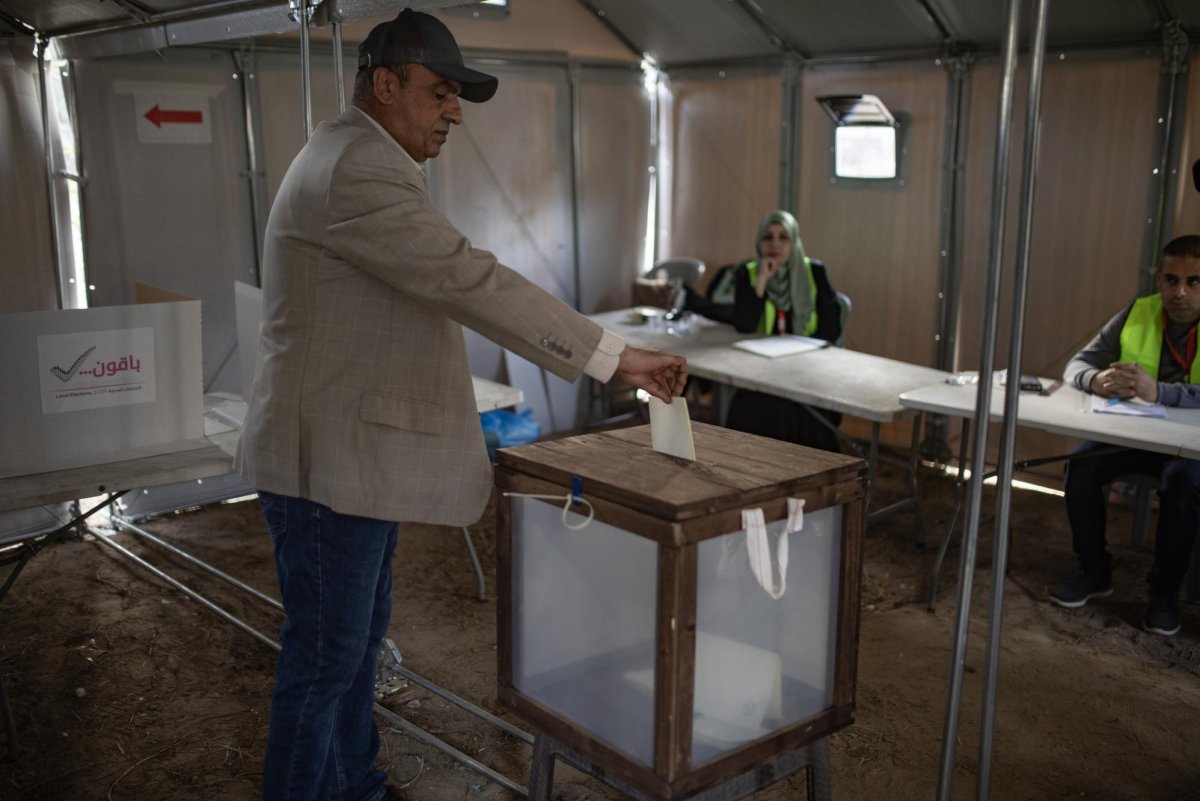
The commencement of municipal elections across the Gaza Strip and the West Bank marks a significant departure from the political stagnation that has characterized the region for two decades. By facilitating the first local voting process in Gaza in twenty years, authorities have initiated a shift in the administrative landscape that carries implications for regional stability and infrastructure management. The return to the ballot box serves as a primary indicator of how local governance may evolve in the coming months.
Administrative Continuity and Local Governance
The election process focuses on municipal leadership, which is responsible for the distribution of essential services, urban planning, and local economic oversight. For investors and observers of regional stability, the transition from appointed or stagnant leadership to elected councils represents a potential change in how public funds are allocated and how local projects are prioritized. The ability of these newly elected bodies to maintain consistent service delivery will determine the long-term viability of this electoral cycle.
This development creates a new baseline for local governance that could influence how international aid and development capital are deployed. Stability in municipal administration is often a prerequisite for sustained economic activity, and the successful completion of these elections provides a framework for future administrative accountability. The focus now shifts to the certification of results and the subsequent transition of power within the affected municipalities.
Regional Economic and Infrastructure Impact
The integration of municipal elections across both Gaza and the West Bank suggests a unified approach to local administrative reform. This alignment is critical for the coordination of cross-border infrastructure projects and the management of shared resources. When local governments operate under a clear mandate from the electorate, the predictability of regulatory environments tends to improve, which is a necessary component for any long-term economic development strategy.
AlphaScala data currently tracks various sectors that may be indirectly influenced by regional stability, including technology and consumer cyclicals. For instance, companies like Fiserv Inc., ON Semiconductor Corporation, and Amer Sports, Inc. maintain diverse operational footprints that are sensitive to shifts in geopolitical risk and regional trade conditions. While these companies operate on a global scale, the broader stock market analysis often accounts for how localized political transitions affect supply chain logistics and regional consumer demand.
The Path to Institutional Stability
The next concrete marker for this transition will be the formal seating of the newly elected municipal councils and the subsequent release of their initial budget and development agendas. Observers should monitor the degree of cooperation between these local bodies and central authorities, as this relationship will dictate the effectiveness of the new administration. The ability to execute on basic municipal functions will serve as the primary test for the legitimacy and operational capacity of these elected officials. Future updates regarding the implementation of local policy will provide further clarity on whether this electoral event leads to sustained institutional reform or remains a singular administrative adjustment.