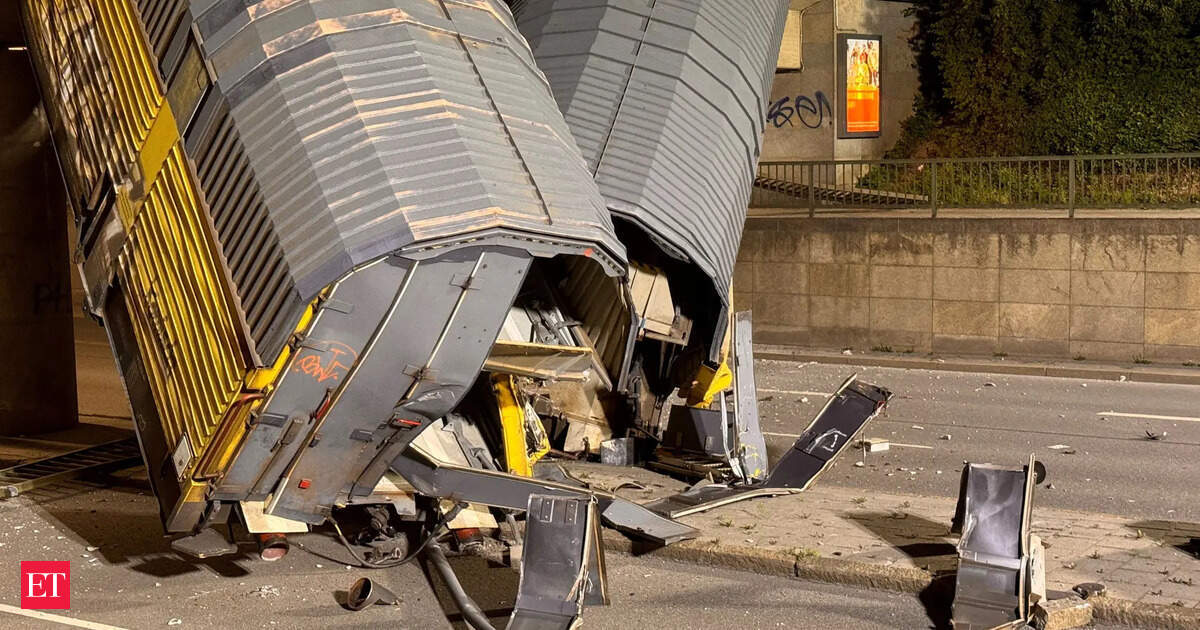
A fatal freight train collision shut down Munich's main rail corridor for 96 hours, threatening just-in-time delivery at BMW's plant and triggering regulatory scrutiny that could shape Deutsche Bahn's 2026 capital plan.
A freight train collision outside Munich Hauptbahnhof early Tuesday left one crew member dead and shut down Germany's busiest rail corridor through Bavaria, rail operator Deutsche Bahn confirmed.
The crash involved two DB Cargo freight trains on the main line near the Allach district around 3:30 a.m. local time. One locomotive jackknifed into an adjacent track, spilling a small quantity of industrial lubricant. No hazardous materials were released, the company said. The deceased was the driver of the lead locomotive, a DB spokesman said. Two other crew members were treated for minor injuries.
Authorities closed all six mainline tracks between Munich and Augsburg, a section that handles roughly 60% of the city's cross-Alpine freight traffic. DB estimates the closure will last 96 hours for track replacement and signal testing.
Supply chain exposure starts with the automotive sector. BMW Group maintains a major assembly plant in Munich and relies on just-in-time parts delivery via rail from suppliers in Hungary and Slovakia. A 96-hour closure of the Munich–Augsburg line forces truck substitution for up to 35,000 tons of components daily, according to a Deutsche Bahn freight logistics official who briefed reporters Tuesday afternoon. The plant has contingency stock covering roughly 48 hours of production, meaning Thursday is the inflection point for assembly-line stoppages.
Volkswagen Group also routes finished vehicles from its Ingolstadt plant through the Munich hub for export to Italy and the Balkans. The closure redirects those trains through Nuremberg, adding 18 to 24 hours to transit times.
Deutsche Bahn faces two financial risks. The first is compensation claims from freight customers under standard railway operating agreements, which trigger payments after 72 hours of service failure. The second is regulatory exposure from the German Federal Railway Authority, which launched a mandatory safety investigation. A preliminary report is due within 30 days. Any finding of track maintenance failures or signal-system errors could trigger fines or mandated capital upgrades on the congested Munich–Augsburg stretch, which DB had already flagged for capacity investment in its 2026 infrastructure plan.
What lowers the risk from a credit perspective is Deutsche Bahn's state ownership. The German government holds 100% of the company, so the direct financial impact of the closure – estimated by analysts at roughly €25 million in direct costs and lost revenue – is manageable against DB's €6 billion 2026 EBITDA target. The investigation, not the closure, is the more consequential variable.
Insurance recovery for the rolling stock damage is standard commercial rail insurance. Lloyd's market sources said claims are unlikely to exceed €15 million given the age of the locomotives involved.
Investors tracking European rail exposure should focus on the investigation timeline. German Federal Railway Authority requires a preliminary safety assessment within 30 days, with a full report typically within 120 days. A finding of systemic track-side signal failures would pressure DB's capital spending toward the high end of its 2026–2028 €165 billion infrastructure budget.
The Augsburg alternate route absorbs about 60% of diverted freight capacity. The remaining 40% moved to road, adding roughly 1,500 truck trips per day on the A8 autobahn for the duration of the closure.
Prepared with AlphaScala research tooling and grounded in primary market data: live prices, fundamentals, SEC filings, hedge-fund holdings, and insider activity. Each story is checked against AlphaScala publishing rules before release. Educational coverage, not personalized advice.