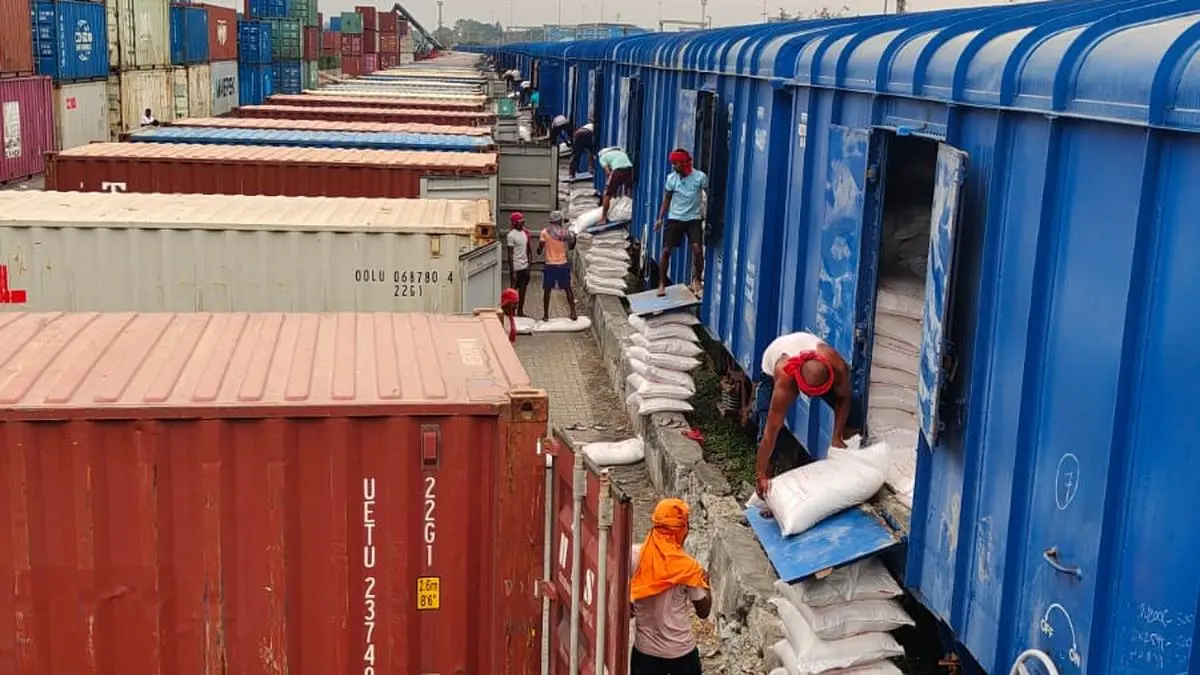
The Catalyst: CONCOR's BCN Wagon Revival at Tondiarpet
Nearly 2,700 tonnes of rice from Andhra Pradesh are moving to China through a rail-road-sea chain via Chennai Port. The consignment, sourced from the Samalkot and Tanuku regions, was loaded in 42 BCN wagons (bogie covered wagon with pneumatic brakes) and hauled 575 km by rail to CONCOR's ICD Tondiarpet. Rice bags were directly stuffed into 105 TEU containers and trucked 5 km to the port for shipment.
This operation revives export cargo handling through BCN wagons at the Container Corporation of India (CONCOR) inland container depot after a five-year gap. The direct-stuffing method cut logistics costs by about 40% compared with the conventional road-sea route, according to a rice exporter associated with the shipment.
Why This Matters Now: Rice Export Restraints Are Gone
Rice export restrictions imposed during 2022-23 to contain domestic food inflation had reduced bulk cargo movements, making BCN wagon operations less viable. Record harvests improved domestic stocks. The government gradually relaxed and by 2025 had lifted export curbs entirely. That policy shift opens the door for sustained volume growth in overseas rice shipments.
The timing is critical. Indian rice exporters now face a choice between road and rail for moving bulk cargo to ports. CONCOR's revived multimodal option provides a cost advantage that can directly improve exporter margins and increase ICD utilisation.
The Mechanism: Direct Stuffing Cuts Costs 40%
Traditional Process vs. the New Sequence
Traditional process: Cargo arrives in BCN wagons, is unloaded at railway goods sheds, trucked to warehouses, containerised, then trucked again to the port. That cycle takes three to four days with multiple handling stages and higher pilferage risk.
New process at ICD Tondiarpet:
- Rail wagons arrive at the ICD
- Rice bags are directly stuffed into sea containers on-site
- Containers are trucked 5 km to Chennai Port
- Entire transfer completes within one day
Practical rule: The direct-stuffing method eliminates two handling steps and one intermediate road leg. Those avoided steps drive the 40% cost reduction.
The Role of BCN Wagons
BCN wagons are covered, pneumatic-braked railcars designed for bulk commodities like grain. CONCOR's ability to route BCN wagons directly into the ICD – rather than to a separate goods shed – is the infrastructure enabler. Without that ICD capability, direct stuffing cannot happen.
Sector Read-Through: CONCOR and Indian Logistics
CONCOR's ICD Network Benefits
CONCOR operates multiple ICDs across India. This revival signals that policy normalisation is translating into real cargo flows. The Tondiarpet ICD – strategically located near Chennai Port – can now attract bulk rice exports that previously moved exclusively by road.
Table: Old vs new logistics for Andhra rice exports
| Stage | Traditional road-sea route | Multimodal rail-road-sea route |
|---|
| Origin to port | Truck 575 km | Rail 575 km to ICD, then truck 5 km |
| Handling steps | Unload at goods shed, store, containerise, load | Direct stuffing at ICD |
| Total transit time | 3-4 days | 1 day |
| Logistics cost vs baseline | 100% (baseline) | ~60% (40% reduction) |
| Pilferage risk | Higher (multiple moves) | Lower (single enclosure) |
Why Chennai Over Visakhapatnam
Visakhapatnam is geographically closer to Samalkot. Exporters chose Chennai because of better container availability, more competitive ocean freight rates, and superior vessel connectivity. That choice underscores the importance of container logistics infrastructure and shipping line deployment – not just proximity.
Indian Agriculture Export Trends
India is the world's largest rice exporter. The lifting of export curbs by 2025, combined with record domestic harvests, means supply is ample. The cost reduction from this multimodal route gives Indian rice a pricing advantage in markets like China, where demand remains steady.
Risk to watch: The route's viability depends on sustained container availability at Chennai Port. If global container shortages return – as seen during 2021-22 – the cost advantage could erode.
Decision Point: What Confirms Sustained Volume Growth
For traders and investors tracking CONCOR stock and the broader Indian logistics sector, the revival is a positive signal. One consignment does not make a trend. The question is whether BCN wagon volumes will scale.
What confirms the thesis
- Repeat shipments through ICD Tondiarpet at similar or higher volumes over the next two quarters
- Expansion of direct-stuffing operations to other commodities like wheat, soybeans, or fertilisers
- CONCOR management guidance citing increased ICD utilisation
What weakens the thesis
- Policy reversal on rice exports (unlikely given current surplus)
- Infrastructure bottlenecks at Chennai Port (congestion, labour issues)
- A shift by exporters back to road if rail rates rise or container availability drops
Bottom line for traders: The 40% cost reduction is a structural advantage that should attract volume. CONCOR's ICD Tondiarpet is now a logistics bottleneck-breaker for southern Indian rice exports. The catalyst is real. Execution – and consistent container supply – will determine whether this revival becomes a growth trend or a one-off.
For a broader view of how logistics stocks are performing, see AlphaScala's stock market analysis.
AlphaScala rates CONCOR with an Alpha Score of 43/100 (Mixed) in the Utilities sector. The score reflects stable fundamentals with limited near-term catalysts beyond the revival of bulk cargo handling.