Madhya Pradesh suspends e-token fertilizer system and agrees to buy 60% of summer moong, ending a farmer protest. Policy gaps remain as the state faces buying nearly 11 lt.
The Madhya Pradesh government suspended its e-token system for fertiliser distribution and agreed to buy 60% of the summer moong crop, ending a farmer protest that reached Bhopal on July 28. Farmers had marched from Narmadapuram, demanding higher procurement and an end to the digital allocation system for urea and DAP.
The protest highlighted policy gaps and the risk of pushing reforms in the farm sector without addressing ground-level friction, experts said. The state's decision to raise procurement from the earlier 25% to 60% came after Union Agriculture Minister Shivraj Singh Chouhan wrote to Chief Minister Mohan Yadav on July 29, pointing out that the Centre had already approved procurement of up to 4.55 lakh tonnes (lt) of summer moong for Madhya Pradesh under the Price Support Scheme. That accounts for 87% of the total quantity approved nationwide under the PM-AASHA scheme. The state had bought only 60,000 tonnes so far.
Chouhan noted that under PM-AASHA guidelines, only 25% of production can be procured at minimum support prices. Any quantity above that is the state's sole responsibility. A former agriculture secretary of Madhya Pradesh said gaps have to be corrected when they emerge. States cannot be blamed every time, the former official said. Under PM-AASHA, the Centre decides which agencies act as central nodal agencies to procure crops. Those agencies are solely responsible for the operation. The former official suggested that the Centre should nominate state agencies independently and hold them accountable for delays or non-procurement.
Madhya Pradesh is the largest producer of moong in the country, with more than 40% of national output. In the 2025-26 summer (Zaid) season, the state produced 18.18 lt out of a total 18.39 lt of summer moong. National production stands at 44.92 lt. If the state buys 60% of its summer moong, it would need to purchase nearly 11 lt.
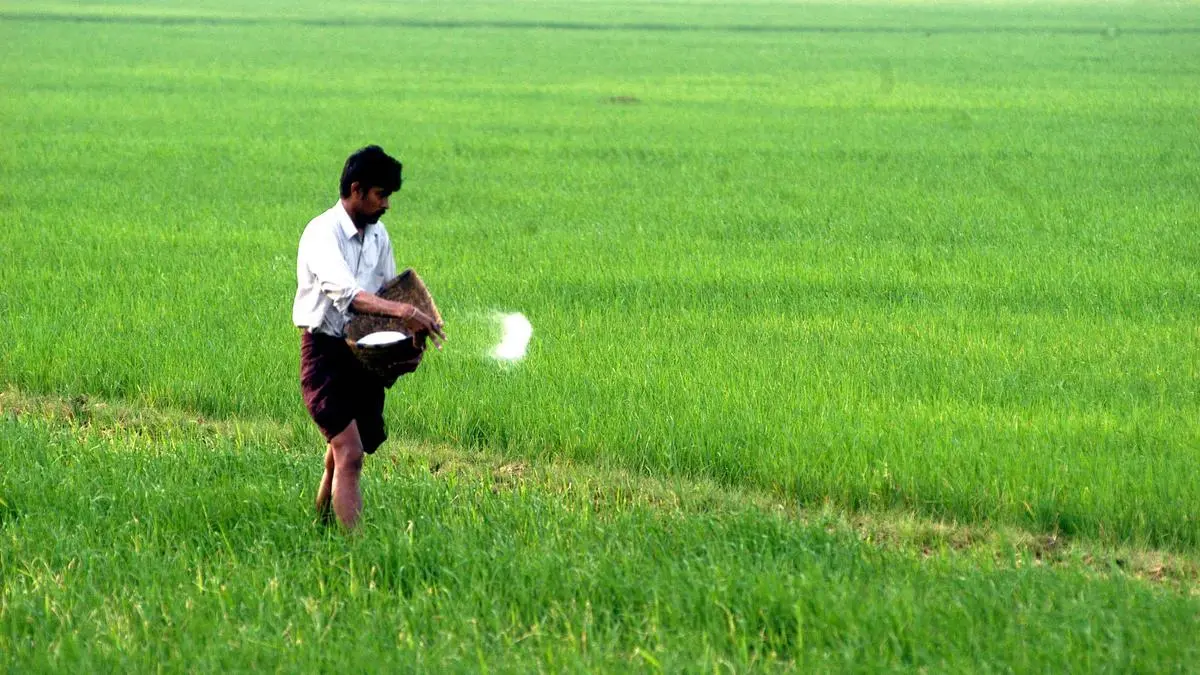
The e-token system was designed to curb black marketing and prevent long queues at retail outlets. Farmers were expected to register using Aadhaar or other approved ID, mention land records, and book a date and time slot at cooperative societies based on availability. Farmer leader Kedar Sirohi, who was part of the protest, said the government was deciding what nutrients and how much quantity farmers should use without taking responsibility for output or yield. "When we wanted to buy DAP, they were denying us SSP or vice versa. When we wanted to buy urea, the government was forcefully selling other fertilisers with it in the name of balanced use," Sirohi said.
Industry leaders are divided on the suspension. A manufacturer of micronutrient supported the move. A top official at a leading fertiliser company welcomed it, saying the system "was supposed to be stopped." The state's e-Vikas portal described the system as a way to "ensure that fertiliser supply aligns with actual requirements, thereby fostering efficiency, transparency, and accountability."
State Agriculture Minister Aidal Singh Kansana said a committee would be formed to examine complaints and practical difficulties relating to the e-token system. The committee will recommend improvements. Until it submits its recommendations and necessary changes are carried out, the e-token system remains suspended.
Prepared with AlphaScala editorial tooling from the source reporting linked above. Indexable analysis may include a cited Alpha Score value. Publishing checks screen each story before release. Educational coverage, not personalized advice.