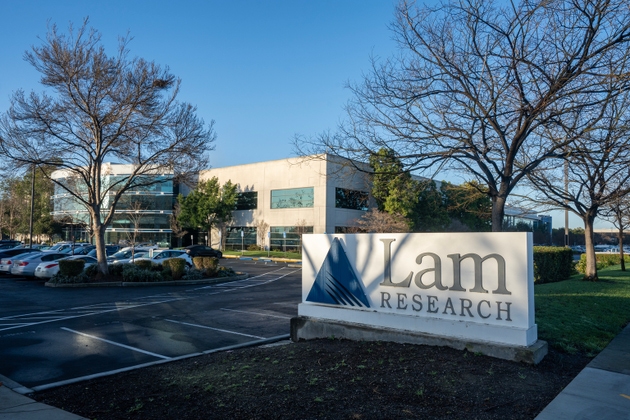
Morgan Stanley dual-rated the semiconductor equipment sector Tuesday, upgrading **Lam Research (LRCX) to Overweight while cutting Applied Materials (AMAT) to Equal-weight. The move is a direct bet on divergence within the same industry cycle.
The surface read is that one company has stronger near-term product cycles. The better market read involves valuation and the shape of equipment spending. Applied Materials carries broader exposure to memory and mature-node logic, making it more vulnerable to demand normalization. Lam Research concentrates on etching and deposition tools for advanced logic and NAND, positioning it to capture the next wave of capital spending tied to high-bandwidth memory and AI infrastructure.
Why Morgan Stanley Sees a Split
An upgrade from Equal-weight to Overweight implies Lam Research can outperform the broader market over the next 12 to 18 months. The cut from Overweight to Equal-weight on Applied Materials suggests the stock already prices in most of its upside. Morgan Stanley raised its price target on LRCX, signaling order momentum rather than just a narrative shift. For those tracking the equipment sector, the call establishes a clean pair trade: long LRCX, neutral AMAT.
The divergence hinges on where chipmakers are allocating wafer fab equipment budgets. TSMC and Samsung are spending heavily on nodes that require Lam’s etching tools. Intel’s foundry ramp also benefits Lam more directly. Applied Materials participates broadly in both leading-edge and trailing-edge spending. That breadth also means the company has more exposure to segments where demand is softening.
The Sector Readthrough: Not a Uniform Recovery
The naive interpretation is that an upgrade and a cut on two peers cancel out for the equipment sector. The better interpretation is that Morgan Stanley is signaling the recovery is uneven – in favor of advanced-node toolmakers over broad-based suppliers. Confirming evidence would be a beat on order guidance from Lam Research in the next report, while Applied Materials delivers in-line results with a cautious outlook. Weakening the thesis would be a sharp order miss from Lam or an upside surprise in AMAT’s foundry and logic revenue.
Sector-level checks also matter. A third-party data point like the monthly SEMI book-to-bill ratio or TSMC’s capex announcements will provide real-world validation. If industry billings start to decelerate, Lam Research’s concentrated exposure cuts both ways: it could fall harder if the AI spending cycle peaks.
AlphaScala Scores: Narrow Gap, Different Trajectories
AlphaScala’s proprietary rating system assigns Applied Materials an Alpha Score of 68 out of 100, labeled Moderate in the Technology sector. Lam Research scores 73 out of 100, also Moderate. The 5-point gap is small. The analyst change adds weight to LRCX’s higher score. An upgrade from a major bank combined with an above-median Alpha Score can create a favorable setup for momentum. The Equal-weight call on AMAT alongside a 68 suggests the stock already reflects consensus expectations.
Review both stock profiles:
The Next Check: Earnings and Equipment Data
The immediate test for the divergence thesis will be the next earnings reports from both companies, likely within 6 to 8 weeks. Order guidance is the key confirm. Beyond earnings, the November SEMI equipment billings release will give a first look at whether industry spending is accelerating or plateauing. An external risk is a trade escalation involving chip export controls, which would affect both names similarly.
For now, the LRCX-AMAT pair trade is the cleanest expression of the analyst split. Confirmation will come from actual orders, not ratings. The next industry shipment data from the Semiconductor Equipment and Materials International group will provide the first real-world check on whether Morgan Stanley’s call is ahead of the curve or behind it.