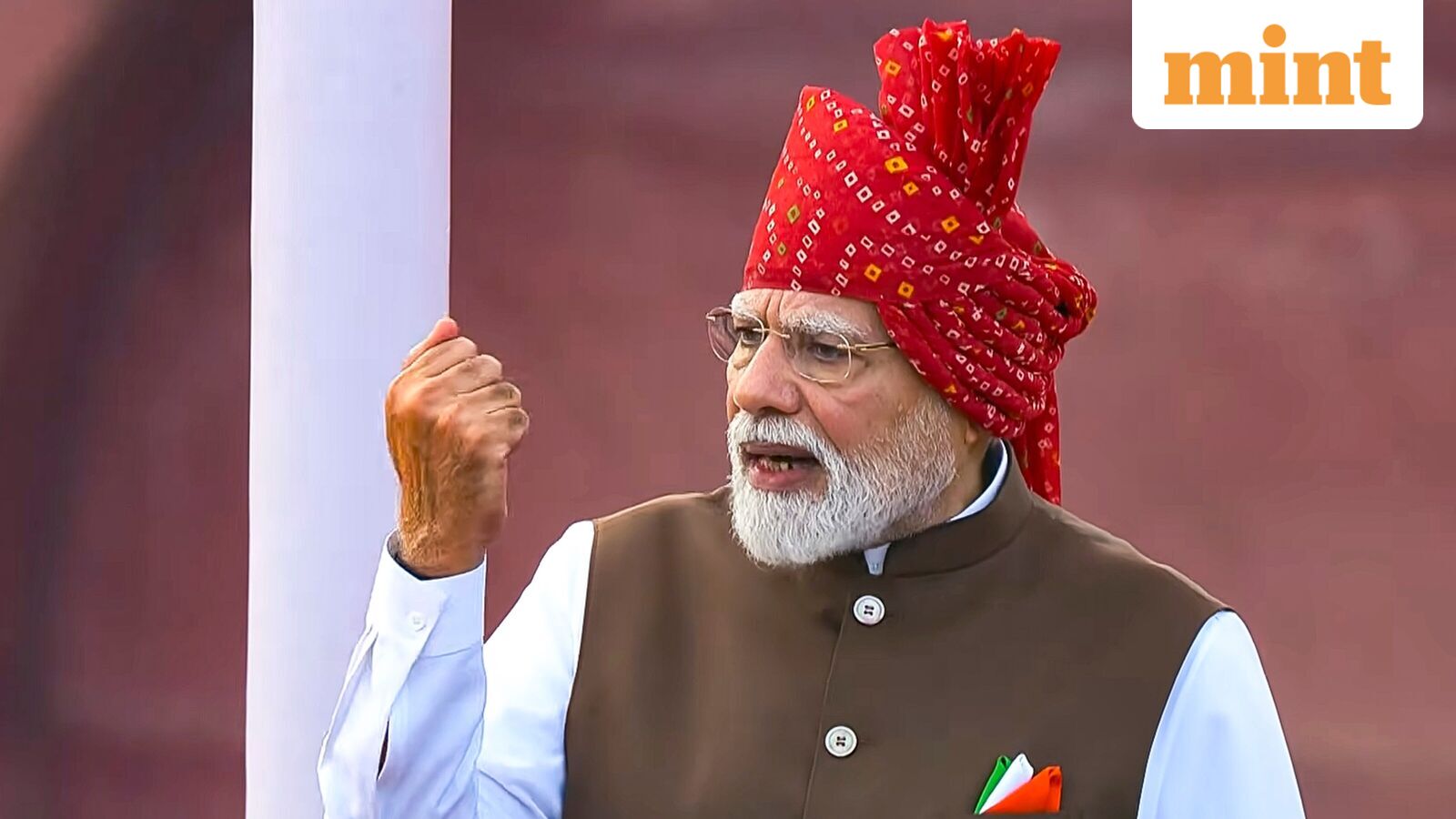
Prime Minister Narendra Modi used his Independence Day speech to lay out seven policy priorities for transforming India into a developed country – or "Viksit Bharat" – by 2047. He called the list the "sapta dhaara," a reference to seven ancient rivers whose waters were said to hold the vital energy for prosperity.
The seven streams in focus are domestic manufacturing, agriculture and food processing, technology, the Gati Shakti infrastructure programme, self-reliance in defence, green and blue economies, and soft power.
Each one is already part of the government's policy framework. The "Make in India" manufacturing push dates to Modi's first term. Gati Shakti, an overhaul of ports, airports, roads and rail logistics, was launched in 2021. Grouping all seven into a single priority list in an Independence Day address signals where public spending and regulatory attention will concentrate over the next two decades, analysts said.
The timing is deliberate. Open markets like America's are retreating behind tariff walls. Globalization is suffering geopolitical reversals. Denial regimes – where technology and supply-chain access become weapons – are taking shape in plain sight, the prime minister argued. Under those conditions, India must rely on itself for the key enablers of its economic emergence.
The same logic applies to national security. Self-reliance in defence reflects the rising cost of neutrality as US-China rivalry deepens.
Technology and innovation made the list because value generation increasingly depends on them. Modi separately announced a plan to train 10 million young Indians in artificial intelligence and a programme to offer free online coaching for competitive exams. Both appear to respond to last month's student protests over a lack of job-ready skills, commentators said.
The green and blue economies – clean energy and marine resources – are on the list because climate action and resource security now overlap with trade competitiveness. Soft power, a broader concept that in India's case often refers to yoga's global reach, sits on the list partly because of its growing use as a diplomatic tool. Analysts debate whether it is amenable to a centralized strategy.
Education did not make the seven-stream list. Modi's AI training and coaching announcements suggest the government sees talent as the necessary tributary for every priority. The long-term goal must be to improve the formal education system, analysts said, noting that third-party coaching should not be needed at all.
The seven streams will shape where public funds flow in the years ahead, the government signalled. Each already has a ministry and a budget line. What changes now is the hierarchy: these seven, grouped together in a prime minister's Independence Day address, sit above any policy aim not named.