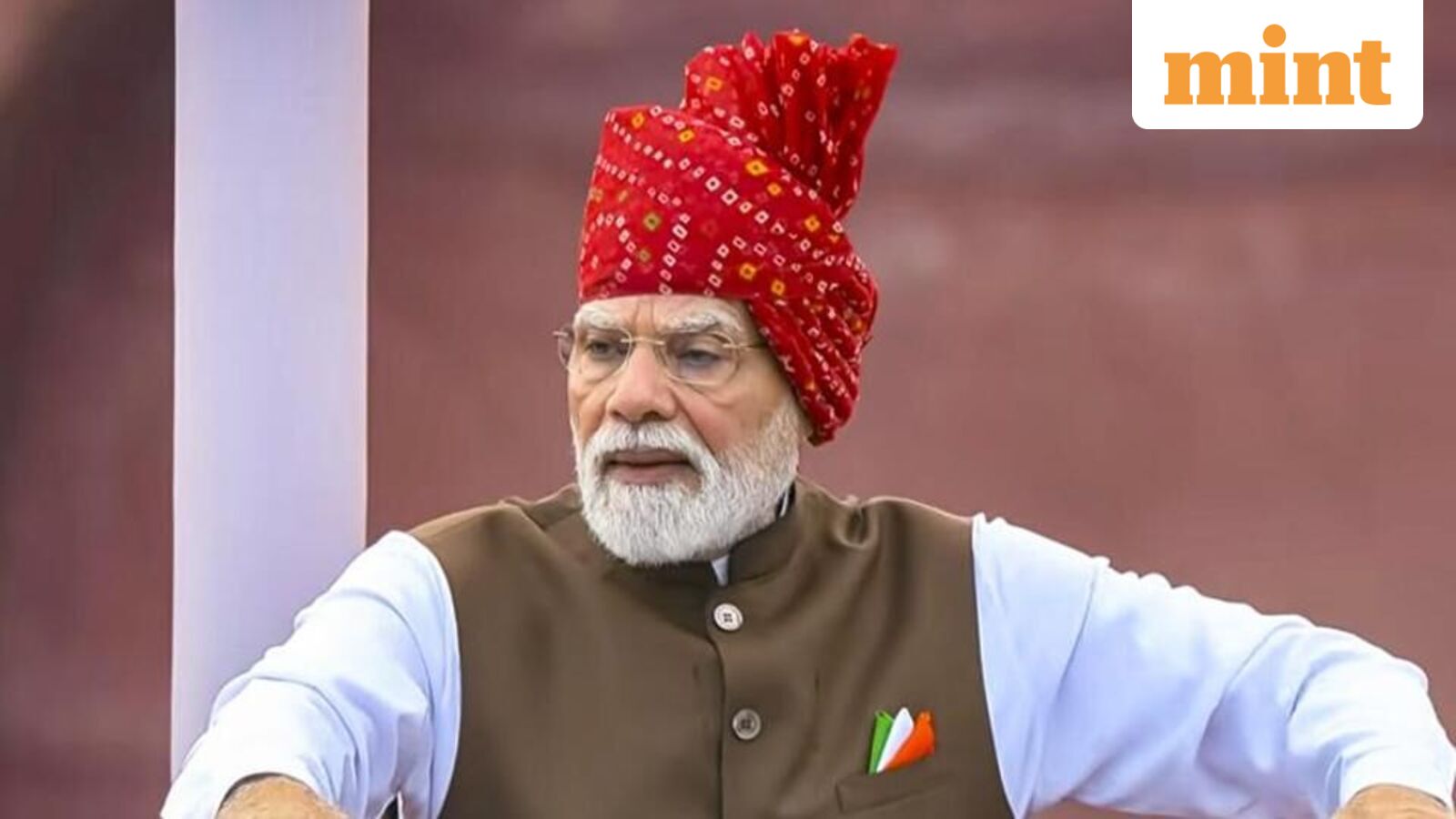
Prime Minister Narendra Modi used his Independence Day speech to announce a slate of programs targeting India's youth, the most market-relevant being a pledge to train 10 million people in artificial intelligence skills. The announcement, delivered from the Red Fort on the 78th Independence Day, sets up a direct catalyst for companies in education technology, skill development, and digital coaching.
The AI skill courses are part of a broader push Modi linked to his Viksit Bharat 2047 goal. He also promised free online coaching for competitive exams and launched a 100-day nationwide campaign called Nasha Mukt Yuva Abhiyan to combat drug addiction. For investors, the AI training target is the clearest with measurable scale: one crore youth represents roughly 1.5% of India's working-age population.
Edtech firms that already operate digital platforms for coding, data science, and AI training stand to capture a portion of that enrollment. The government's track record on similar large-scale skilling missions – such as the Skill India initiative – shows that public procurement of course content and certification can flow to both private providers and state-run institutes. Free coaching for competitive exams could also lift demand for test-prep platforms, though Modi did not specify the delivery mechanism or budget.
Modi framed the skills push as preparation for future jobs in technology and innovation. He did not name any private company or set a timeline beyond the general Viksit Bharat roadmap. The sports talent hunt, targeting children aged 5 to 15, is aimed at qualifying for at least three-fourths of Olympic events by 2036, when India hopes to host the Games. That initiative could benefit sports infrastructure and training companies, but the immediate market angle is on the education side.
The drug-free campaign, while socially significant, carries no direct corporate tie-in. Modi called on families, NGOs, and religious leaders to join the 100-week effort. He said drug addiction was becoming a big challenge for the country and urged collective responsibility.
Analytical claims about which companies win need attribution. The source text provides no named edtech firms, so we cannot say "Byju's will benefit." Instead, the read-through is that the edtech sector broadly has a new demand driver. Companies with existing government contracts for digital learning – such as those working with the National Skill Development Corporation – are the most obvious candidates.
Modi also expressed confidence that India will become a developed nation by 2047. He said the country is moving forward with a new resolve and that the world is compelled to look at India differently when the most populous nation takes a resolution to become developed.
India is a strong contender to host the 2036 Olympics, Modi said. The talent hunt for children aged 5 to 15 will identify prospects in every corner of the country, who will receive special training to become world-class athletes. India already hosts the Khelo India Games, University Games, and other events, and the government operates the Target Olympic Podium Scheme (TOPS).
The timing of the announcements follows student protests that have drawn attention to youth unemployment. Modi's outreach included self-recorded Instagram reels in a selfie style, a shift in communication that signals a focus on engaging younger voters ahead of state elections.
For markets, the concrete takeaway is the 10 million AI training target. The government will need to select partners, design curriculum, and deliver at scale – a process that will create contract opportunities for edtech providers, content creators, and assessment platforms. Investors tracking India's stock market analysis should watch for tenders or policy frameworks that specify which private players can participate. Until then, the speech sets a directional goal without a spending number.
The sports talent hunt will run over several years, with the first qualification cycle likely starting before the 2030 Commonwealth Games, which India also hosts.