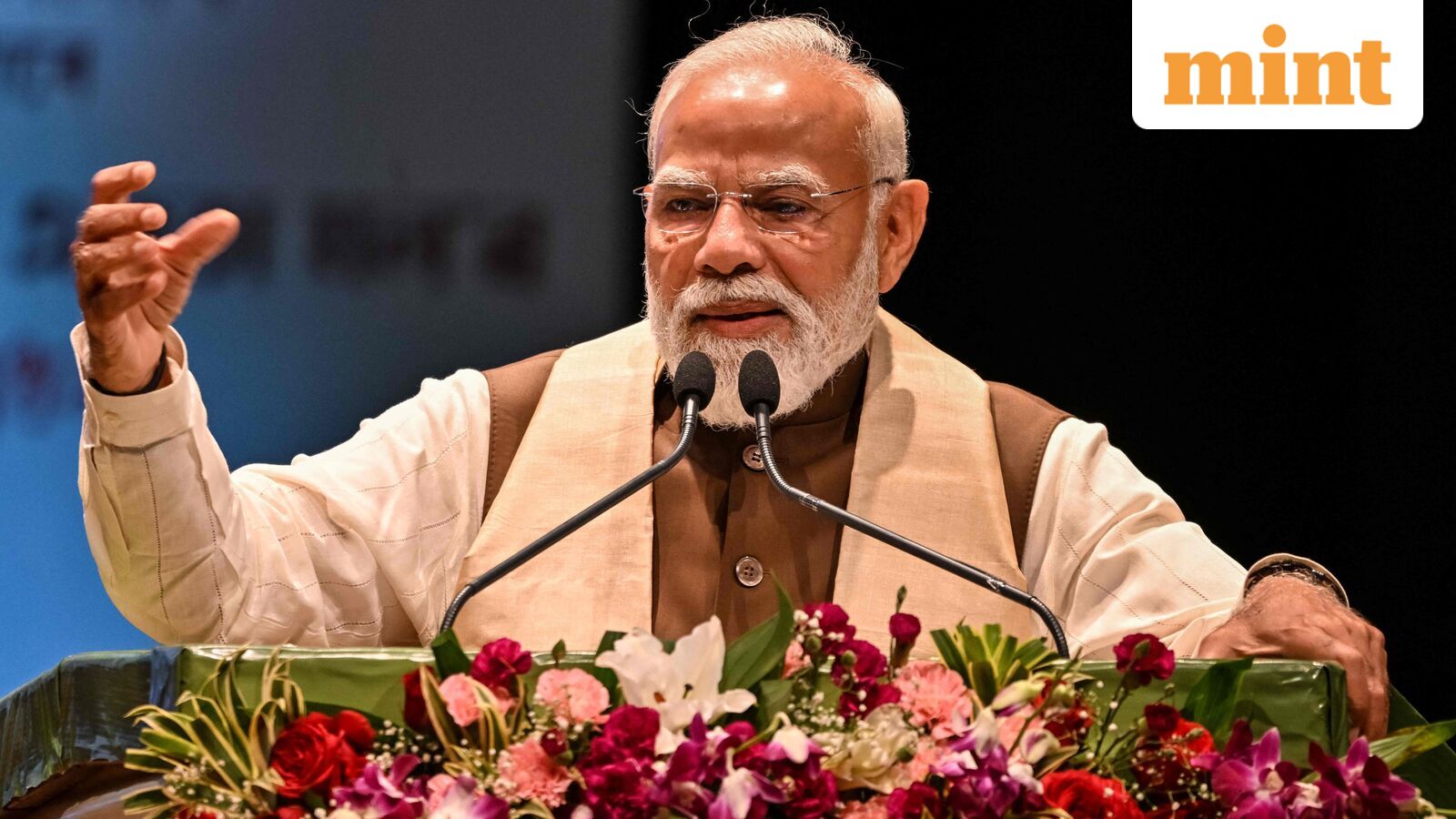
Prime Minister Modi detailed a regulatory shift to a 'permitted unless prohibited' model and highlighted the PLI scheme covering 14 sectors for manufacturing growth.
Prime Minister Narendra Modi said Friday the government is moving its regulatory approach from a "prohibited unless permitted" model to "permitted unless prohibited." The change is meant to reduce compliance barriers for businesses across manufacturing, digital services and infrastructure.
"Our government believes there should be no regulation for doing something that has not been explicitly prohibited under law," Modi said at the ET Global Leaders' Forum.
The prime minister highlighted the Production Linked Incentive (PLI) scheme, which rewards higher output with incentives. He contrasted it with what he called the "Production Linked Punishment" model of earlier governments, which he said increased unemployment. The PLI scheme covers 14 sectors including electronics, automobiles, pharmaceuticals and food processing. Companies in these industries stand to benefit from the incentive structure tied to production volume.
India has the world's cheapest data and is working toward cheaper and better mobile phones, Modi said. That push supports the country's digital economy. Telecom operators, handset makers and data center operators are among those that could gain from lower input costs and rising domestic demand.
Modi also cited reforms in Indian Railways, the Delhi Metro and the Namo Rapid Rail as examples of how India is adapting its infrastructure. He said the government had changed its approach to border infrastructure, treating it as a strength rather than a weakness. These projects signal continued spending on transport and construction, sectors that rely on government contracts and capital outlays.
Global economic conditions remain challenging, the prime minister said. Resources are being "weaponized," he added. India continues to be viewed as a bright spot for growth, Modi said, pointing to the country's political stability and policy continuity.
The government's reform agenda is aimed at sustaining growth momentum while improving governance and ease of living, Modi said. The regulatory shift and production-linked incentives are expected to attract investment and boost manufacturing output over the coming years, the prime minister indicated.
Prepared with AlphaScala editorial tooling from the source reporting linked above. Indexable analysis may include a cited Alpha Score value. Publishing checks screen each story before release. Educational coverage, not personalized advice.