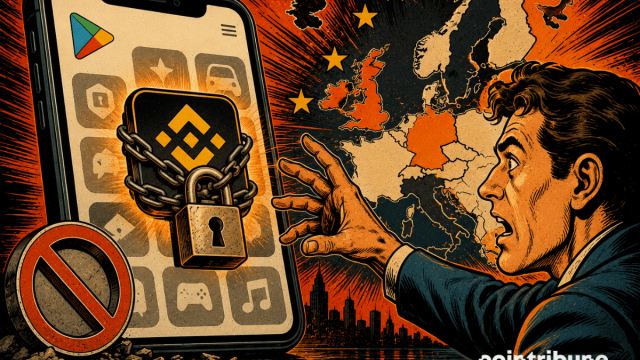
Binance's Android app disappeared from the Google Play Store in several European Union countries starting July 27, 2026, following the end of MiCA's transition period on July 1. The world's largest crypto exchange lost access to a primary distribution channel across parts of the continent.
The removal is not uniform. A Spanish user told Cointelegraph on July 27 that the Binance app no longer appeared in Play Store search results. A Latvian user reported the same. But checks in Poland showed the app remained fully accessible for download. That differentiated treatment suggests the withdrawal follows a targeted logic, likely dictated by individual national regulators' positions on the platform's MiCA compliance.
The fragmentation underscores a reality MiCA's architects acknowledged but markets often forget: the regulation harmonizes the European framework for digital assets, but implementation retains a national dimension that gives local authorities real discretion. The transition period's end continues to shake major players, including those that seemed best prepared.
The Binance app remains available on Oppo's App Market, an alternative Android store preinstalled on devices from the Chinese brand. That narrow channel illustrates the resilience of the Android ecosystem against restrictions from official stores.
A Binance spokesperson told Cointelegraph the company was "aware of the Google Play policy update affecting the availability of crypto app updates in certain markets." The platform said it is actively collaborating with Google to find a solution. The spokesperson did not specify which markets are affected or which rules led to the restriction.
First reports surfaced last week. Erald Ghoos, CEO of OKX Europe, said on X that the Binance app had been removed from the Play Store due to license requirements imposed by MiCA. Binance has not confirmed that interpretation, but the timeline gives it credibility.
Binance's regulatory position in Europe has darkened in recent weeks. The company withdrew its MiCA license application in Greece shortly before the July 1 deadline. It also notified some European users that access to several services would be restricted, with withdrawals the only functions fully available. That contrasts with the offensive strategy shown by platforms like OKX and Bitstamp, which obtained their licenses within the deadlines.
For Android users in Spain, Latvia, and potentially other affected countries, workarounds exist. Direct download of the APK file from Binance's official website is the simplest option, provided the authenticity of the source is verified. Oppo device users retain native access via the manufacturer's App Market.
Normalization depends entirely on Binance's ability to regularize its regulatory status in the jurisdictions concerned. The platform dominates the global crypto exchange market with daily volumes regularly exceeding $10 billion. A prolonged absence from official European stores would represent a significant competitive handicap in a market where mobile adoption is predominant.
The Play Store eviction materializes the increasing pressure MiCA exerts on crypto infrastructure operating in Europe. Obtaining a full license in a member state, clarifying Google's rules for crypto apps, and restoring constructive dialogue with regulators outline the path to return. The exodus of European crypto capital to private wallets suggests the regulatory status quo is no longer sustainable.