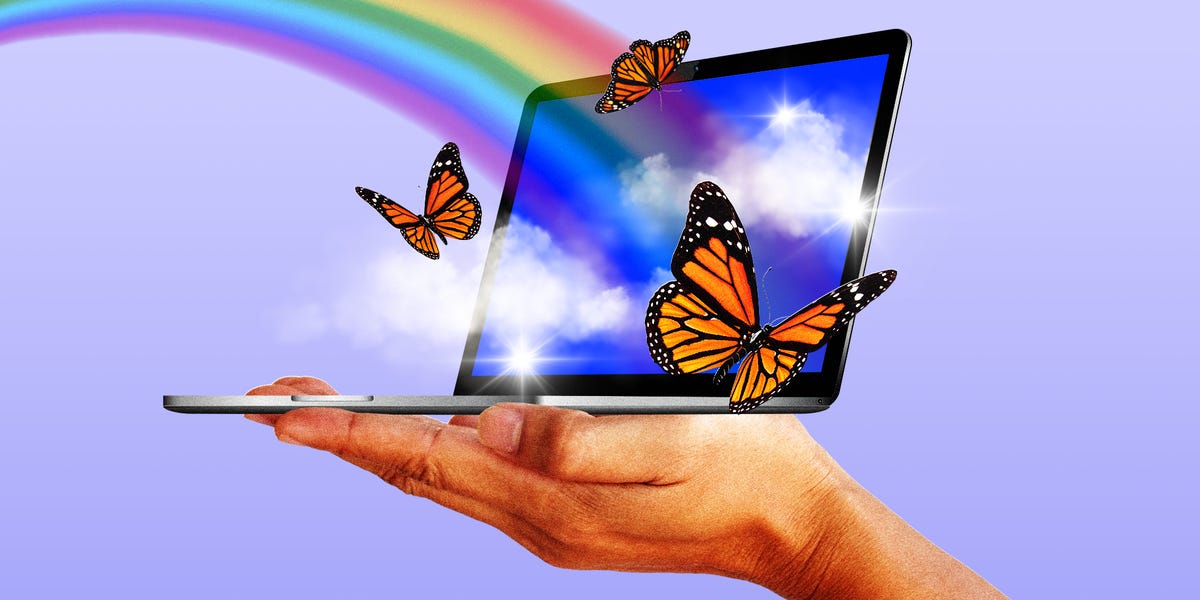
Meta's new ad campaign for artificial intelligence is a swirl of rainbows, butterflies and smiling children. The narrator calls the company's staff "optimists" and "dreamers," declares Meta is "betting on people" and promises the "future is for everyone."
The timing is curious. Meta laid off 8,000 workers that same week. The company also recently hired several associates of Donald Trump. And the broader American public has grown skeptical of the technology. A Pew Research Center survey found 40% of Americans expect AI to have a negative impact on society; only 16% said it would be positive. Nearly three-quarters of Americans oppose data centers being built in their area, Gallup found. Protests have appeared on TikTok, at City Hall meetings and outside Anthropic's headquarters.
Meta is not alone in facing this challenge. Executives at Anthropic, OpenAI and other labs have shifted their tone. A few years ago, leaders warned that AI could wipe out white-collar work. Now they argue it will be an unqualified benefit. Sam Altman, four months after ChatGPT's launch, called AI "even bigger" than a technological revolution. Dario Amodei compared large language models to a "country of geniuses in a datacenter." Elon Musk has suggested people might not need to work at all.
Anthropic debuted its own ad during the World Cup two weeks ago. It showed facial recognition tracking, a cemetery and a burning house. "Can AI be trusted?" a voiceover asked. "Who's gonna hit the brakes if we need to?" The answer the ad offered was Anthropic itself.
The response was harsh. Andreessen Horowitz partner Olivia Moore asked if Anthropic was "actively trying to churn users." Sam Altman said he thought it was satire. Still, both ads follow a similar structure: raise the criticism, then dismiss it.
Anthropic's ad includes a voice saying, "If we all had a voice in it, then I feel like it would be better." The implication is that the public has a voice in the company's development. It does not; Anthropic is a private company. The ad's promise of "hope in hard questions" offers no plan for answering them.
Meta's ad is more confrontational. "Some people will have you believe AI will make us less connected," the narrator says. The company positions itself as the savior against vague critics.
Notion took a different approach with its "AI dread" billboards. The software company set up a hotline for callers worried that AI could replace their jobs.
David Reibstein, a marketing professor at the University of Pennsylvania's Wharton School, said the labs had to address the criticism. He called Anthropic's ad "gutsy" but was less impressed by Meta's. The message, he said, comes across as "trust us because we're Facebook." When asked whether Anthropic was being hypocritical by raising harms it may be enabling, he said, "I don't think it's being hypocritical. I think it's being sensitive."
A Meta representative did not answer questions about the ad's message. Instead, the company sent contact information for advertising executives with whom it claimed no financial ties. One was Zach Blume, president of the creative agency Portal A, who said he found both ads "powerful and persuasive."
Joonas Virtanen, a founding designer at the mini-app startup Wabi who previously helped make Airbnb's chatbots "more fun," said he found Anthropic's approach more believable. He called it an "honest" ad that "treats people like adults." On Meta's ad, he said: "It's a little bit of corporate bullshit. It is selling that rosy vision."
Virtanen works in tech. He is predisposed to AI's benefits. The real challenge for these companies is reaching those outside the industry – people who would rather live near a nuclear reactor than a data center.
Amodei has softened his warnings about an AI apocalypse. Altman said he would be "delighted to be wrong" about AI destroying jobs. The seed of doubt is already planted. The ads show that the labs understand how deep the worries have gone. Rainbows and "hard questions" will not be enough.