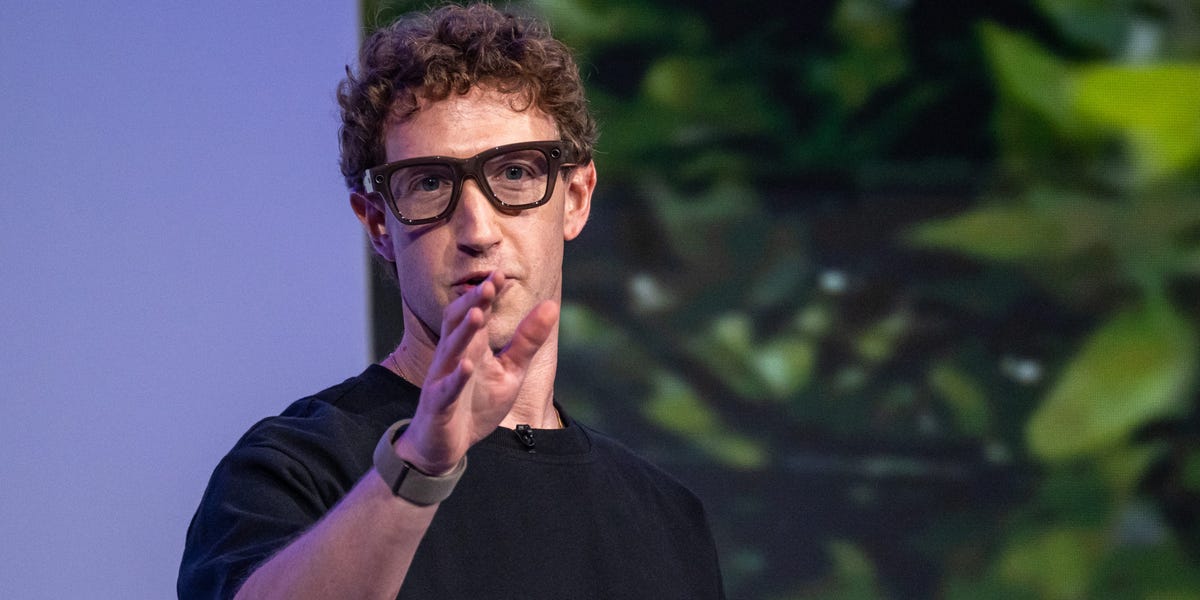
Meta released its open-weight model Muse Glimmer on Monday, and CEO Mark Zuckerberg published a 6,500-word essay outlining his vision for AI. The announcements drew a mix of praise and skepticism from industry figures, academics, and the White House.
Meta's former chief AI scientist Yann LeCun praised the release. "Good move. Bravo," LeCun wrote on X, replying to Zuckerberg's announcement. LeCun, who co-founded AMI Labs after leaving Meta, has not always been quick to praise his former employer. In January he called Meta's chief AI officer Alexandr Wang "inexperienced" and predicted Meta would lose more AI talent.
Box CEO Aaron Levie said the news was bigger than Meta. "America now finally has its response to the open weights AI race," Levie wrote on X. He said the release "is broadly net positive for AI - even frontier closed models - because it helps drive further diffusion of AI." The lower cost of intelligence, he said, "allows companies to run models as they see fit, as well as allows them to post train their own models for specific use-cases to get better performance gains in their domain."
Venture capitalist Sriram Krishnan, a former White House advisor, praised both the model and the essay. "Great piece from @finkd - especially the theme of AI being something that is personally empowering," Krishnan wrote on X.
Not everyone embraced the message. Y Combinator policy head Luther Lowe said Zuckerberg had the right message but was the wrong person to deliver it. "The message is compelling; the messenger has a credibility problem," he wrote. Lowe pointed to Meta's decision to ban rival chatbots from accessing WhatsApp Business API, which he said conflicts with Zuckerberg's broader message about making superintelligent AI widely available. The European Commission ordered Meta in June to allow third-party AI assistants free access to WhatsApp; Meta said it disagreed and would appeal.
Hugging Face CEO Clément Delangue expressed excitement. "Meta is back!" Delangue wrote on X. Delangue has pushed for open models and previously said Hugging Face had to turn to a Chinese open model to help address OpenAI's models' breach of its systems because proprietary AI models had safeguards that prevented the company from getting the help it needed.
Johns Hopkins University Professor Seth Lazar said Zuckerberg's "overall vision is cool" and expressed optimism if the essay serves as a "North Star" for Meta's SuperIntelligence Labs. "Sometimes protecting individual rights means giving people an agent who will push on their behalf against rules and restrictions that are over-applied and unfairly demanding," Lazar wrote. But he warned that others in the AI community would likely find Zuckerberg's vision disappointing. Lazar said Zuckerberg sees compute as the main limitation to superintelligence, but other restrictions on capabilities are likely needed.
Wharton professor Ethan Mollick said the bigger news was Meta's announcement that it will release the weights for Muse Spark, its current most advanced closed model. "Spark is the big news and is a good model," Mollick wrote on X. "Not quite at the frontier of open models from China, and still well behind the closed frontier, but the best non-Chinese open weights model released in a year." What matters next, Mollick said, is whether Meta continues to release new open models to keep up.
The Trump White House praised Meta's launch of a "Future Is For Everyone Fund" that will support communities where it builds data centers and AI infrastructure. "President Trump's vision for American AI dominance continues to drive results," the White House rapid response account wrote on X, sharing CNBC's coverage. Zuckerberg wrote that community investment led to greater support for projects such as data centers.
Nvidia offered its praise. Meta has built much of its AI work on Nvidia's chips. "Great to see @AIatMet back publishing open models," Nvidia's AI account wrote on X. Nvidia shares fell 2.84% to $217.59 on the day, with an Alpha Score of 76, indicating strong fundamentals. You can view the NVDA stock page for more details.
Zuckerberg's essay and the model release arrive at a moment when the open vs. closed AI debate is intensifying. The reactions from industry figures show support for open models but also skepticism about Meta's credibility and the practical limits of superintelligence as Zuckerberg envisions it.