Volatility is already stirring. Geopolitics, earnings, and economic data are all converging this week, and the calendar is packed.
Microsoft Corp. and Meta Platforms Inc. report Wednesday. Apple Inc. and Amazon.com Inc. follow on Thursday. The Federal Reserve and the Bank of England deliver interest-rate decisions. European inflation and Chinese PMIs land in between. Oil briefly touched $100 a barrel over the weekend, adding another layer of uncertainty.
“All of it comes against the backdrop of an oil market that briefly traded above $100 Brent, elevated global bond yields, and a market still trying to digest two consecutive weeks of equity weakness,” said Goldman Sachs Group Inc. partner Richard Privorotsky. He recommends VIX calls as tail-risk hedges. “Think we remain in more of a chop, implied correlation still near lowest level in last couple decades and dispersion is suppressing market moves.”
Goldman’s data shows that in US midterm election years, volatility typically rises at the index level from August through October. That pattern supports the case for VIX calls now. Single-stock volatility remains elevated, and dispersion of returns has been extreme this year. Those readings now look more likely to reverse than extend, which could add to turbulence.
Technicals offer a framework. The MSCI World Index is capped near 4,885 points. Systematic investors hold elevated positioning in the 70th percentile, which Deutsche Bank AG strategists including Parag Thatte describe as vulnerable “if volatility picks up or if equities break out of the range to the downside.”
Last week saw another round of meaningful de‑grossing. Discretionary investors cut exposure back to early‑April lows, around the 17th percentile, according to the Deutsche Bank strategists. That is well below levels implied by earnings and macro growth. The rotation out of large‑cap technology stocks is about three‑quarters complete, they added, after positioning fell from elevated levels.
In the megacap earnings space, the Magnificent Seven have been funding the AI beneficiary and semiconductor trade for months. Those stocks did not benefit from recent profit‑taking in the group. Investors remain reluctant to re‑engage, especially with worries over capital expenditure commitments reinforced by Alphabet Inc.’s announcement last week.
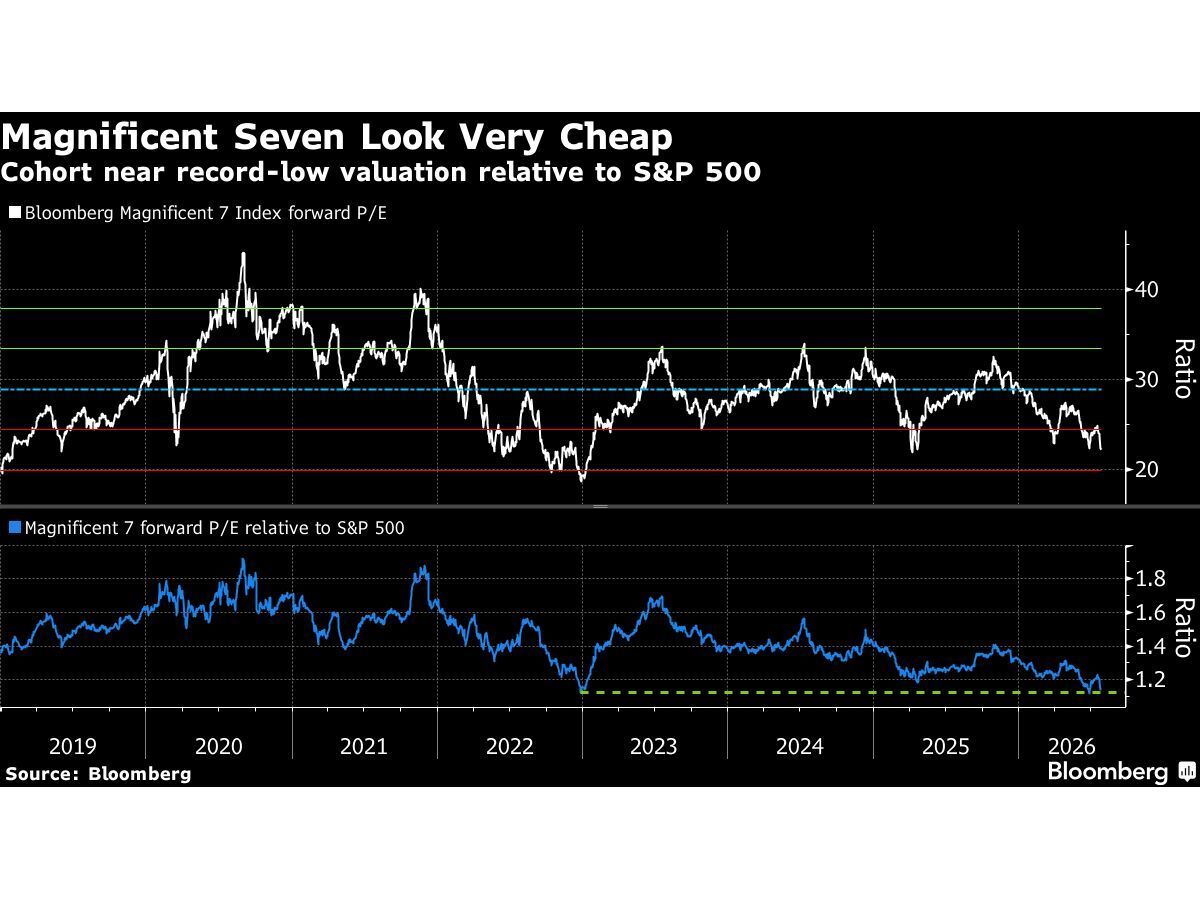
Yet the Mag Seven are now trading at historically depressed valuations. Their forward price‑to‑earnings ratio has fallen to near the bottom of a seven‑year range, both on an absolute and a relative basis. The de‑rating was driven by a drop in prices as well as rising earnings estimates. That may offer an opportunity to buy the dip.
Apple (AAPL) carries an Alpha Score of 58, reflecting a moderate outlook. Microsoft (MSFT) scores 60. Both are among the companies reporting this week, and their results will shape the market’s next move.
The Fed decision arrives Wednesday afternoon. The BOE follows Thursday. Between earnings, oil, and central banks, the next few days leave little room for a summer lull.