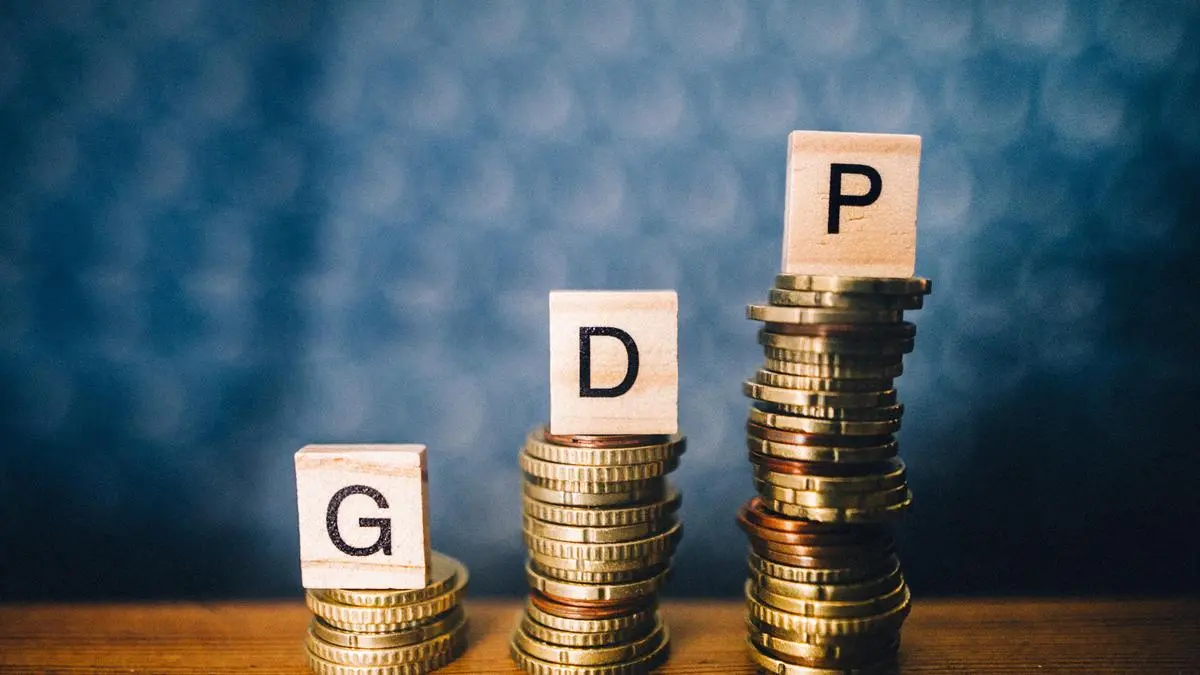
McKinsey Forecasts India’s Global GDP Share to Reach 7% by 2050

India is on track to claim 7% of global GDP by 2050, drawing significant interest from institutional capital seeking alternatives to developed market saturation.
Alpha Score of 45 reflects weak overall profile with strong momentum, poor value, poor quality, weak sentiment.
Alpha Score of 47 reflects weak overall profile with moderate momentum, poor value, moderate quality. Based on 3 of 4 signals — score is capped at 90 until remaining data ingests.
Alpha Score of 55 reflects moderate overall profile with moderate momentum, moderate value, moderate quality. Based on 3 of 4 signals — score is capped at 90 until remaining data ingests.
Alpha Score of 63 reflects moderate overall profile with strong momentum, weak value, moderate quality, moderate sentiment.
The Growth Trajectory
India is projected to command 7% of global GDP by 2050, up from its current standing as a global economic outlier. This shift represents a structural expansion in the country's economic footprint, moving it from a localized emerging market player to a core component of the global growth engine.
The McKinsey data suggests that this expansion is not merely a function of population growth but a result of deep-seated capital inflows. Investors are increasingly diversifying away from traditional Western markets to capture the yield gap present in the Indian private sector.
Capital Allocation Shifts
Institutional money is rotating toward India's private markets as public equity valuations in the US and Europe face pressure from high interest rates. Private equity and venture capital firms are finding the risk-adjusted returns in infrastructure and domestic consumption sectors more attractive than the stagnating growth profiles of developed peers.
"Rising economic weight boosts appeal for alternative investors; private markets gain traction."
Traders should note that this migration of capital is changing the underlying liquidity profile of Indian assets. While historically viewed as a high-beta play on global sentiment, the increasing commitment from long-term institutional allocators suggests a potential decoupling from broader market analysis trends during periods of volatility.
| Metric | Current Status | 2050 Projection |
|---|---|---|
| Global GDP Share | ~3.5% | 7% |
| Private Market Interest | Moderate | High |
| Economic Classification | Emerging | Core Player |
Implications for Global Portfolios
For those managing cross-asset exposure, the rise of India as a 7% GDP contributor requires a re-evaluation of portfolio weightings. The direct correlation between Indian growth and commodity demand, particularly energy imports, remains a critical factor. Traders monitoring the crude oil profile should anticipate that sustained Indian expansion will continue to place a floor under long-term demand projections, even as the global energy transition accelerates.
Investors looking for exposure should watch the following:
- Currency Volatility: The INR remains sensitive to trade deficits; sustained GDP growth needs to be balanced against fiscal discipline to avoid currency debasement.
- Infrastructure Spend: Large-scale projects are the primary catalyst for the 2050 target. Watch government bond yields for signals on how these projects are being financed.
- Private Market Multiples: As more capital chases limited high-quality assets, expect a compression in entry multiples that could temper future returns for late-cycle entrants.
This structural shift toward a 7% GDP share confirms that India is no longer an optional allocation for global macro funds. The focus for the next decade will be on the sustainability of this growth and whether the country can successfully convert its demographic advantage into high-value service and manufacturing output.
AI-drafted from named sources and checked against AlphaScala publishing rules before release. Direct quotes must match source text, low-information tables are removed, and thinner or higher-risk stories can be held for manual review.