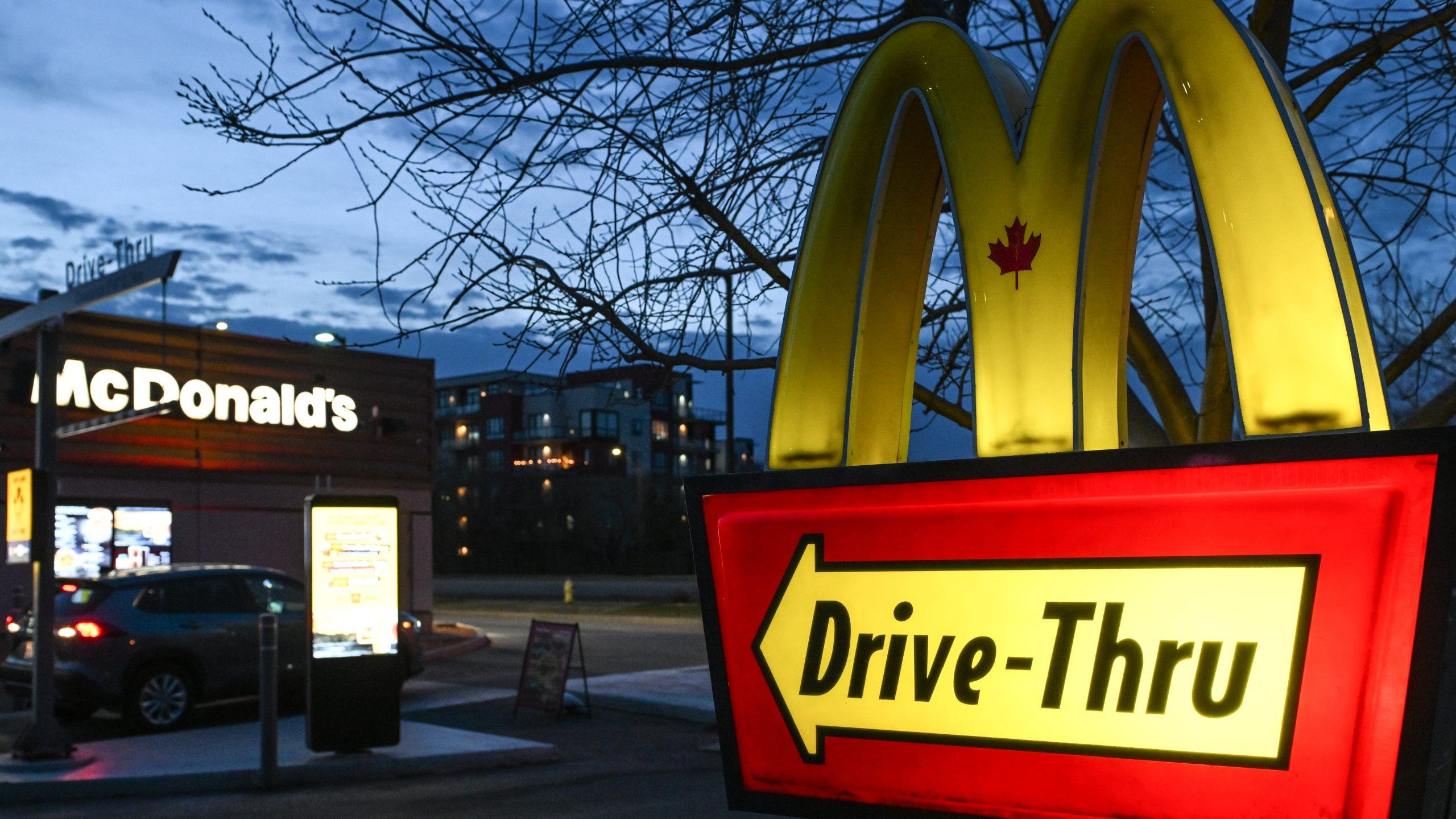
McDonald's customers may soon be giving their order to a robot. The fast food company is testing a new artificial intelligence order-taking system at the drive-thru called ArchIQ at five locations across the country, according to Restaurant Business Magazine. The initiative is part of the company's new brand strategy called McDonald's Next, announced this week.
CEO Chris Kempczinski said during the McDonald's Next introduction that customers should not have to choose between "hospitality or speed." The drive-thru test is the operational expression of that statement.
The ArchIQ System: What It Does and What It Replaces
The ArchIQ system handles orders at the drive-thru speaker only. Human staff still process the payment and pickup windows. That distinction matters because it preserves customer interaction at the moment of payment, where errors cause the most friction.
Google and NVIDIA Behind the Hardware
A franchisee account on X, McFranchisee, stated that Google is the infrastructure partner for ArchIQ. Google uses NVIDIA hardware for its AI processing. Every McDonald's location in the U.S. is expected to receive Google Edge Cloud blades ahead of a broader rollout, the franchisee said.
Edge computing reduces latency by processing data closer to the source rather than sending it to a central cloud server. For a drive-thru, that means the AI must interpret a muffled order in real time without a two-second round trip to a data center. The Edge Cloud blade is the physical piece that makes that possible.
Practical rule: Each Edge Cloud blade is a hardware procurement event. If McDonald's rolls out to all 13,500 U.S. locations, that is 13,500 installations requiring NVIDIA chips and Google infrastructure software.
The 90% Automation Rate: The Metric That Matters
McFranchisee reported that the system has processed over 1 million transactions with about 90% of orders completed without human escalations. The remaining 10% that require human intervention represent the failure mode that killed McDonald's earlier AI effort.
Why the Prior Effort Failed
McDonald's dropped a similar AI drive-thru system two years ago. That system was developed in-house and later sold to IBM. The franchisee account stated that the in-house model "wasn't good enough for our needs." The key limitation was handling custom orders, regional menu variations, and noisy environments.
The 90% figure suggests ArchIQ has improved on that failure mode. At a high-volume McDonald's serving 300 drive-thru cars per day, a 90% automation rate means 30 orders per day require a human at the speaker. The question is whether that error rate is low enough to justify the infrastructure cost of Edge Cloud blades at every location.
The 90% figure comes from a single franchisee account, not from McDonald's corporate. The company has not confirmed the metric. If the real number is lower, the rollout timeline stretches. If it is higher, the competitive pressure on Wendy's and Taco Bell increases, as both chains have also tested AI ordering systems.
The Sector Read-Through: What ArchIQ Means for Quick-Service Restaurant AI
McDonald's is not the only chain testing AI drive-thru systems. Wendy's has tested a Google-powered AI system. Taco Bell parent Yum! Brands has experimented with voice AI. The difference is scale. McDonald's operates about 13,500 U.S. locations, most with drive-thrus. A successful rollout would make it the largest deployment of AI order-taking in the fast-food industry.
Infrastructure Spending Is the Real Story
The read-through for the sector is about infrastructure spending, not just software. Every McDonald's location getting Google Edge Cloud blades means hardware procurement, installation, and maintenance contracts. That benefits NVIDIA indirectly through Google's cloud hardware purchases. IBM benefits only to the extent that IBM's prior involvement gave it institutional knowledge of McDonald's AI systems.
The table shows that McDonald's has the most aggressive timeline and the largest potential deployment. If ArchIQ scales, it will pressure competitors to match the technology or risk losing drive-thru speed perception. The cost of not deploying AI is a measurable increase in labor expense relative to a competitor that automates.
Customer Pushback Is a Real Risk
Public reaction to the ArchIQ test has been negative. Comments on the McFranchisee X post included complaints about existing kiosks and AI systems at Wendy's. One user wrote: "We all hate the system installed at Wendy's. We hate the kiosks at McDonald's, Wendy's, and Taco Bell that we are asked to use instead of talking to a person. We will hate this too. Say goodbye to customers."
The franchisee account responded that the AI system only handles the speaker, not the payment window, and that human staff remain visible. The distinction may not matter to customers who perceive any automation as a reduction in service quality. Customer perception is a variable that cannot be solved with better hardware.
The Google and NVIDIA Edge AI Deployment Case Study
The franchisee account's statement that Google is behind ArchIQ and uses NVIDIA hardware creates a direct link between McDonald's AI test and the broader technology sector. Google's Edge Cloud blades are the physical infrastructure layer. NVIDIA's chips power the AI processing.
What this means: The McDonald's test is a real-world deployment of edge AI outside a data center. Each location needs a local compute node, not just a cloud subscription. The total addressable market for fast-food AI infrastructure is the number of drive-thru lanes in the U.S. multiplied by the hardware cost per lane.
What Would Confirm or Weaken the Setup
Confirming signals:
- McDonald's corporate confirms the 90% accuracy metric or releases a higher figure
- Expansion from 5 test stores to 20-plus locations within six months
- Competitors announce their own Edge Cloud infrastructure deals
Weakening signals:
- Customer complaints drive a pullback or slower rollout
- The 90% figure is revised downward by McDonald's
- A competitor launches a superior system that captures market share
The Next Catalyst: McDonald's Corporate Confirmation
McDonald's has not responded to FOX Business for comment on the ArchIQ test. The next catalyst is the company's earnings call or a corporate press release that addresses the test directly. The franchisee data is directional unconfirmed until McDonald's speaks.
The Alpha Score for MCD is 48 out of 100, labeled Mixed. That score reflects the uncertainty around the company's growth strategy and the AI test's outcome. A successful ArchIQ rollout would likely push the score higher. A failed test would reinforce the Mixed label.
For traders, the setup is binary until McDonald's corporate speaks. The stock sits in the Consumer Discretionary sector, which makes it sensitive to consumer spending trends. AI-driven labor savings would improve margins. A failed test would leave the company reliant on the same cost structure as its competitors.
Watch for an official statement on the ArchIQ test, the 90% accuracy figure, and any expansion plans. Those three data points will determine whether this is a real deployment or a repeat of the IBM-era failure.