Stocks● Neutral
McConnell's Hospital Stay Enters Fourth Week With Sparse Details
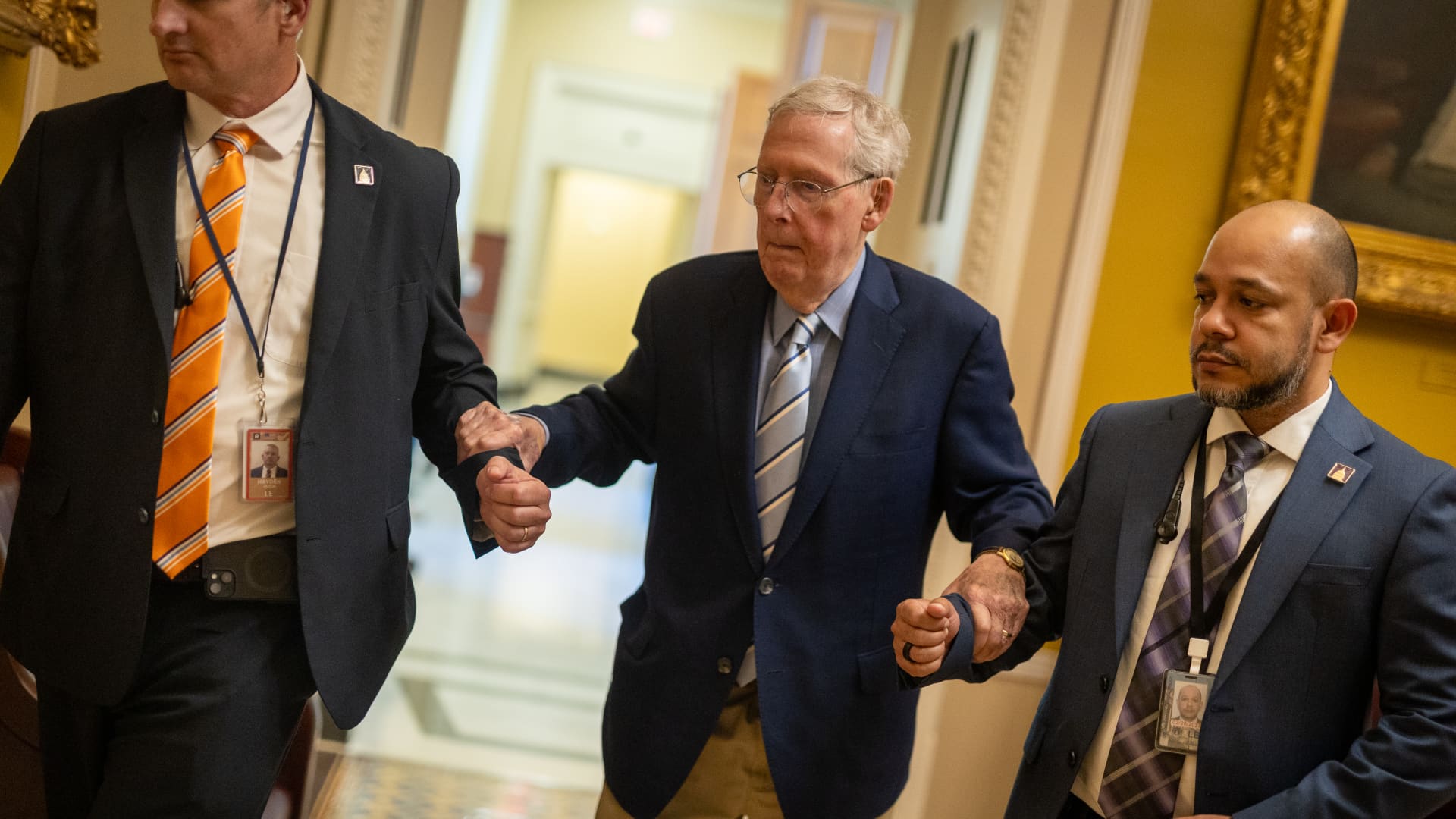
McConnell has been hospitalized since June 14. Colleagues Thune and Barrasso say he's engaged, but a CPR call from his address and a claim he's brain dead keep the story alive.
Continue with
Sen. Mitch McConnell remains hospitalized more than three weeks after being admitted June 14, with his office releasing almost no medical specifics. The 84-year-old Kentucky Republican declined to seek an eighth term after a series of health scares. A spokesman's initial statement said he is "receiving excellent care." No update followed until last week, when the office said McConnell is improving and working with staff on Senate business while the chamber is out of session.
Audio of emergency services calls from his Washington address on the day of the hospitalization – first reported by journalist Desiree Townsend – indicates responders performed CPR on a person in cardiac arrest. McConnell's name is not on the recordings. His office declined to comment.
The lack of transparency created a vacuum. Right-wing activist Laura Loomer, a Trump ally, claimed a "high level source close to the White House" told her McConnell is "officially brain dead." Multiple Republican senators pushed back directly. Senate Majority Leader John Thune of South Dakota spoke with McConnell by phone Monday, discussing national security issues, a Thune spokesperson told CNBC. Senate Majority Whip John Barrasso of Wyoming had a 20-minute conversation Tuesday. His spokesperson, Kate Noyes, said McConnell discussed Senate races, the Graham Platner scandal, the Supreme Court ruling on coordinated spending limits, the need to pass the NDAA, and confirming the DNI nominee. McConnell was "fully engaged and is eager to get back to the Senate," Noyes said.