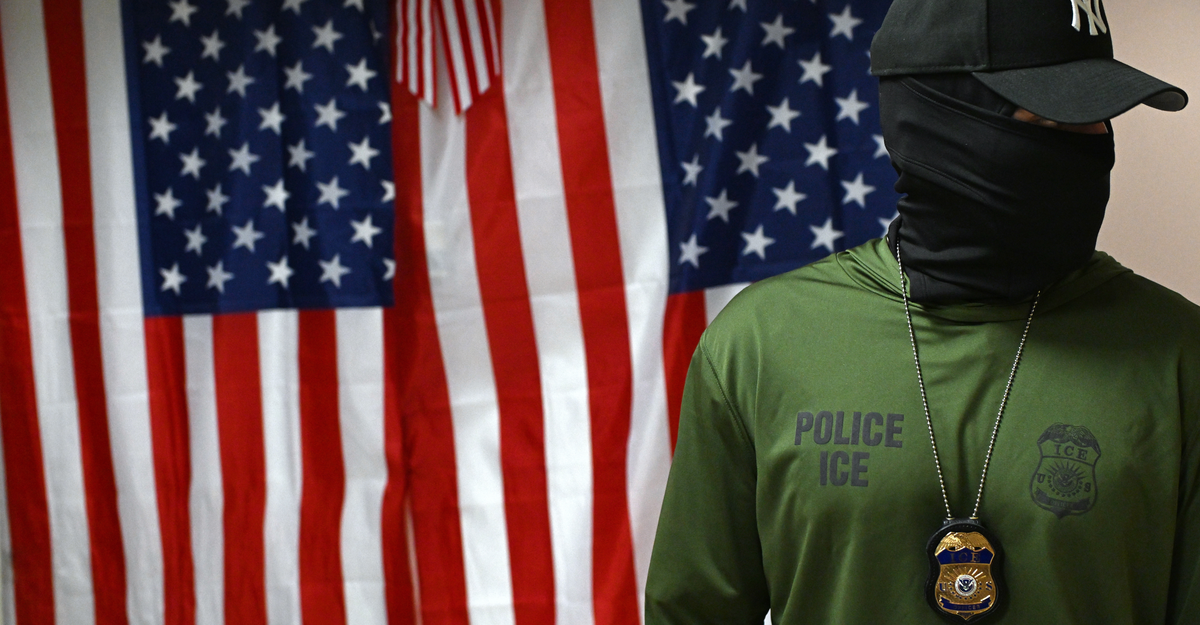
Masked federal agents from ICE and the Border Patrol have escalated enforcement in American cities. The fallout now includes two fatal shootings and a federal investigation, while an economic disruption in the Twin Cities has kept thousands of students out of school.
Sen. Thom Tillis, a North Carolina Republican, defended the masks in a CNN interview. "I've seen people dox me. I've seen people take pictures and identify law-enforcement officers and then put their families at risk," Tillis said. He called requiring agents to pull down their masks "a step too far."
The safety argument for masks runs counter to the data. Alex Nowrasteh of the Cato Institute found that law enforcement officers who do not work at ICE or the Border Patrol have a death rate 6.3 times higher than immigration enforcement officers. The chance of an ICE or Border Patrol agent being murdered in the line of duty is about one in 94,549 per year, roughly 5.5 times less likely than a civilian being murdered, according to Nowrasteh's analysis.
Garrett Graff, a journalist, testified to an accountability commission set up by Illinois' governor that nearly 5,000 CBP and Border Patrol officers were arrested between 2005 and 2024. "The crime rate of CBP agents and officers was higher PER CAPITA than the crime rate of undocumented immigrants in the United States," Graff wrote.
The enforcement operations turned deadly with the shootings of Renee Good and Alex Pretti, who were killed while drawing attention to or recording agents' behavior. On Sunday, ProPublica named two agents involved in the Pretti shooting: Border Patrol officer Jesus Ochoa and Customs and Border Protection officer Raymundo Gutierrez. The Justice Department reversed course Friday and promised an actual investigation of Pretti's killing. Administration officials have said federal agents hold "absolute immunity" in the execution of their duties.
The civil rights exposure has widened. The ACLU has filed suit alleging that agents are stopping and detaining people on the basis of little more than their accent or skin color, in violation of due-process rights. Minneapolis Police Chief Brian O'Hara told The New York Times that family members of his officers who are American citizens have been stopped. "They're not stopping family members of folks who are Norwegian or Irish. That's not happening."
Economic effects are showing up in school districts. Thousands of students in the Twin Cities have stopped going to school and are in hiding with their families, the reporting found. Most Somali and Hispanic residents of the area have legal status, yet agents are indiscriminately stopping residents, the ACLU lawsuit contends. In Salem, Oregon, an American was hospitalized after reportedly being dragged from her car by immigration agents demanding her papers. She is among dozens of Americans who, ProPublica reported in October, have been physically abused or detained for extended periods.
The legal path ahead is uncertain. Tillis said requiring agents to show their faces is "a step too far," and no federal policy change has been proposed. The DOJ investigation of Pretti's killing is one direct route to accountability; the ACLU case is another. In September, the Supreme Court issued a shadow-docket ruling. Justice Brett Kavanaugh wrote a concurrence that critics say enabled the profiling, and his later attempt to walk it back has not altered federal agents' conduct, the reporting said.
For investors tracking the news cycle, New York Times Co. (NYSE: NYT) has been central to the coverage, and AlphaScala's Alpha Score for the company stands at 39/100, labeled Mixed. The broader market picture is covered in AlphaScala's stock market analysis.