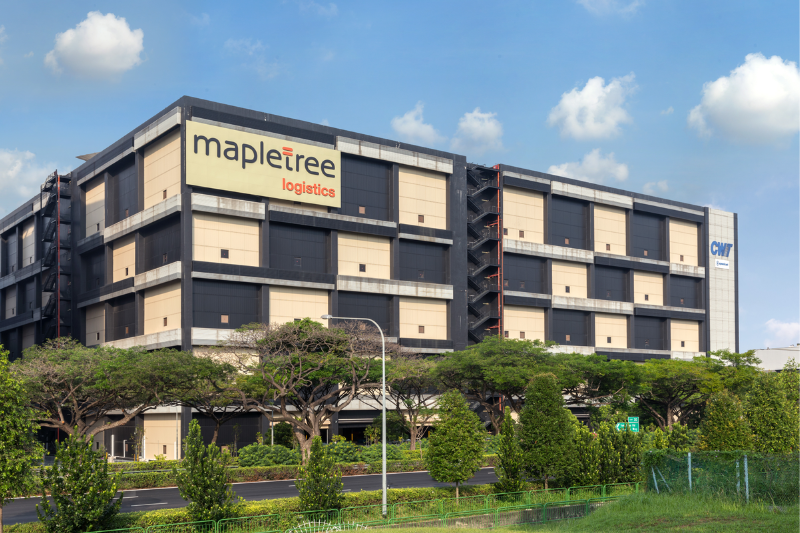
E-commerce growth, supply chain diversification, and a rebound in cross-border trade have turned modern logistics properties into mission-critical infrastructure. Mapletree Logistics Trust (SGX: M44U) or MLT stands out as Singapore's first logistics-focused REIT in Asia, presenting a way for investors to capitalise on this structural tailwind.
Warehouses aren't just cheap storage on the outskirts of town anymore. Increasingly, they are becoming the backbone of modern retail. E-commerce has completely rewired supply chains, forcing companies to build out massive fulfilment hubs just to hit next-day delivery targets. Add in the death of the "just-in-time" inventory model following recent global supply shocks, and businesses are now hoarding buffer stock "just in case". This combination of e-commerce growth and heavier inventory loads keeps the baseline demand for prime logistics space tighter than the pre-COVID era.
With 175 properties spanning across nine geographic markets, MLT is well-positioned to capitalise on this long-term demand for quality logistics facilities. MLT's key markets include Singapore, China, Japan, Australia, South Korea, and Southeast Asian nations such as Malaysia and Vietnam. This strong diversification across Asia reduces reliance on a single market, providing a buffer for the logistics specialist against any idiosyncratic slowdown in a particular country.
MLT's broad tenant base, consisting of 987 customers and with no single sector (16 in total) accounting for more than 17% of its revenue, further strengthens the REIT's diversification and reduces concentration risk. Finally, MLT has a high occupancy rate across its portfolio, standing at 96.9% as of 31 March 2026, which showcases the healthy demand for its logistics properties.
First, the logistics specialist's scale allows the REIT to lock in cross-border leases with large multinational tenants, which shields it from localised economic shocks. Managing assets across different markets also strengthens the appeal of MLT as the go-to partner for multinational clients who can rest easy knowing that the facilities they are using are top-of-the-line.
A key element of this scale is the backing of its sponsor: Mapletree Investments. Mapletree Investments provides a wealth of knowledge on the best practices in managing logistics properties, alongside a healthy pipeline of potential accretive acquisitions for MLT. Strong sponsor support matters for REIT investors as it strengthens the ability of a REIT to continually generate returns for unitholders.
Beyond just buying new properties, MLT regularly conducts capital recycling, selling off old warehouses to invest in modern logistics facilities. Capital recycling is crucial as it ensures MLT's buildings are able to handle modern e-commerce requirements, which supports its ability to raise rents on its tenants over the long run.
That said, MLT's scale does not exclude the REIT from cyclical risks; a slowing global economy will result in lower trade volumes and manufacturing activity, which could result in softer demand for warehouses. Other key financial risks include currency and interest rate risks: given that MLT receives a decent chunk of its income in foreign currency, a stronger Singapore Dollar could hurt its financials. As always, for REITs as an asset class, higher interest rates will result in higher financing costs. Finally, increasing logistics supply in other markets, especially China, is something investors should keep an eye on. Hence, investors must monitor MLT's occupancy rate and its ability to raise rents on its tenants.
Asia is expected to see the largest middle-class expansion in history, supporting the growth of consumption and trade – trends that are highly beneficial for the demand for logistics properties. Additionally, new accretive acquisitions and asset enhancement initiatives could also drive MLT's rental income. Combining all these factors should see MLT growing its distributions to patient investors.
On that note, we think the REIT's recent softer year-on-year (YoY) distributions are not something to be worried about, as we see it as evidence of MLT investing now for a better future. In summary, the future looks bright for the logistics real estate sector due to rising e-commerce trends and cross-border trade. MLT's well-diversified portfolio of logistics properties across Asia, its strong sponsor support, and exposure to this trend should result in decent performance moving forward. While short-term macroeconomic challenges remain, we think MLT remains in a good position to ride out these temporary headwinds.