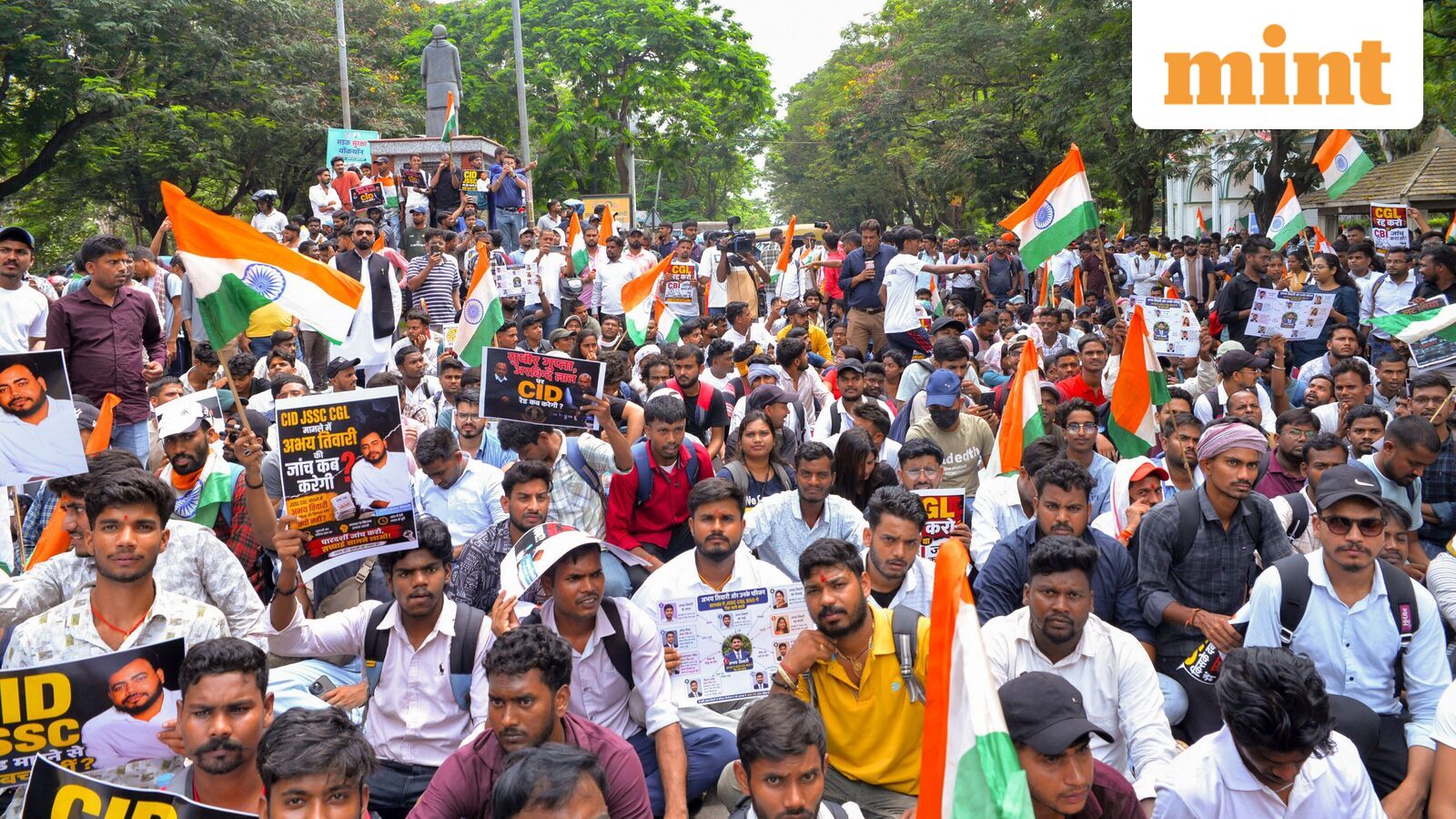
Something has shifted in Indian street politics. The crowds are no longer showing up for abstract cultural grievances. They want schools, roads, exam integrity and jobs.
Manu Joseph, the journalist and novelist, makes this argument in a recent column for Mint. He has been watching Indian protest behavior for decades. What he sees now is different.
"The issues consuming the country are schools, roads, exam leaks and unemployment," Joseph writes. "The young, including school children, are hitting the streets."
This is not the India he grew up in. In the Madras of his childhood, people traveled in overcrowded buses, spilling onto footboards while police hit dangling legs to force them back into space that did not exist. No one protested for better public transport. Protests then were largely stage-managed affairs – people paid to break things for a political spectacle, or rallies over "hurt sentiments" where marchers waved at cameras.
The first time Joseph saw actual middle-class rage on the streets was after the 2008 Mumbai terror attacks. That sparked an anti-politician movement that peaked with Anna Hazare's 2011 fast. Then came the protests after the 2012 Delhi gang rape and murder. Both were brief.
Joseph identifies four categories of what he calls "useless issues" – things that matter to the cultural upper rungs that will not alter the lives of most Indians.
First is pure farce: thugs who can barely write in their mother tongue claiming offense at English name boards, or assaulting women in pubs on behalf of culture. Second are cultural issues that matter to a small elite still accustomed to having their outrage set the national agenda.
The third category is not inherently useless. It is important, Joseph says, that would not surface in a mature society. He cites Congress President Mallikarjun Kharge's anguish at a "purification" ceremony by an upper-caste group for a stage in Haldwani, Uttarakhand, after he addressed a rally there.
The fourth is an important issue hijacked by politicians who lack the credibility, intent or capacity to solve it.
"The most captivating issues in India today are raised by people directly affected by what they are raging against," Joseph writes. "They don't look like politicians, or the 'youth-wing' of any political party, nor are they the posh do-gooders who speak 'on behalf' of victims."
Even the affluent are stepping out. Last year Joseph noticed English placards at a protest that had commas – the upper class had joined the struggle. "The act of protesting in public is an oddly humble thing to do," he writes. "Walking with others, accepting your ordinariness, demanding something from someone more powerful."
Joseph does not claim the old abstract issues have disappeared. Politicians still debate how many stanzas of Vande Mataram should be sung. The Supreme Court recently heard a complaint against a comedian who offended the disabled. People still say there are mosques that were temples once.
The emotional force of those cultural issues has diminished, he argues. "What stirs all classes are their prospects for a better life."
Politician Subramanian Swamy, when Joseph asked him why Indians spend so much energy on useless things, smiled and said identity was not useless. Joseph does not disagree. He frames "useless" as things that will not alter most people's lives, not things that are unimportant to those who care about them.
The BJP's core competency, Joseph writes, is not in municipal-level issues. "It would rather tell us why we must sing all the stanzas of Vande Mataram."
Joseph's latest book is "Why the Poor Don't Kill Us," a non-fiction bestseller in India that examines the strange peace between classes in a deeply unequal society. He is a former editor-in-chief of Open Magazine and the creator of the Netflix series "Decoupled."