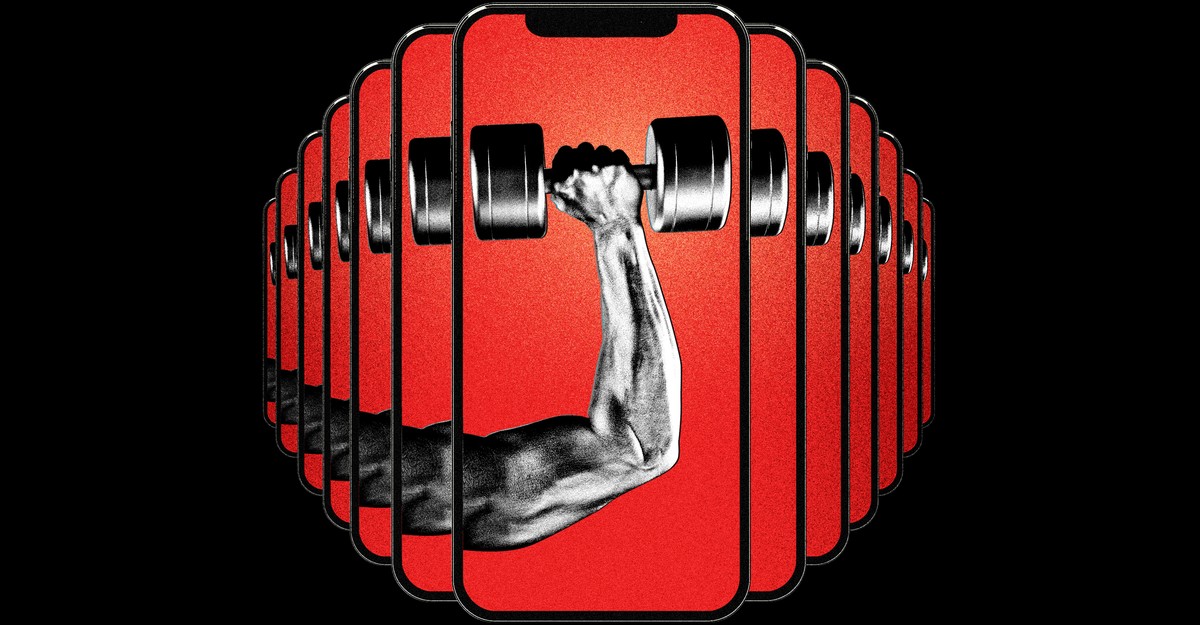
The online ecosystem of masculinity influencers, known as the manosphere, has reshaped advertising strategies for crypto companies, gambling apps, and supplement brands, according to a recent analysis of the movement's political and economic reach.
Right-wing politicians and media figures have waged a smear campaign against Texas state senator James Talarico, calling him a “vegan” and “transgender” in an attempt to question his masculinity. President Donald Trump called Talarico a “vegan,” and Trump adviser Stephen Miller twice declared that Talarico is “transgender.” Fox News host Jesse Watters sneered that Talarico was “getting his hands on whatever meat he can.” The attacks, the analysis argues, reflect a broader cultural strategy that treats masculinity as a lifestyle product.
“Masculinity, in this sense, is a lifestyle product: one that comes with a set of political beliefs predicated on the subjugation of women, minority groups, and anyone else who men are told are their inferiors,” the article states.
Advertisers have long exploited male insecurities. The analysis notes that “gambling apps and crypto companies have spent so much money on ads that make giving them your money seem adventurous.” The mechanism is similar to traditional beauty-industry advertising: manufacturers create insecurity to sell a solution. “Ad campaigns have long preyed in this way on female insecurities, telling women how they are supposed to look and act,” the article says, citing Susan Faludi's 1991 book “Backlash.”
For men, the manosphere pitch often pairs benign self-help advice with conspiratorial misogyny. “Heartbreak and rejection leave people emotionally vulnerable, and the manosphere pitch often comes paired with benign advice about standing up for yourself, being mentally tough, or becoming physically active,” the analysis says. The business model, however, rewards keeping followers in a state of dissatisfaction. “The manosphere hucksters prefer their followers to be tied only to them, forking over cash to be told they're victims of one conspiracy after another,” the article adds.
Social scientists have studied the behavioral effects. Adam Stanaland, a psychology professor at the University of Richmond, told the article's author that insecure men may compensate by endorsing “political bigotry, homophobia, sexual violence, and anti-environmentalism.” Stanaland co-authored a study on “fragile” masculinity that found such men are “more likely to endorse policies and politicians that disproportionately harm marginalized groups.”
The economic driver is not simply job losses in manufacturing, the analysis argues. John Ray, who does polling for the Young Men Research Project, told the author that “young men who were more economically precarious, broadly speaking, were less ideological–one way or the other. It was actually young men that said that they were less worried about their finances who are more likely to have some of those right-wing views.”
The modern data economy amplifies the trend. “Social-media companies want you to be glued to your phone for as long as possible so they can sell you things or produce data they can sell to others,” the article says. “Extremism draws attention, so it's not surprising that we're seeing more extreme ideas about what it means to be a man.”
The analysis concludes that the political program enabled by this online culture has real-world consequences. It cites a public-health official who neglects preventable diseases, a Department of Defense renamed the Department of War that launched a war in the Middle East, and a president who imposed tariffs to bring back “manly jobs” but drove up inflation. “It's hard to see how any of this has made men's lives better,” the article says. “But maybe making other people's lives worse is enough.”
The article was published online and has drawn attention for its detailed reporting on the intersection of masculinity, advertising, and political strategy.