Stocks● Neutral
Mammogram Guideline Split Creates Screening Market Crossroads
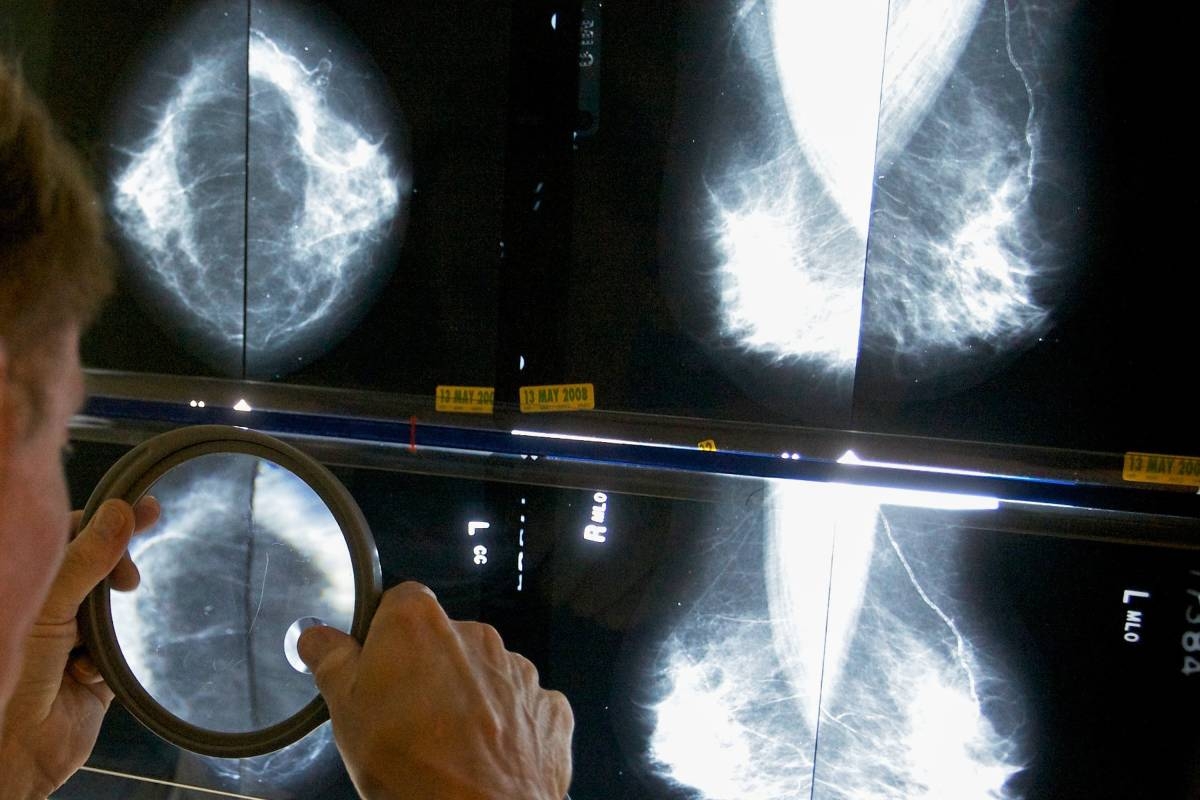
ACP and ACS guidelines diverge on mammogram start age and frequency. WISDOM trial data pushes risk-based screening, boosting 3D mammography, AI, and genetic testing stocks.
Continue with
The American College of Physicians last month issued breast cancer screening guidelines that recommend average-risk women start mammograms at age 50 and go every other year. For women ages 40 to 49, the ACP says to discuss pros and cons with a doctor and, if screening is chosen, to continue on a biennial schedule. That advice directly contradicts the U.S. Preventive Services Task Force, which recently switched its own guidance to start every-other-year mammograms at age 40, and the American Cancer Society, which has long recommended yearly mammograms for 45- to 54-year-olds with an option to start at 40.
The conflicting guidance creates a practical problem for women trying to decide when and how often to screen. For investors, the disagreement signals something else: the breast cancer screening market is at an inflection point. The direction of future guidelines – toward risk-based, personalized screening – will determine which technologies and services see demand accelerate and which face headwinds.
ACP Sets the Conservative Floor
The ACP’s position is the most conservative among major U.S. health organizations. It argues that for women in their 40s, the balance between benefit and harm is narrower. “We’re not saying there’s no benefit” from mammograms in the 40s, said Dr. Carolyn Crandall of UCLA, who chaired the ACP report. “There’s a narrower balance between the benefits you could get and the harms in 40- to 49-year-olds.”
That harm includes stress and pain from investigating suspicious spots that turn out to be benign. The ACP also advises that doctors can ask women 75 or older whether they wish to stop routine screening. The American Cancer Society, by contrast, says there is no reason to stop if a woman remains healthy.
The Three Major Guidelines at a Glance
| Organization | Start Age | Frequency | Notes |
|---|---|---|---|
| American College of Physicians | 50 | Every other year | Discuss with doctor for ages 40–49; consider stopping at 75 |
| U.S. Preventive Services Task Force | 40 | Every other year | Recently lowered from 50 |
| American Cancer Society | 45 (option at 40) | Yearly for 45–54; then every other year or yearly | No upper age limit if healthy |
The differences are not trivial. A woman following the ACP guidance will have roughly half as many mammograms over her lifetime as one following the ACS schedule. That has direct implications for equipment utilization, procedure volumes, and the revenue of diagnostic imaging centers and device makers.
WISDOM Trial Pushes Toward Risk-Based Screening
The core tension in the guidelines is that they are designed for women at “average risk.” Dr. Laura Esserman of the University of California, San Francisco, explained why that framing is flawed: “Breast cancer is not one disease. So how in the world does it make sense to screen everybody the same when everyone doesn’t have the same risk?”
Esserman leads the WISDOM trial, a study of nearly 46,000 women that used age, genetic testing, lifestyle, health history, and breast density to classify participants as low, average, elevated, or high risk. The risk level determined whether they started mammograms at 50, went every other year, every year, or – for the highest-risk group – twice a year with one mammogram and one MRI. The study, published in JAMA, found that risk-based screening worked as well as standard yearly screening.
One surprise from the trial: about 30% of women whose gene testing indicated increased risk did not report relatives with breast cancer. That suggests family history alone is an inadequate screening tool. If risk-based screening becomes the standard, demand for genetic testing and AI-based risk assessment tools will rise. Companies that provide these technologies stand to benefit as guidelines shift from age-based to biology-based schedules.
Dense Breast Tissue Creates a Clearer Need
Nearly half of women over 40 have dense breast tissue, which can make tumors harder to spot on a standard mammogram and slightly increases cancer risk. The ACP guidance specifically advises considering 3D mammography – digital breast tomosynthesis (DBT) – for these women. DBT produces clearer images and reduces the need for callbacks. That recommendation could accelerate replacement cycles for older 2D mammography systems and boost utilization of DBT-capable machines.