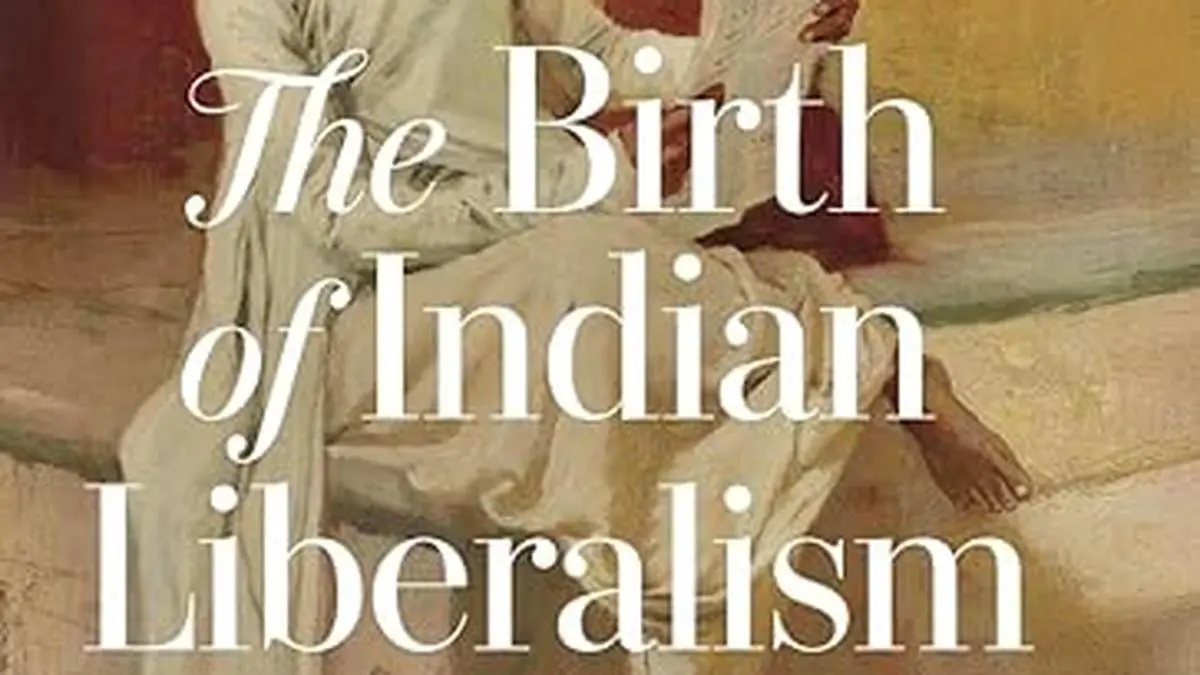
Rahul Sagar's new book unearths the letters of Mama Parmanand, a forgotten liberal who proposed co-adjudicators, strict public-private finance, and a 'permanent aristocracy of intellect'.
A new book by Rahul Sagar recovers the intellectual legacy of a 19th-century thinker who shaped liberal ideas in India outside the British Raj. The volume, reviewed this week by a senior journalist and author, focuses on the letters of Narayan Mahadev Parmanand, known as Mama Parmanand, to an unnamed Indian ruler.
Mama Parmanand was born in 1838 in the Konkan region and educated at Elphinstone College in Bombay. He worked as a journalist and corresponded with figures such as M.G. Ranade, Badruddin Tyabji and Pherozeshah Mehta. The reviewer writes that Sagar's book "straddles political theory and history" and that the introduction alone runs 120 pages.
The reviewer argues that decades of left-leaning historiography have erased figures like Parmanand from the mainstream record. Historians trained after independence focused overwhelmingly on Mughal court politics or the Congress-led freedom struggle, leaving little room for thinkers who operated in the princely states. Sagar's work aims to correct that imbalance.
Parmanand's core concern was governance in the princely states, territories where the British ruled indirectly. His central problem, the reviewer notes, was the role of the British Resident, the central government's representative in each state. Residents controlled all communication between the ruler and Calcutta, and Parmanand believed they used that gatekeeping power to undermine local authority.
His proposed solution was to make the ruler and the Resident "co-adjudicators" – partners in administration rather than one supervising the other. The idea, the reviewer writes, was to turn Residents into "partners rather than mere censors."
Parmanand also tackled financial probity. The reviewer says there was no dividing line between public and private finances in the princely states. Parmanand urged rulers to adopt the British model for British India: separate the ruler's personal wealth from the state's treasury, and ensure subjects received tangible benefits from tax revenue.
The list of reforms he pressed for was long. It covered accountability, abuse of power by low-level bureaucrats, village panchayat systems, free mass education, research funding, and women's participation in public life. The reviewer notes that Parmanand was "a hundred years ahead" of agendas that became common only in the last 75 years.
Particularly relevant for modern readers was his emphasis on meritocracy. Parmanand called for an examination system that would create a "permanent aristocracy of intellect," where position depended on ability rather than birth. Such an educated class, he argued, would form a barrier between the people and sovereign power.
The broader intellectual claim of Sagar's book is that Indian liberalism was not simply a British import. The conventional view, summarised by British Prime Minister Ramsay MacDonald in his 1910 book "The Awakening of India," held that liberalism was "the only battery of guns which India has captured from us and condescends to use against us." Sagar distinguishes between liberalism in British India – which colonial critics have always discussed – and liberalism in the ungoverned princely states, which has been largely ignored.
The reviewer writes that Sagar draws a distinction between the history of an idea and the justification for it, though the reviewer wished that point had been elaborated further.
Sagar's collection of Parmanand's letters gives the book its archival weight. The reviewer closes by noting that many readers "have sensed this intuitively. This book gives concrete shape to that feeling."
Drafted by a large language model from the source reporting linked above, then screened by automated publishing checks. It is not read by a journalist before publication. Some articles cite our Alpha Score. Verify prices and figures against the original source. Educational coverage, not personalized advice.