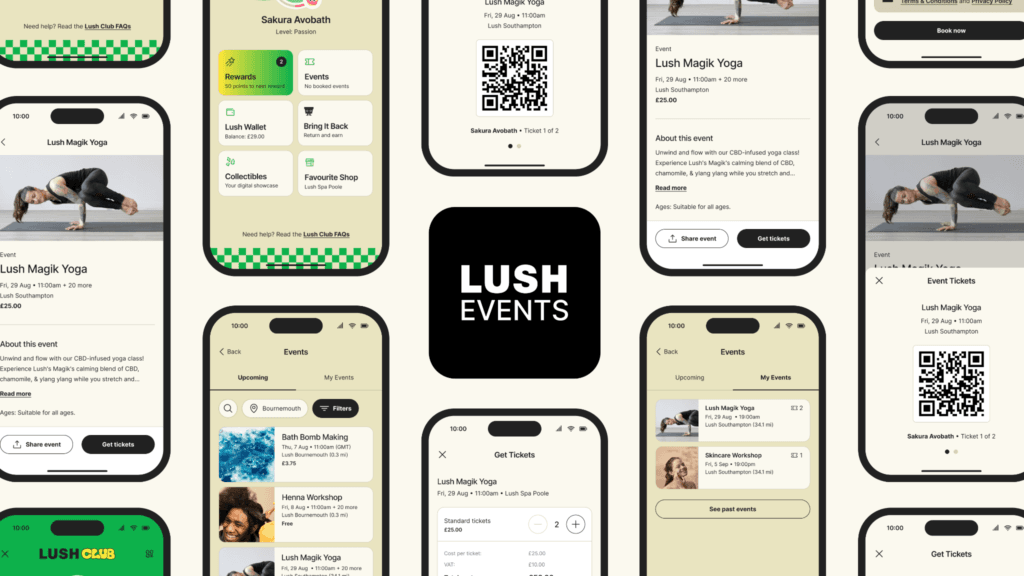
Lush is launching a new app feature called Lush Events in May. Customers can discover and book in-store services – spa treatments, product workshops, community gatherings – directly through the mobile app. The feature links to the company's existing loyalty scheme, allowing customers to use points toward these experiences. This is not just a scheduling tool. It represents a structural change in how loyalty points function inside the retail model.
Loyalty Points as Booking Currency
A simple reading of the launch is that Lush added an event booking tab to its app. The better market read examines the reward mechanics. Points typically sit dormant until a customer accumulates enough for a free product. That process takes months. Under the Lush Events model, points become a currency for services that offer immediate perceived value. A customer can attend a workshop this week and earn points from the transaction, then apply points toward the next booking. This creates a repeat loop: more bookings generate more points, which fund future visits. The result is a higher frequency of app opens and store visits compared to a deferred-product-reward system.
Data Feedback Loop and Store Operations
Every event booking tells Lush which stores, times, and service types a customer prefers. That data feeds inventory planning, staffing decisions, and local marketing campaigns. Purchase history alone does not reveal why a customer walked into a store or what they wanted to do there. Event bookings do. For a private company like Lush, operational efficiencies from this feedback matter more than quarterly earnings pressure. The same logic applies to any publicly traded retailer weighing a similar integration. The feature effectively converts a loyalty program from a passive discount engine into an active demand-signal system.
Sector Read-Through for Beauty Retail
Lush is not publicly traded, so its results will not appear in an earnings release. Competitors such as Ulta Beauty, Sephora (owned by LVMH), and mass-market chains will be watching the feature's performance. The specific metrics to monitor are app session frequency, loyalty point redemption rates on services versus products, and store-level foot traffic on event days. If Lush reports higher redemption rates or stronger store-level productivity through its own channels, expect larger rivals to accelerate similar app-integrated experiences. If the feature fails to gain traction, the risk is that customers treat it as a calendar tool rather than a compelling loyalty mechanic.
Next Decision Point
The real test comes six months after launch. By then the initial novelty has faded. What matters is whether repeat booking patterns emerge or stall. If users return to book a second or third event, the loop is working. If bookings decline after the first use, the feature has not changed behavior. Lush has not disclosed internal adoption targets. Competitors and analysts will look for any public signal – app store ratings, search trends, or indirect comments from executives – that indicates momentum. This feature is one of the more direct attempts to bridge digital loyalty and physical retail. Its outcome will inform strategy across the beauty sector and beyond.
stock market analysis
best stock brokers