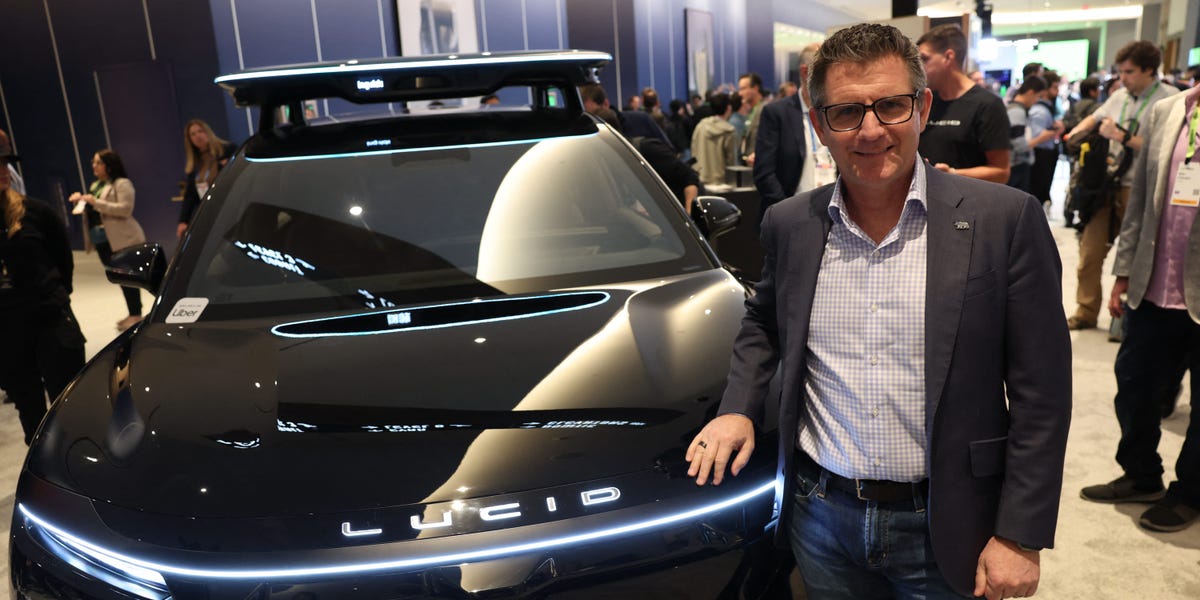
Lucid Motors eliminated the chief operating officer position as part of a broader round of layoffs, a move that tightens spending while the EV maker pushes forward with plans for a midsize SUV and a robotaxi service.
The company confirmed the cuts this week. Marc Winterhoff, the former COO, is among the departures. Winterhoff was the executive most closely tied to Lucid's robotaxi ambitions. In a recent interview with Business Insider, he described the robotaxi strategy as built for capital efficiency. The company aimed to enter the autonomous-ride market without the multibillion-dollar spend that rivals like Waymo or Cruise have burned through, he said.
Lucid has never released financial projections for the robotaxi program. Winterhoff's comment offered the most concrete description yet of how the company plans to fund what is widely seen as a capital-intensive business. He framed the effort as deliberately lean: using Lucid's existing vehicle platform and battery technology, and relying on third-party autonomy software rather than building it from scratch.
The claim of capital efficiency is now central to how investors will judge the robotaxi effort, especially as Lucid's main business – selling luxury EVs – continues to consume cash. The company ended the third quarter with roughly $4.3 billion in cash. That provides several years of operating runway at its current burn rate. The pace of spending is under scrutiny from analysts who worry the company cannot afford two parallel product lines: a midsize car launch and a robotaxi program.
The cuts come as Lucid prepares to launch a midsize SUV, the Gravity, and a lower-priced sedan that it hopes will broaden its customer base beyond the Air's high-end buyers. The midsize model is the company's primary near-term growth catalyst. The robotaxi project, by contrast, is a longer-term bet that would require regulatory approval and technology partnerships.
Winterhoff's departure does not necessarily mean the robotaxi plan is on hold. In his interview, he said the approach would keep capital needs lower than what competitors have spent. The company has not named a replacement for Winterhoff. CEO Peter Rawlinson has previously stated that the robotaxi effort is a long-term priority. The timing and scale of deployment remain vague.
Lucid said the layoffs were part of ongoing cost discipline. The elimination of the COO role removes one layer of management.
Winterhoff's assertion that the robotaxi strategy was designed to be capital-efficient will be tested as Lucid allocates resources in the coming quarters. The company has not disclosed a target date for a robotaxi launch, nor has it named a potential mobility partner. The capital-efficiency claim, if accurate, would distinguish Lucid from most of its autonomous-vehicle peers. It remains an assertion, not yet backed by detailed budgets or timetables.