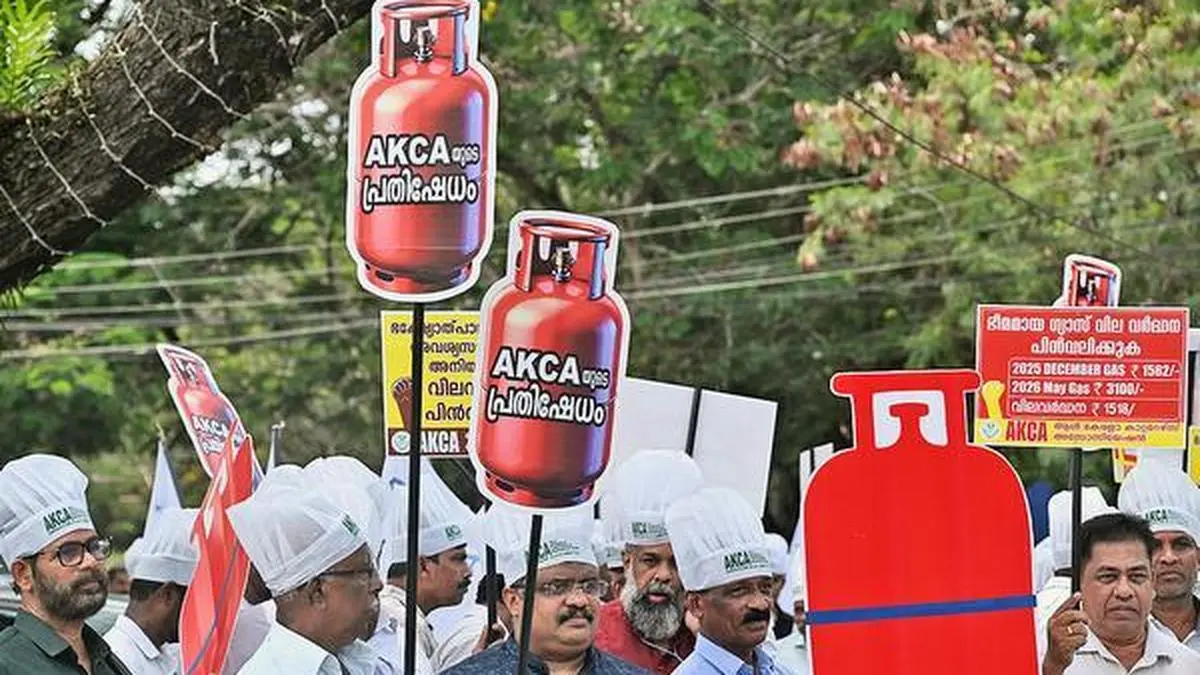
Small tea shops face ₹1,000 daily extra LPG cost, Kochi tea auction sees subdued buying as eateries close, and KHRA warns of Parliament march if no resolution by June 1.
The Kerala Hotel and Restaurant Association (KHRA) has given the Central government until June 1 to resolve the commercial LPG pricing crisis. The association warned of strong protests, including a march to Parliament, if no relief arrives by the deadline. The ultimatum turns a simmering cost squeeze into a discrete risk event for investors tracking Indian hospitality, food-service, and tea-sector equities.
The KHRA State committee resolved to approach the Union government again and escalate action if the deadline passes without concrete relief. A 24-hour statewide strike on May 6 already closed thousands of restaurants and bakeries, demonstrating the sector’s capacity to disrupt daily commerce. A march on Parliament would raise the political stakes further, especially with a state government sensitive to small-business sentiment.
The KHRA demands immediate intervention to lower commercial LPG prices. While the association has not published a detailed charter, the core ask is to decouple the commercial cylinder price from the trajectory that has pushed it to ₹3,100 in April, nearly double the level six months earlier.
For traders in hospitality stocks, the deadline creates a binary setup. A government response before June 1 could remove a near-term margin overhang. Failure to act risks another round of shutdowns that would depress same-store sales for listed quick-service chains and casual dining operators.
Commercial LPG cylinder prices have almost doubled in six months. The surge reflects an allocation strategy where domestic households, which account for roughly 85% of cooking gas consumption, are shielded from the full market price. The hotel industry argues it is unfairly carrying the subsidy burden for the domestic segment.
The math for a small operator is brutal:
KHRA officials warn that if the current situation persists, a majority of hotels in the state may be forced to shut down permanently. The statement is not hyperbole. The economics of a roadside eatery already operate on single-digit net margins. An unhedged input cost shock of this magnitude makes the business model non-viable within a few quarters.
Bottom line for traders: The closure risk is concentrated in the unorganised segment, yet it matters for listed companies because these small outlets form the distribution network for branded tea, coffee, and packaged foods.
The Kochi tea auction market has already felt the secondary effects. Reports indicate that the closing of wayside eateries has dampened local buying of loose tea. Traders at the auction describe subdued demand, with loose tea traders pulling back as their end-customer base shrinks.
This is a microcosm of the demand-side risk. When a tea shop shuts down, it not only stops buying gas, it stops buying tea leaves, milk, and sugar. The consumption chain that supports Indian tea companies and dairy suppliers frays from the bottom up. While branded packaged-tea firms have diversified retail channels, the weakness in the loose tea segment signals stress in the unorganised out-of-home consumption that still drives a large share of India’s tea volume.
While the Indian hospitality sector faces margin compression from a policy-driven input cost, Sri Lanka’s tourism sector has shown resilience. A recent travel advisory did little to deter wedding bookings, underscoring how uneven the post-pandemic recovery path remains across South Asian travel markets – a contrast that matters for regional thematic allocations.
The crisis points to a deeper structural issue. Domestic LPG consumers constitute about 85% of total cooking gas offtake, and successive governments have treated retail LPG pricing as a politically sensitive variable. Commercial users – hotels, restaurants, caterers – are the residual price-takers.
When global energy costs rise, the administered price mechanism passes the bulk of the increase to the commercial cylinder. The result is a cross-subsidy that works in calm energy markets and breaks down during spikes. The KHRA is effectively asking the Centre to either extend some form of subsidy to commercial LPG or to rebalance the pricing formula.
For investors in oil marketing companies and city gas distributors, the political calculus matters too. If the government grants relief to hoteliers, it may do so by absorbing a portion of the cost, which could compress marketing margins for state-backed fuel retailers. Alternatively, a one-time cash transfer or tax rebate could limit the fiscal hit.
A reduction in commercial LPG cylinder prices – even a modest one – would signal that the Centre is responsive. Any announcement of a direct subsidy for small food-service businesses or a revision of the commercial cylinder pricing formula would likely forestall the planned protest. From a market standpoint, a pre-June 1 intervention removes the immediate event risk and stabilises margin expectations for the June quarter.
If the deadline passes without action and the KHRA proceeds with a march to Parliament, the issue could attract national media attention and draw opposition parties into the debate. The risk for equities would then shift from a Kerala-specific operating cost problem to a broader political narrative about small-business distress.
The tea market would remain the most immediate lead indicator. A further drop in loose tea volumes at the Kochi auction would confirm that closure rates are accelerating rather than stabilising. Traders should watch weekly auction offtake data for any signs of a demand cliff ahead of the deadline.
The June 1 date is not just a lobbying tactic; it is the next concrete marker that turns a slow-burn margin squeeze into an event capable of repricing expectations across hospitality and tea-related stocks in a single session.
Prepared with AlphaScala editorial tooling from the source reporting linked above. Indexable analysis may include a cited Alpha Score value. Publishing checks screen each story before release. Educational coverage, not personalized advice.