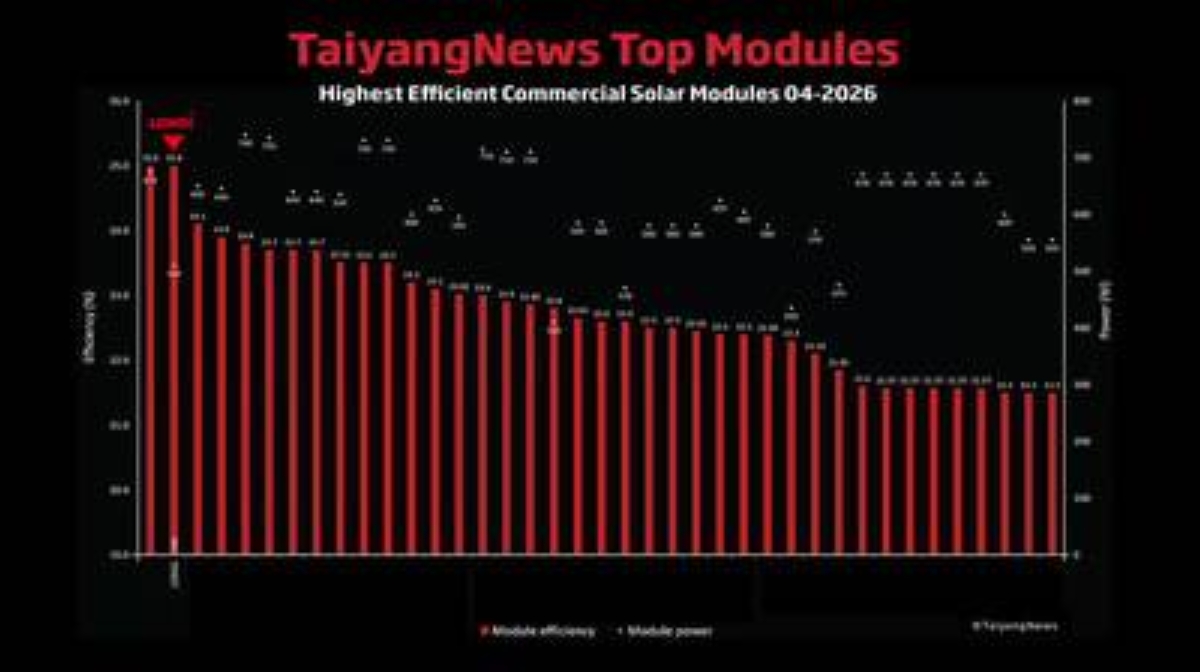
LONGi Green Energy Technology has reached a significant technical benchmark as its EcoLife series modules achieved a 25% mass production efficiency rating. This performance, verified by the latest industry rankings from Taiyang News, establishes a new standard for back-contact (BC) technology in the photovoltaic sector. The transition to the 25% efficiency threshold represents a shift in manufacturing capabilities, moving beyond incremental gains toward a new baseline for high-output solar hardware.
Advancements in Back-Contact Technology
The adoption of HIBC technology serves as the primary driver for this efficiency jump. By moving electrical contacts to the rear of the cell, the design minimizes shading on the front surface, which directly improves light absorption and power conversion. This structural change addresses a long-standing constraint in traditional cell architectures where front-side grid lines obstruct sunlight. The successful scale-up of this design into mass production indicates that the manufacturing process has matured enough to support high-volume output without sacrificing the performance gains observed in laboratory settings.
Sector Impact and Competitive Dynamics
The solar industry remains locked in a cycle of rapid technological iteration, where module efficiency is the primary metric for competitive differentiation. As firms like LONGi push toward the 25% mark, the broader sector faces pressure to accelerate its own research and development cycles to maintain cost-per-watt parity. This development reinforces the trend of consolidation around specific high-efficiency pathways, as manufacturers move away from legacy designs that struggle to compete with the output density of modern back-contact modules.
Market participants should monitor how this efficiency leap influences pricing power for premium modules. While higher efficiency reduces the total number of panels required for large-scale installations, the cost of implementing advanced cell architectures often remains elevated. The ability to maintain these efficiency levels while managing production yields will determine the long-term impact on margins for solar manufacturers. For broader stock market analysis, the focus remains on whether these technical milestones translate into sustained revenue growth or if the industry will continue to face margin compression due to global supply gluts.
Path Toward Commercial Scaling
- Verification of 25% efficiency in mass production confirms the viability of the HIBC pathway.
- Industry standardization of high-efficiency metrics creates a clearer benchmark for utility-scale project developers.
- Future performance will depend on the ability to replicate these results across larger production volumes and diverse environmental conditions.
The next concrete marker for this narrative is the upcoming quarterly reporting cycle, where investors will look for evidence of how these efficiency gains are reflected in unit costs and overall gross margins. If the 25% efficiency threshold becomes the new industry standard, the focus will shift to the speed of adoption across the supply chain and the potential for a wider industry pivot toward back-contact architectures. Monitoring the competitive response from other major solar manufacturers will be essential to understanding whether this efficiency milestone triggers a broader shift in market share or remains a localized success for LONGi.