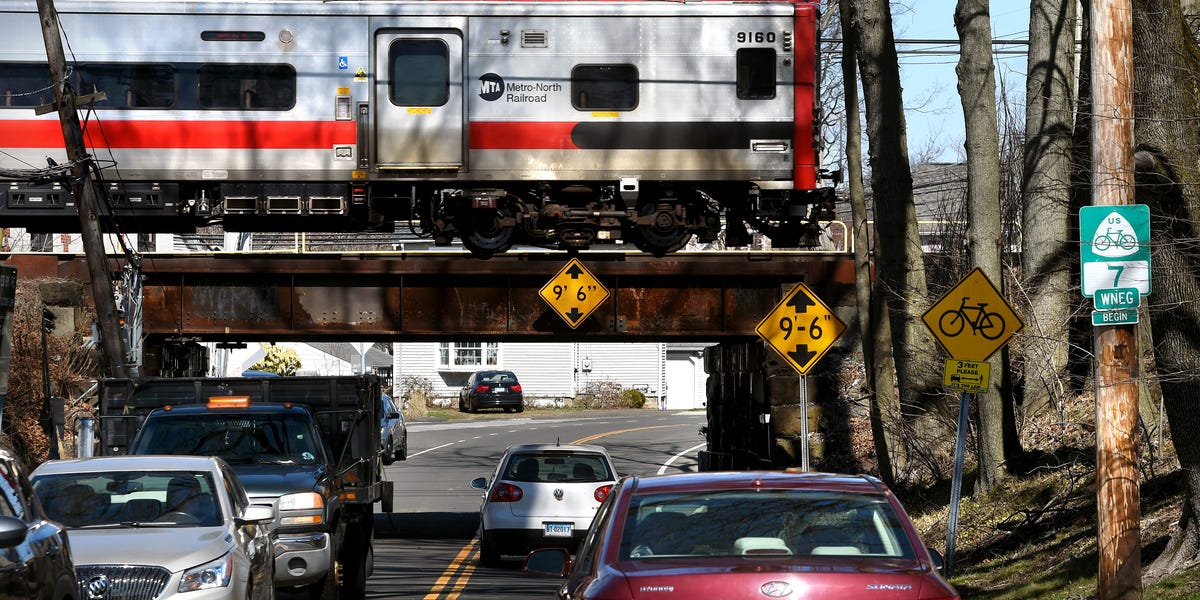
The share of U.S. workers traveling an hour or more to their jobs hit 9.3% in 2024, up from 7.7% in 2021, according to census surveys reported by Business Insider's Juliana Kaplan. The trend reflects a steady migration: young professionals chasing affordable homes push farther from city centers, and commute times stretch with them.
For listed companies with large employee bases, the shift introduces a cost that plays out unevenly. Office landlords see the clearest headwind. If 9.3% of workers already spend an hour-plus on the road, the pool of people willing to commute daily to a downtown tower shrinks further. The same dynamic pressures companies to shrink leased space or adopt hybrid policies that lower occupancy. Office REITs such as Boston Properties (BXP) face structural vacancy risk that no single earnings call can fix.
Suburban retail gets the opposite tailwind. Workers who commute long distances tend to stop at gas stations, fast food, and coffee shops near train stations or highway exits. Starbucks (SBUX) is a natural beneficiary, given its drive‑through and mobile‑order infrastructure. The company’s Alpha Score sits at 34/100 – a Weak label – but the commuting trend offers a demand floor that other consumer discretionary names lack. Investors watching SBUX should weigh the traffic tailwind against the weak overall fundamentals flagged by the Alpha Score.
Automakers and auto suppliers capture a different slice. Longer commutes mean more miles driven, faster wear on tires, brakes, and oil – and eventually earlier replacement cycles. For General Motors (GM) and Ford (F), the trend supports steady parts and service revenue even if new‑vehicle demand softens.
Retail workers face a two‑tier reality. Employees at suburban locations benefit from being close to home, while those assigned to downtown stores endure the longer trip. That split raises turnover risk for companies with large hourly workforces – particularly in consumer discretionary. The 9.3% figure also means 90.7% of workers still commute under an hour, so the trend is gradual, not a cliff.
Kaplan’s reporting points to one concrete driver: housing costs. As long as home prices near metro cores stay elevated, younger workers will move outward. The 2025 census survey will show whether the 9.3% share accelerated or stabilized. For now, the data argues for a portfolio tilted toward suburban‑facing stocks and away from pure‑play office exposure.
AlphaScala's Alpha Score rates SBUX at 34 out of 100, indicating Weak fundamental momentum. Read the full SBUX stock page for the breakdown.