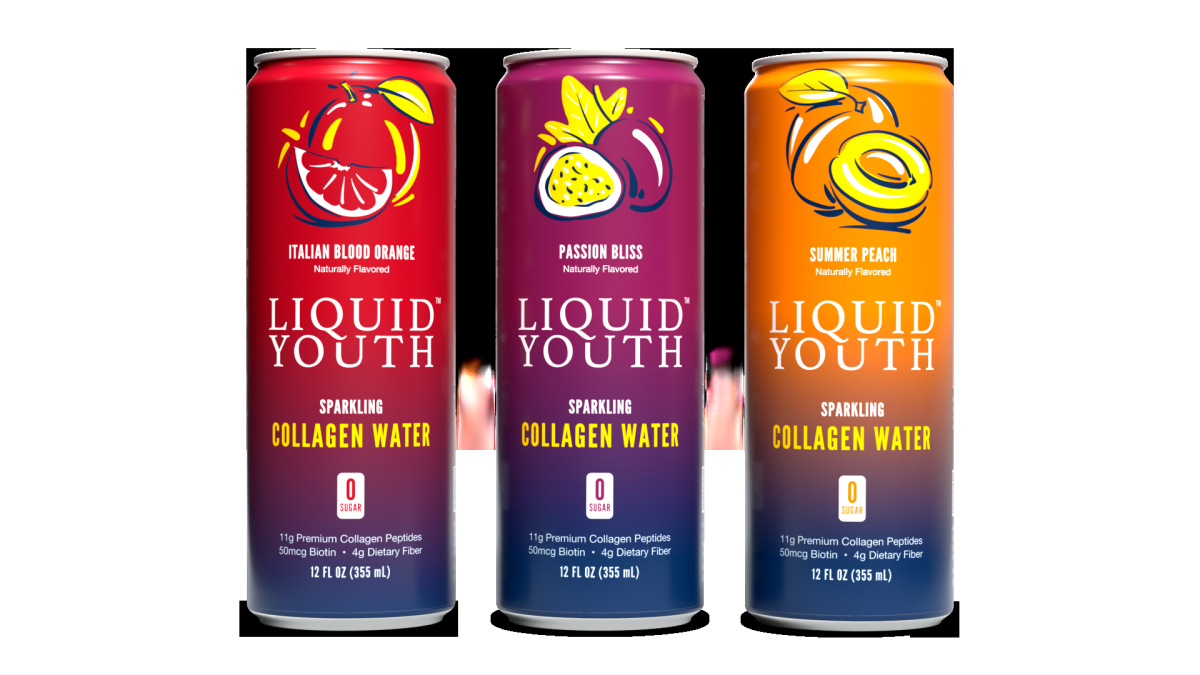
Liquid Youth, the PhD-founded sparkling collagen water brand, placed products at Stop & Shop, Hy-Vee, Schnucks, Gelson's, Lucky's Market, Better Health Market, Fruitful Yield, and Milam's Market. The company also maintains existing placements at Target and Walmart. This distribution velocity covers an estimated 1,500+ new grocery doors across the Midwest, Northeast, and California. The expansion signals more than a standard line extension. The question is whether this is a genuine market share grab or a slotting-fee gamble that stalls at the shelf.
The Simple Read: More Shelves Equal More Sales
The surface-level take is straightforward. Liquid Youth gains access to new doors, each a potential repeat-purchase funnel. Founder and CEO Dr. Lance Li said in the announcement: “What we’re seeing across every new retail partner is the same thing: shoppers are actively seeking out functional beverages that do more without compromising on their ingredients or ingredient integrity.” If that purchase velocity holds, the brand's revenue run-rate could double within 12 months.
The Better Read: Distribution Density Matters More Than Door Count
The functional beverage category is crowded. Celsius, Alani Nu, Poppi, Olipop, and legacy players like Vitaminwater all chase the same shelf. Liquid Youth's angle is a specific niche: sparkling collagen water with zero sugar, 11g grass-fed collagen, 10g protein, and 4g fiber. That positions it as a hybrid between a wellness shot and a soda alternative. The ready-to-drink format removes the mixing friction that kills powder collagen adoption.
The real risk is not demand. It is category velocity per door. A brand that adds 200 doors but sees low repeat rates will burn slotting fees (often $50,000–$100,000 per item per chain) and get delisted within six months. The confirming factor is not just placement. It is shelf-turn velocity and margin support.
Confirming Factors: What Would Validate the Setup
- Scan velocity relative to category average. If Liquid Youth's weekly sales per door exceed the functional beverage category median (about $120–$150 per week per store for premium items), the expansion is accretive.
- Repeat purchase data at existing Target and Walmart locations. If same-store sales show a month-over-month loyalty lift, the wider rollout has a proven model.
- Gross margin stability. The brand uses grass-fed bovine collagen, a volatile input. If COGS stays in line with the 40%–45% gross margin range typical for premium RTD beverages, the unit economics work.
- Shelf placement quality. End-cap or eye-level positioning increases trial dramatically. If Liquid Youth secured primary placements rather than bottom-shelf overflow, the odds improve.
Invalidating Factors: What Would Break the Thesis
- Slotting fee overhang. If the expansion was funded disproportionately by upfront payments (rather than retailer demand), cash flow will pressure marketing spend.
- Cannibalization from existing collagen powders. Liquid Youth's ready-to-drink format competes with powder collagen users who might switch. If the brand draws from the same pool, total addressable market shrinks.
- Beta of the sparkling water category. National sparkling water sales have slowed from 15% CAGR to single digits. If the macro tailwind fades, even strong placement cannot sustain growth.
- Retailer pushback on velocity minimums. Chains like Stop & Shop and Hy-Vee increasingly enforce velocity clauses. A miss triggers delisting within 30 days.
Execution Risk: From Placement to Pull-Through
Distribution is a lead indicator, not a confirmation. The real test comes in the next two quarterly reporting cycles. Liquid Youth is privately held, so the data will show up indirectly through industry scanner services (IRI, Nielsen). For a trader looking at this as a thematic read-through for the functional beverage space, the relevant comparison is how Celsius and Poppi performed in their early expansion phases. Celsius added 5,000 doors in 2021 and saw revenue surge 140% year over year. Poppi added 3,000 doors in 2023 and hit $100 million in revenue. Liquid Youth's 1,500+ door addition is smaller. The expansion is concentrated in higher-traffic regional grocers.
What Would Confirm the Thematic Set-up
- Analog scanner data. If Liquid Youth's velocity exceeds the first-year scan rates of those peers at similar door counts (about $80–$100 per door per week for a new brand), the setup is intact.
- Repeat petition from retailers. A second-wave expansion into more chain stores (e.g., Publix, Kroger) within 12 months would confirm the velocity thesis.
- Private label response. If large CPG companies (e.g., PepsiCo, Coca-Cola) launch direct copycat SKUs, that confirms category gravity. It also increases competitive risk.
Next Concrete Catalyst: The GLP-1 Connection
The press release explicitly mentions Liquid Youth's fit for “those following GLP-1 protocols or prioritizing blood sugar-conscious nutrition.” This is a deliberate positioning pivot. The GLP-1 drug surge (Ozempic, Wegovy, Mounjaro) has created a new beverage demand: high-protein, low-sugar, convenient. Liquid Youth's 10g protein, zero sugar, ready-to-drink format directly addresses that use case. The next catalyst would be any partnership with a GLP-1 prescriber platform (e.g., Hims & Hers, Ro, Noom) or a direct-to-consumer subscription bundle. If such an announcement appears in the next two quarters, it would significantly extend the brand's addressable market beyond the shelf.
Distribution Costs and the Slotting Fee Trap
For a brand founder, the first 1,500 doors are the most expensive. Slotting fees for a new functional beverage SKU can run $25,000–$50,000 per item per chain plus trade promotion spend. On seven chains, that could be $350,000–$700,000 in upfront cash outlay. Liquid Youth was founded by Dr. Lance Li, a beverage formulator who previously worked on major brand launches. His experience likely buys some pivot room. The capital intensity of this expansion means the company likely raised debt or equity to fund it. Any reported fundraising round or credit line would be a signal of liquidity support.
Final Lens: How a Trader Can Track This
Direct investment in Liquid Youth is not available to public markets. The thematic read-through extends to publicly traded beverage and CPG names. If Liquid Youth succeeds, it validates the functional collagen RTD subcategory. That would benefit ingredient suppliers (e.g., Tessenderlo Kerley for collagen, Darling Ingredients for gelatin) and pressure legacy brands (e.g., Keurig Dr Pepper for ready-to-drink innovation). If Liquid Youth's velocity data disappoints within six months, it signals category saturation and weakens the case for other premium RTD entrants. The confirming data points – IRI scanner velocity, retailer reorders, and any follow-on funding – should be tracked on a monthly cadence. Without those, the expansion setup remains unconfirmed.