LinkedIn's feedback button for AI slop has cut views on flagged posts by 40%. Over 1 million users have clicked the button since July 30 launch.
LinkedIn's new feedback system for low-quality AI content is producing measurable results. Hari Srinivasan, the platform's chief product officer, said members are now seeing 40% fewer views on posts the site classifies as AI-generated slop compared to a few weeks ago.
"Despite the progress, we know we have more to do to ensure LinkedIn remains a place where you can find real people & real perspectives," Srinivasan wrote in a post on the platform. "This all remains very top of mind."
The tool, launched July 30, lets users click a "seems like AI slop" button on suspicious posts and comments. Srinivasan said over one million people have used it since launch.
LinkedIn deliberately avoided an automated detection system. "We want members to get feedback from real humans on what sounds authentic - not just have an AI detector review it and get it wrong," Srinivasan wrote at launch.
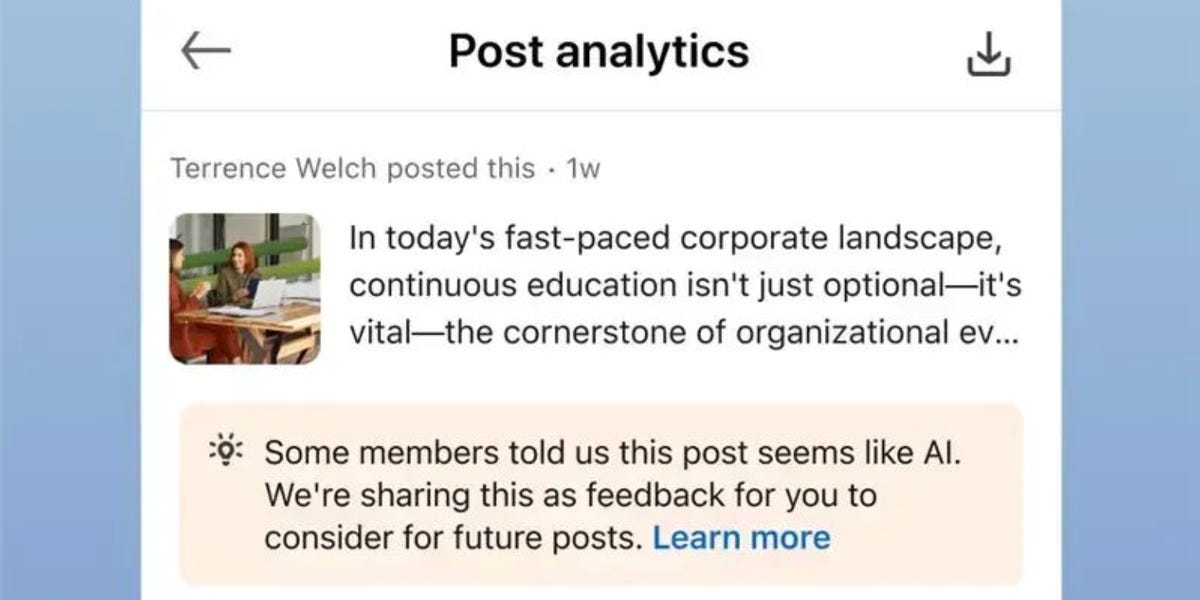
The feedback loop has two sides. Posts that collect "enough community feedback" now carry a notification in Post Analytics, telling the author how their content is being received. Srinivasan said LinkedIn built safeguards to prevent coordinated targeting of specific users.
"We approached this assuming good intent," he wrote. "I know I'm increasingly conscious on how to not sound like AI & the goal is to provide helpful feedback."
The move comes as other platforms sharpen their stance on AI-generated content. Substack and YouTube have both introduced policies targeting synthetic posts as tools like Anthropic's Claude and OpenAI's ChatGPT proliferate.
Business Insider's Katie Notopoulos recently tested the dynamic. She fed an AI tool designed to mimic LinkedIn's "thought leadership" tone into the platform and found the generated text drew wider readership than her typical posts. Under the new system, those same posts would likely trigger the feedback mechanism.
Prepared with AlphaScala editorial tooling from the source reporting linked above. Indexable analysis may include a cited Alpha Score value. Publishing checks screen each story before release. Educational coverage, not personalized advice.