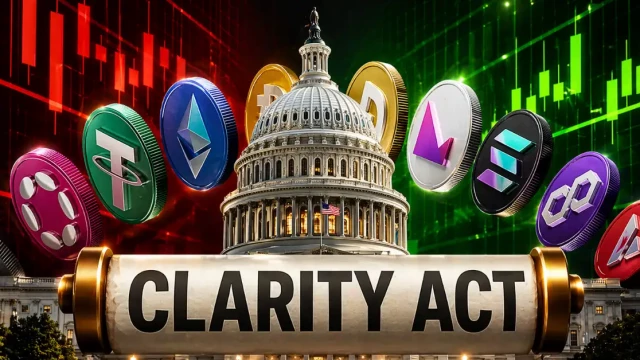
Legislative gridlock threatens U.S. crypto market structure as analysts weigh a 50% chance of passage. Failure by June risks prolonged regulatory ambiguity.
The U.S. CLARITY Act faces a critical window in May as industry stakeholders weigh the prospects of federal oversight for digital assets. While recent legislative momentum has stalled, the bill remains a focal point for firms operating within the domestic crypto ecosystem. The timeline for potential passage has been compressed, with proponents eyeing a June conclusion for the legislative process.
Galaxy Digital CEO Mike Novogratz recently expressed confidence in the bill reaching the finish line. His outlook suggests that the legislative machinery is positioned to finalize the framework within the coming weeks. This perspective contrasts with internal research assessments that place the probability of passage at 50 percent. The gap between executive optimism and analytical caution reflects the broader difficulty in predicting outcomes for legislative stagnation clouds U.S. crypto market structure bill.
Market participants are monitoring the CLARITY Act for its potential to define the operational boundaries of digital asset firms. The bill aims to establish a clearer path for compliance, which would alter how institutions interact with Bitcoin (BTC) profile and other digital assets. The current lack of a unified federal standard has forced many firms to navigate a patchwork of state-level requirements and enforcement-led oversight. A successful passage would provide the regulatory certainty required for larger capital inflows into the sector.
AlphaScala currently tracks various assets across the technology and utility sectors, including U stock page with an Alpha Score of 43/100 and SO stock page with an Alpha Score of 45/100. Both are labeled as Mixed, reflecting the broader market environment where regulatory clarity remains a primary driver of institutional sentiment.
The next concrete marker for the CLARITY Act is the conclusion of the May legislative session. If the bill fails to gain traction before the end of the month, the probability of meaningful movement before the next election cycle diminishes significantly. Observers are watching for committee scheduling and floor activity as indicators of whether the bill has secured the necessary bipartisan support to move forward. The absence of a clear legislative path by the end of May will likely force firms to adjust their long-term operational strategies to account for continued regulatory ambiguity.
Prepared with AlphaScala editorial tooling from the source reporting linked above. Indexable analysis may include a cited Alpha Score value. Publishing checks screen each story before release. Educational coverage, not personalized advice.