Crypto▼ Bearish
Why Prediction Markets Are Betting Against the Clarity Act
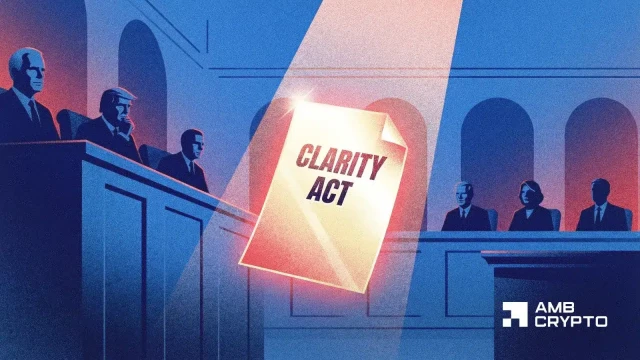
Polymarket odds signal skepticism toward the Clarity Act despite Treasury pressure. Traders should prepare for volatility if legislative momentum shifts.
Continue with
The Legislative Impasse
U.S. Treasury Secretary Janet Yellen has issued a pointed call to action for the legislative branch, urging Congress to move swiftly on the passage of the "Clarity Act." The bill, which aims to provide a definitive regulatory framework for the digital asset industry, is being positioned by the Treasury as a critical mechanism to mitigate systemic risk and consumer harm. However, the urgency emanating from the Treasury Department stands in stark contrast to the sentiment currently being priced into decentralized prediction markets.
While Secretary Yellen emphasizes that the lack of clear guidance creates an untenable environment for both institutional capital and retail protection, the betting odds on platforms like Polymarket have seen a notable decline regarding the bill's near-term viability. This divergence between administrative pressure and market-based forecasting creates a complex narrative for traders attempting to gauge the future of the U.S. crypto regulatory environment.
Market Sentiment and the Polymarket Divergence
For institutional investors and market participants, the "Clarity Act" represents a binary event. Proponents argue that a legal framework would invite long-awaited institutional inflows by removing the "regulation by enforcement" cloud that has haunted the sector for years. Conversely, the cooling of odds on Polymarket suggests that the smart money is increasingly skeptical of a legislative breakthrough in the current political climate.
This drop in odds, while not a predictive certainty, reflects a broader malaise among traders who have grown accustomed to the gridlock characterizing the current Congressional session. When the Treasury Secretary speaks, markets typically respond; yet, the current disconnect highlights a growing frustration among market participants who view the rhetoric as failing to translate into tangible legislative momentum. Traders are now forced to navigate a landscape where policy intent is high, but the probability of execution remains suppressed by partisan friction.