Lebanon is betting its sovereignty on a U.S.-brokered framework that would see Israel withdraw from occupied southern territory and disarm Hezbollah. President Joseph Aoun secured what his office called a "first diplomatic achievement" during his White House meeting this week, the first such invitation for a Lebanese head of state since 2009. Trump offered political backing, continued military aid for the Lebanese Army, resumed direct U.S. airline flights, and promised increased investment for Lebanon's economic recovery.
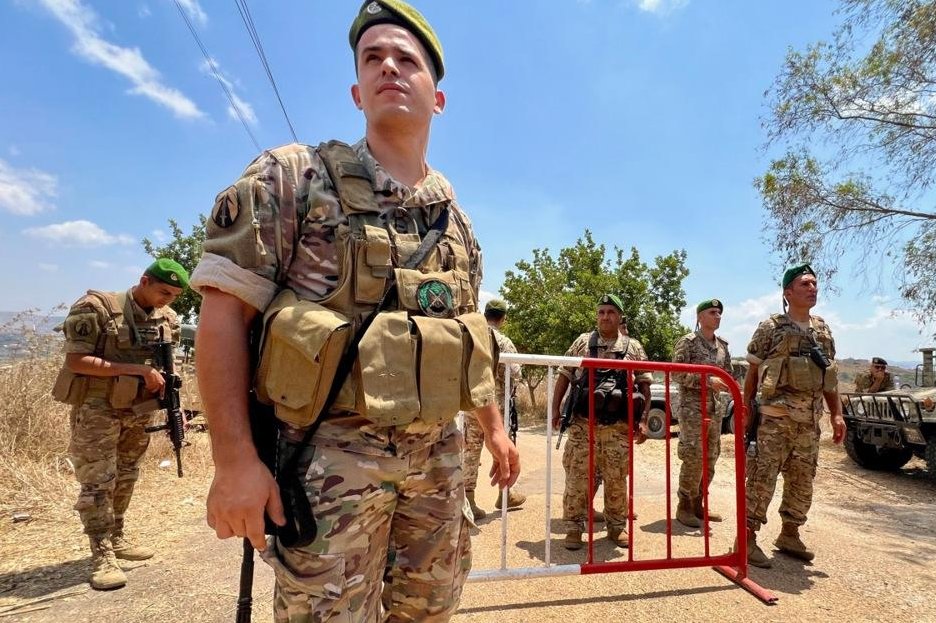
The meeting came hours after the Lebanese Army deployed in the first two pilot zones in southern Lebanon, villages that had remained within Israeli firing range even after the June 26 framework agreement. Specialized U.S. military teams are supervising and verifying the deployment. Retired Brigadier Gen. Ziad al-Hashem, a former Lebanese Army deputy chief of staff for planning, called the move a "historic achievement" and said any inch of land restored to state sovereignty was a gain.
"Bringing more territory under Lebanese sovereignty is very important, while keeping Lebanon linked to the U.S.-Iran track is very dangerous for the country," al-Hashem told UPI.
The core risk is that Hezbollah and Iran could derail the process. Both continue to insist on linking Lebanon's track to Iran's suspended negotiations with the United States, despite the renewed confrontation between Washington and Tehran. A Lebanese official warned that if Iran's Islamic Revolutionary Guard Corps orders Hezbollah to fire on Israel again, Israeli retaliation would be "catastrophic" for Lebanon, causing more destruction, casualties, and occupation of additional areas.
Eric Lob, an associate professor of Middle East comparative studies at Florida International University, said the ongoing U.S.-Iran conflict disincentivizes Hezbollah from disarming. He pointed to Gaza as a warning. Israel, he said, "is occupying more and more of it by the day" under a 20-point plan that has not stopped the fighting.
"Even if Hezbollah has been degraded, it must be looking at what is going on in Gaza and saying to itself, 'There's just no way we can disarm,'" Lob told UPI.
The Lebanese Army now faces a test of capacity. Israel remains skeptical that southern Lebanon can be placed fully under army control and that Hezbollah will agree to complete disarmament. Aoun's plan reportedly aims to contain Hezbollah's weapons without direct confrontation by keeping them in depots and preventing their movement or use. Al-Hashem said that approach could succeed if Lebanese authorities fulfill their commitments under the agreement.
Failing to restrain Hezbollah would give Israel a pretext to resume attacks, destroy more villages, and withdraw from the framework accord. The Gaza model looms as a warning. Israel retains freedom of military action there, and Lebanon could lose U.S. momentum while Israel continues to occupy a security zone in southern Lebanon.
Aoun met Trump while Israeli Prime Minister Benjamin Netanyahu was still awaiting a date for his Washington visit. Al-Hashem argued the timing showed U.S. commitment to the framework and continued pressure on Israel. Still, Lob said Washington is playing a "big role" in restraining Israel, whether it will continue to do so remains open.
"I think that until there's a de-escalation and cessation of hostilities between Iran and the United States, it will be difficult to make progress in Lebanon on the diplomatic front," he said.