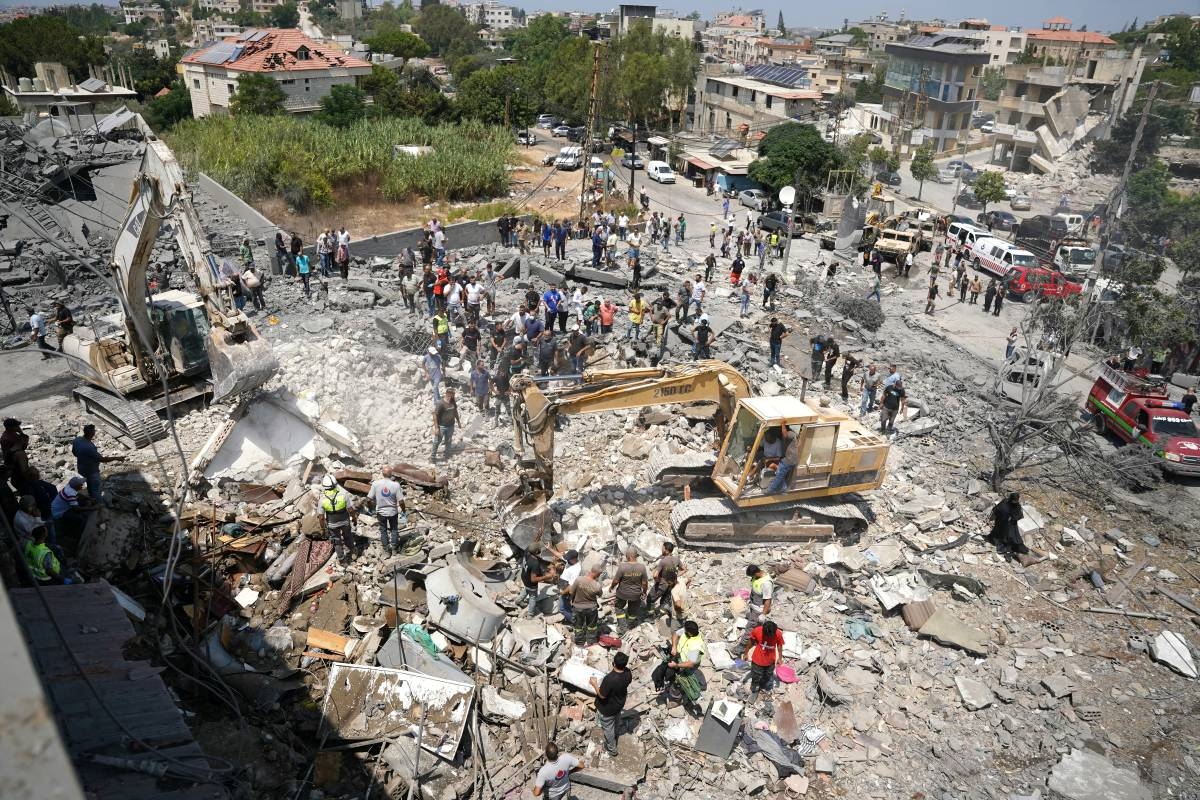
ANSAR, Lebanon – Israeli airstrikes on southern Lebanon killed 11 people including three children on Saturday, the deadliest raids since June deals eased hostilities between Israel and Hezbollah. The strikes hit a home in the village of Ansar and a ridge near Nabatieh, with a second wave targeting the town of Deir Zahrani.
Israel's military said the attacks were retaliation for a Hezbollah rocket strike, and that one strike killed a commander in the group's elite Radwan Force, Ali Samir Al-Haj Hassan. The army accused Hassan of using his family as "human shields", a claim Lebanon's leaders rejected. President Joseph Aoun said an entire family was killed in Ansar, calling the raids "a clear message on the negotiations process".
The violence came as Israel and Lebanon prepare for an eighth round of US-sponsored direct talks in Rome next month. The June framework deal called for Hezbollah disarmament, Israeli withdrawal from south Lebanon, and Lebanese army deployment in pilot zones. Hezbollah has opposed the deal and refused to negotiate. Saturday's strikes drew condemnation from Prime Minister Nawaf Salam, who said women and children are not military targets. Parliament speaker Nabih Berri, a Hezbollah ally, urged the deal's sponsors to act "before it's too late".
Hezbollah said the attacks would be met with "an appropriate response" and accused Prime Minister Benjamin Netanyahu of escalating the war to boost his re-election campaign. Netanyahu's spokesman, Doron Spielman, said the strikes should "jumpstart the talks and make them much more serious". He voiced hope the Lebanese army would step up to remove Hezbollah from the picture.
Lebanon's health ministry said seven people died in Ansar, including three children and two women. Four others were killed and 17 wounded in Deir Zahrani, among them a child and 11 women. An AFP correspondent in Ansar saw a destroyed building and rescuers combing rubble. Abbas Khalil, 60, said he was praying when the strike hit. "We were shocked. There's no justification for this," he said.
Three Israeli soldiers were seriously wounded inside a security zone – a strip of territory about 10 kilometers deep where Israeli forces are operating. The Israeli army said it struck Hezbollah infrastructure and that the group had attacked soldiers inside the zone.
The escalation threatens the fragile June deal, which followed a US-Iran memorandum of understanding on the broader Middle East war. Violence had dropped significantly since then, but Lebanon still reports intermittent strikes and demolitions of civilian buildings. Israeli Defence Minister Israel Katz this week vowed to keep troops in the security zone, a position the US State Department said is inconsistent with the framework commitments.
For markets, the renewed fighting raises the risk of a broader regional flare-up. Hezbollah's rocket fire and Israeli ground operations had drawn Lebanon into the Middle East war in March, with Lebanese authorities reporting more than 4,300 deaths. Any sustained escalation could push up oil prices, boost defense stocks, and drive safe-haven flows into gold and the dollar. Traders and analysts will watch for Hezbollah's next move and whether the Rome talks survive the latest breach.
The next catalyst is the scheduled round of negotiations. If both sides return to the table, the immediate risk may recede. If Hezbollah follows through on its threat of retaliation, the region could see a new cycle of strikes that tests the limits of the US-Iran understanding.