Stocks● Neutral
Learn Financial Modeling Fast: Complete Guide (2026)
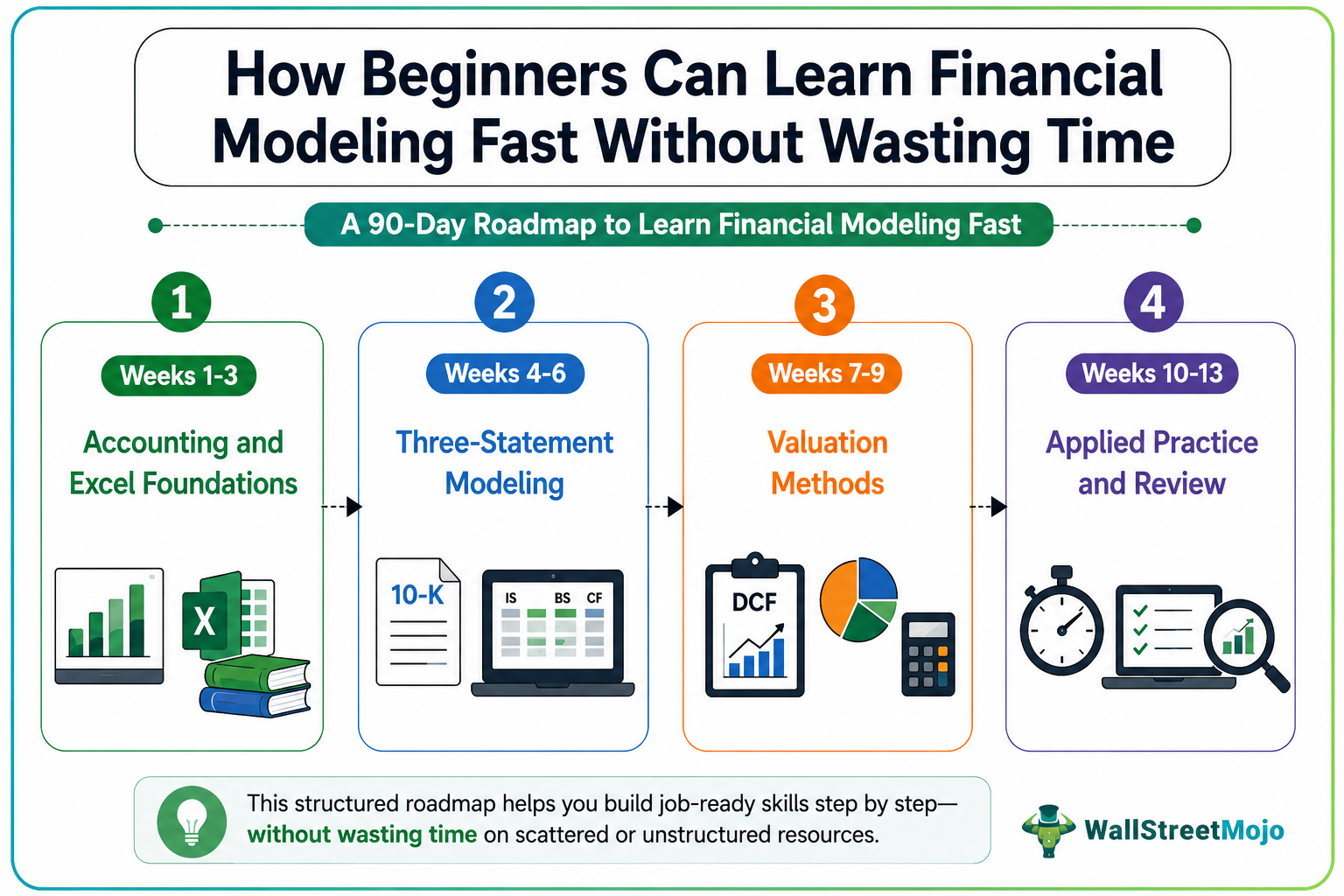
Master financial modeling in 90 days with a structured sequence: Excel fluency, accounting logic, then hands-on modeling. Avoid the trial-and-error that slows self-taught learners.
Continue with
Financial modeling sits at the top of the skill list for investment banking, equity research, and corporate finance roles. The CFA Institute found that 51% of employers rank it as a priority. Yet most beginners spend months on YouTube tutorials without producing a model that would pass a hiring manager's review.
To learn the skill fast, you need a structured sequence. Start with Excel fluency. Move to accounting logic. Then build practical modeling skills. That order cuts the trial-and-error phase that holds back self-taught learners.
Financial modeling means building a spreadsheet that represents a company's past and projected financial performance. The model links the income statement, balance sheet, and cash flow statement into one dynamic structure. It also includes valuation methods like discounted cash flow analysis, comparable company analysis, or leveraged buyout modeling, depending on the use case.
Beginners often misunderstand the scope. Financial modeling is not just using Excel. It requires working knowledge of GAAP or IFRS accounting principles. It also requires understanding corporate finance concepts like weighted average cost of capital. And it demands the discipline to build transparent, auditable formulas instead of hardcoded values.
Three patterns hold back self-taught learners. First, they skip accounting fundamentals and jump straight to model-building. Second, they use hardcoded numbers instead of formulas, which makes models fragile and unprofessional. Third, they overcomplicate the first model with unnecessary circular references and macros.
A structured course compresses the trial-and-error phase by teaching accounting, Excel, and modeling in the sequence employers expect. This approach works better than following the order a search algorithm surfaces.
Before touching valuation, beginners should be fluent in a defined set of Excel functions and formatting conventions that appear in nearly every professional model. The key functions include VLOOKUP, INDEX-MATCH, SUMIFS, and nested IF statements. Formatting conventions mean using blue font for hardcoded inputs, black font for formulas, and consistent column widths. Recruiters treat inconsistent formatting as a signal of weak attention to detail.