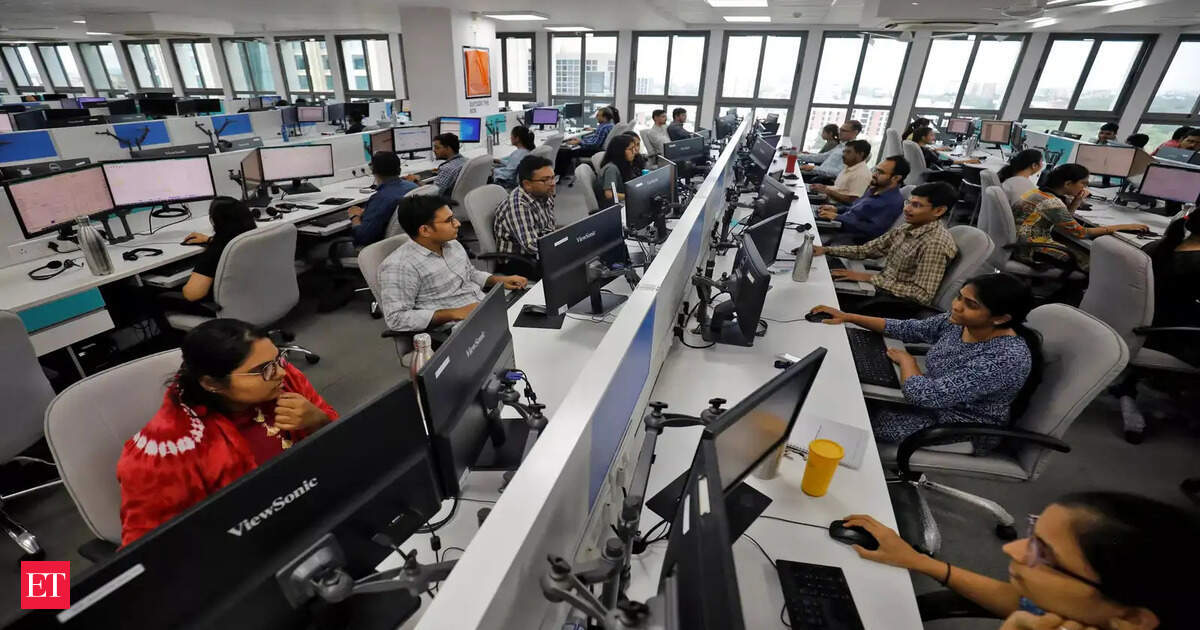
Large office transactions surged 3% YoY, Bengaluru leading, Hyderabad and Mumbai accelerating. The shift to campus-style workplaces marks a structural change in India's leasing market.
India's commercial office market just crossed a threshold that changes the demand story for every landlord and REIT investor. Large office transactions now account for 65% of total leasing, after a 3% year-on-year surge in deal volume. The figure isn't just a statistic; it captures a structural shift toward consolidated, campus-style workplaces that is reshaping rental dynamics across the country's top office corridors.
The simple read is that more big companies are taking big spaces. The better market read is that this concentration of demand gives pricing power to owners of large, contiguous floor plates in supply-constrained micro-markets, while smaller, fragmented assets face slower absorption and weaker rent growth. For anyone tracking Indian commercial real estate exposure, the data forces a reassessment of which assets and which cities will capture the next leg of leasing demand.
When large deals dominate to this degree, the market effectively bifurcates. Occupiers seeking 100,000 square feet or more are not just expanding; they are consolidating multiple offices into single-campus environments that support hybrid work, collaboration, and talent retention. This trend is particularly visible among global capability centers and technology firms that have driven India's office absorption for the past decade.
The 65% share means that headline leasing numbers are increasingly a story about a handful of large transactions rather than broad-based demand. That has consequences. Prime Grade A assets in established business districts can command rent premiums and longer lease tenures, while older buildings or those in secondary locations may struggle to compete even if overall market vacancy appears tight. For investors, the metric to watch is not just total leasing volume but the spread between large-deal rents and the rest of the market. A widening spread confirms that the flight to quality is accelerating.
The city-level breakdown reinforces the concentration theme. Bengaluru continues to lead in large office transactions, a function of its deep tech ecosystem and the presence of multinational R&D centers. Hyderabad and Mumbai, however, are showing accelerated growth in large deals, suggesting that occupiers are diversifying beyond the traditional gateway city.
Hyderabad's rise is particularly instructive. Lower occupancy costs, improved infrastructure, and a growing talent pool have made it a preferred location for large-scale back-office and technology operations. Mumbai's acceleration, meanwhile, reflects its status as a financial hub where banking and financial services firms are upgrading to modern, compliant workspaces. For developers and REITs, the implication is clear: portfolios weighted toward these three cities are better positioned to capture the next wave of large occupier demand, while exposure to markets where large deals are scarce may face a slower recovery.
India's listed office REITs, which hold portfolios of large, campus-style assets, are the most direct beneficiaries of this trend. When occupiers consolidate into larger spaces, REITs with contiguous blocks of Grade A inventory can drive leasing velocity without sacrificing rent. The 3% year-on-year growth in large transactions, if sustained, should translate into higher occupancy rates and improved rental spreads for these vehicles.
But the trade is not without nuance. The same data shows that smaller office demand grew at a slower pace, which means REITs or developers with a high share of small-suite inventory may see divergent performance. Investors should track quarterly leasing breakdowns by deal size, not just aggregate absorption. The next catalyst will be the upcoming market reports from property consultants, which will reveal whether the 65% share is a one-quarter spike or the beginning of a sustained trend. Confirmation would strengthen the case for overweighting large-asset owners; a reversal would signal that the consolidation trade is losing momentum.
For traders, the decision point is whether to position for a continued bifurcation in the office market. The data says large occupiers are driving the bus. The question now is whether the supply pipeline in Bengaluru, Hyderabad, and Mumbai can keep up without diluting the rent premium that makes these assets attractive. Watch leasing spreads and pre-commitment rates in new developments for the next signal.
Drafted by the AlphaScala research model and grounded in primary market data – live prices, fundamentals, SEC filings, hedge-fund holdings, and insider activity. Each story is checked against AlphaScala publishing rules before release. Educational coverage, not personalized advice.